

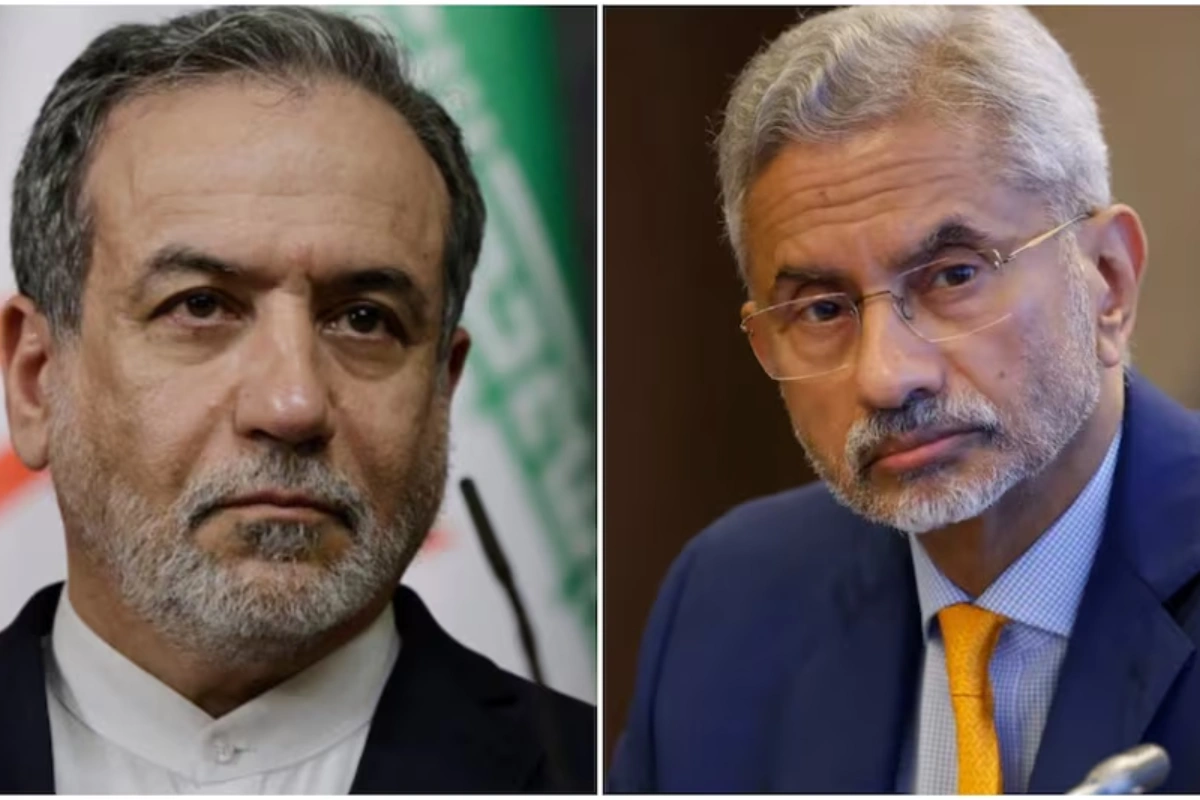
US Iran War: Iranian foreign minister Seyed Abbas Araghchi dialled Indian External Affairs Minister S Jaishankar to discuss the ongoing Middle East crisis and regional developments at length.
The Iranian and Indian foreign ministers have spoken more than a dozen times ever since the joint forces of USA and Israel attacked the Islamic Republic of Iran on February 28 this year. The latest call came after the visits of Araghchi to Oman, Pakistan and Russia as part of ongoing efforts to bring an end to the war.
DON'T MISS
The two leaders discussed the evolving West Asia crisis, ceasefire developments and broader regional dynamics, marking yet another instance of India’s active diplomatic engagement.
US Iran War-A Region on Edge
The current US-Iran confrontation traces back to escalating hostilities earlier in 2026, when joint US-Israel strikes on Iran triggered a wider regional conflict. Since then, attempts at peace have repeatedly stalled, with both sides refusing to compromise on core issues such as Iran’s nuclear ambitions and control over key maritime routes like the Strait of Hormuz.
Despite occasional ceasefire discussions, the situation remains volatile. Military build-ups, proxy conflicts and international alignments suggest that the crisis is far from over.
India-Neutrality vs Intervention
India has traditionally followed a policy of strategic autonomy, maintaining balanced relations with both Western powers like the United States and regional players such as Iran. This approach has served India well, allowing it to avoid entanglement in conflicts while preserving its economic and diplomatic interests. However, the current crisis presents a more complex challenge.
On one hand, the United States is a key strategic partner for India, particularly in defence, technology, and countering China’s influence. Aligning too closely with Iran could risk straining this relationship. On the other hand, Iran remains crucial for India’s energy needs and connectivity ambitions, especially projects linked to Central Asia.
Neutrality, while safer, is not without its limitations. In a world increasingly defined by blocs and alliances, remaining neutral may reduce India’s influence in shaping outcomes that directly affect its interests.
Given these constraints, India is most likely to pursue a path of calibrated diplomacy rather than outright intervention or passive neutrality. This means continuing active engagement with all parties, advocating for dialogue and supporting de-escalation efforts without taking sides.


