

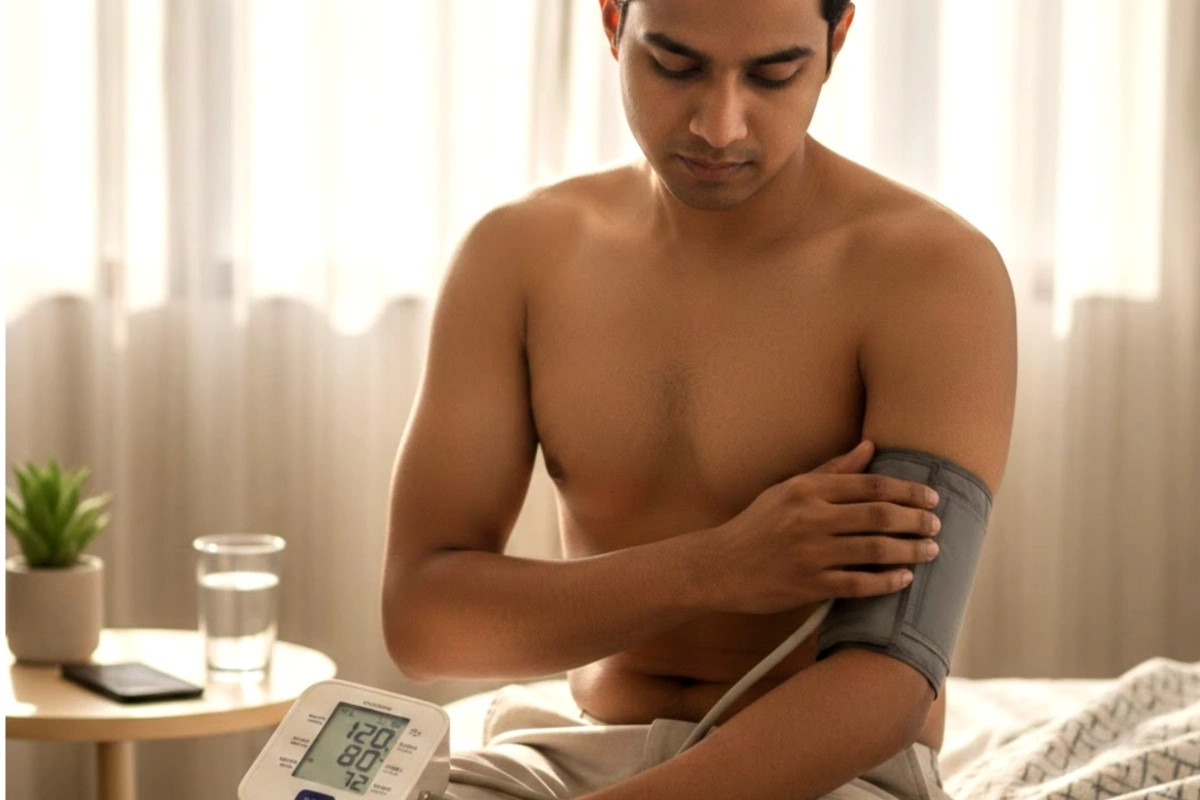
Blood Pressure: Many people feel reassured when their home monitor shows a normal number. But what if that reading is not accurate? A small mistake during measurement can quietly distort the result. This may hide a real problem or create unnecessary worry. Doctors say correct technique matters just as much as the machine itself.
Checking Blood Pressure (BP) is one of the most common health checks worldwide. It measures the force of blood pushing against artery walls. A BP reading has two numbers. The first is systolic pressure, recorded when the heart pumps blood. The second is diastolic pressure, measured when the heart relaxes between beats. Together, they help assess heart and vessel health.
Because BP testing is now easy at home, many households own digital or analogue monitors. However, untrained users often make simple errors. On February 18, Dr Pramod Tripathi, known for his work in diabetes management, shared a list of common mistakes people make while measuring BP at home.
Blood Pressure Check At Home: 10 Mistakes To Avoid
Even minor habits can affect your numbers. Here are ten errors experts warn against:
- Feet not flat on the ground
Dangling feet can alter the reading. Sit with both feet resting comfortably. - Crossing your legs
This may raise BP values. Keep legs uncrossed. - Full bladder
A full bladder can increase readings. Empty it before measurement. - Back held stiff and straight
Sit relaxed with your back supported. - Cuff placed over clothing
Always wrap the cuff on bare skin. Fold sleeves up if needed. - Wrong tube position (analogue devices)
The tube should face inward toward the body. - Arm not at heart level
Rest your arm on a table so it stays level with your heart. - Talking during the test
Remain silent and still for an accurate result. - Drinking tea or coffee just before
Wait at least 30 minutes after caffeine. - Checking BP when stressed or after exercise
Sit calmly for a few minutes before measuring.
Dr Tripathi also recommends taking two readings, five minutes apart, and calculating the average. He explains that if the upper number often crosses 130 or 140, it may suggest arteries are becoming stiffer with age. A rising lower number, he adds, can signal tightening of smaller blood vessels, possibly linked to stress, insulin levels or salt intake.
Why Accurate BP Readings Matter
According to the Cleveland Clinic, a typical healthy adult BP is usually below 120/80 mm Hg. Consistently incorrect readings can delay diagnosis or trigger false alarms.
High Blood Pressure (Hypertension):
- Major risk factor for heart disease and stroke
- Extremely high levels may become a life-threatening emergency
Low Blood Pressure (Hypotension):
- Can cause dizziness and fainting
- Severe drops may reduce blood flow to vital organs
Home monitoring is a powerful tool, but accuracy is key. Sit correctly, stay relaxed and follow proper steps. A reliable Blood Pressure reading can offer early warning and help protect your heart.


