
Home Blog Page 24

Fate of India’s Trade Relations With USA Hangs In Balance? Russian Sanctions Bill Passed, U.S. Ponders Imposing 100% Tariffs

Russia- Sanctions- Bill
Google

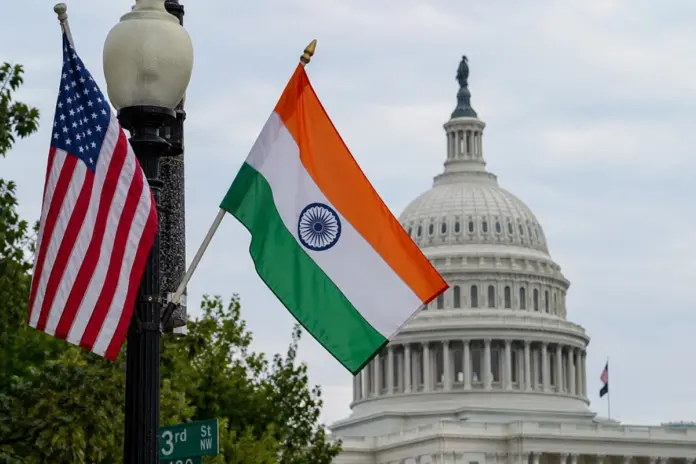
The recent bill introduced and passed in the US House of Representatives regarding sanctions on Russia has put India-US trade under further strain. This bill will allow the President of the USA, Donald Trump, to levy tariffs of up to 100% on countries that buy Russian energy products like oil and gas. Both India and China are among the major buyers of Russian energy products.

Russia Sanctions Bill Passes in the U.S. House

The U.S. House passed the Lindsey O. Graham Sanctions Russia and Iran Act of 2026 by a vote of 262-159 on September 16. This act imposes sanctions on the energy sector, financial sector, and officials and also grants the U.S. President further powers to impose tariffs on countries that continue to buy Russian energy products. This act was already passed in the U.S. Senate and is pending approval by the president. The tariff power given to the president can go up to 100%.

Why the focus on India?

India has been one of the major buyers of Russian oil in the past years. Hence, the nation has become an integral part of the discussion about the proposed law, with the new tariff provisions potentially increasing the costs of exports from India to the U.S. It should be noted that passing the bill does not mean the automatic imposition of a 100 percent tariff on India, since it provides the U.S. president with the power to impose such a tariff.

How it may impact India–U.S. trade?

The new development introduces another dimension of uncertainty in the relations between the countries, taking into account the ongoing energy imports from Russia that are an important aspect of the Indian import policy. The introduction of the high tariff may affect Indian exporters. 

Saudi Arabia Isolated? US-Houthi Talks in Oman Highlight Washington’s Approach to Yemen as Tensions in the Red Sea Mount, Check

Houthis
Google

We have initiated talks with the Houthi movement from Yemen amid increasing tension between the Houthis and the Yemeni government forces backed by the Saudis along the Red Sea coast. Such talks have sparked some interest in the way in which the US responds to the dynamic situation in Yemen through non-intervention, with the help of armed forces on behalf of Saudi Arabia.

US–Houthi Talks in Oman

It is reported that U.S. officials have had talks with Houthi officials at the U.S. embassy in Muscat facilitated by Oman. This happened after the Houthi offensive in the Yemeni Red Sea coastal areas and amid increasing worries about the security of the Bab el-Mandeb shipping lane. According to reports, the Houthi officials have told US officials that they will not attack any American ships and will observe the 2025 ceasefire agreement with the U.S.

Saudi Arabia at the center of Washington’s stance

The talks are important since Saudi Arabia has been dealing with a stepped-up Houthi attack while requesting additional military aid. As per US officials, Washington does not plan to intervene in the conflict directly, but the US maintains focus on maritime security and stability in the region. The country has been seeking help from regional and Western countries while its missile-defence capability comes under strain. In this context, the US is pursuing some types of indirect collaboration with Saudi Arabia, such as intelligence assistance, without being directly involved in any military operation.

Red Sea developments create new worries

Apart from Yemen and Saudi Arabia, the recent violence has broader ramifications for other nations. The Houthis have extended their influence in important parts of the Yemeni Red Sea coast and also in the areas near the Bab el-Mandeb Strait, which is an important international waterway. The conflict has led to fears regarding energy supply, the security of ships, and regional stability in the region. About 125,000 individuals have been displaced in Yemen following the resumption of the conflict, according to reports.

From UPI Payments to ’Cash Only,’ Delhi Traders Protest Against Govt Policy Through Signages in Their Stores, Check Details

UPI- Payment
Google

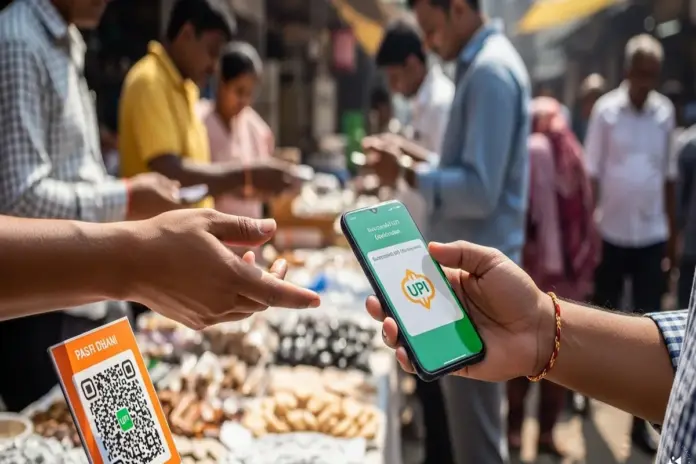
UPI Payments: The traders from Delhi have resorted to putting up “Cash Only’ banners at their stores in a bid to protest the recent imposition of charges by the government on the use of UPI payment systems. This is because of the recent introduction of a Merchant Discount Rate (MDR) charge of 0.4% for transactions via UPI that exceed Rs 2000, which will be implemented from October 15 onwards.

Why are traders protesting against the new charge on UPI?

Up till now, traders have enjoyed making UPI transactions free of merchant fee. However, the new MDR policy has generated concern among traders in Delhi who operate on thin profit margins. Merchants feel that such an extra cost might demotivate other merchants to continue using this payment medium.

‘Cash Only’ signage found at Delhi shops

As a result, traders in various markets in Delhi have started removing and replacing the signage of UPI payments with cash payment notices as a form of protest against the new MDR policy.

Traders seek a review of the policy

Trader associations have called for the MDR framework to be reconsidered, arguing that the new charge could affect both merchants and customers. Delhi market representatives have also indicated plans for further protests against the policy.The development highlights the tension between maintaining UPI as a widely accessible digital payment system and creating a sustainable revenue model for its payment ecosystem. The government and payment authorities have said the MDR is intended to support the long-term financial sustainability and expansion of UPI, while critics fear it could encourage some merchants to return to cash.

After Food Safety, Tukaram Munde Sheds Light On Markup of Medical Consumables, Underlying Pricing Discrepancy In Question

Tukaram- Mundhe
Google

Following his focus on food-safety issues in Maharashtra, Food and Drug Administration (FDA) Commissioner Tukaram Munde has brought up yet another matter pertaining to the pricing of medical consumables used in hospitals. 

From Food Safety to Medical Pricing

In one of his posts on X, FDA Commissioner Munde has brought up the issue of pricing of medical consumable items used by patients at hospitals. In a survey conducted in Maharashtra to check the prices of such items, a difference was found between the trade price and the printed MRP of such items.

Major differences between trade price and MRP

The data shared by Munde highlight the magnitude of the difference between these prices. An IV infusion set that costs ₹11.05 was priced at an MRP of ₹325, whereas a syringe, which costs ₹6.75 in trade price, was priced at an MRP of ₹57.20. The trade price of the catheter was ₹29.41, but its MRP was ₹310. 

Relevance of this issue for patients

As opposed to common goods, the purchases of medical consumables take place during the course of treatment, when patients along with their relatives cannot compare prices and alternatives. Therefore, it is difficult for patients to assess if the sum paid corresponds to the cost of the good itself or to a markup. Moreover, the problem concerns the method of MRP calculation prior to the arrival of products in hospitals. Manufacturers or distributors might influence this process, but patients bear the burden of the costs of consumption during the treatment.

A regulatory gap under discussion

The pricing issue also highlights a difference between medicines and medical consumables. Scheduled medicines are subject to price controls under the Drugs (Prices Control) Order, 2013, while many medical devices and consumables do not face the same level of price regulation. The Maharashtra FDA has therefore brought the issue to the attention of the National Pharmaceutical Pricing Authority (NPPA), seeking greater scrutiny of pricing practices involving hospital consumables.

Bollywood Powerhouses Join Censor Board: Preity Zinta, Pankaj Tripathi and Suniel Shetty Appointed to CBFC

Censor- Board
Google

The Central Board of Film Certification (CBFC), popularly known as India’s Censor Board, has a fresh new look. On September 16, the Ministry of Information and Broadcasting announced an 18-member panel to run the board for the next three years, and the list is packed with familiar Bollywood faces.

Who Are the New Members?

Leading the star power on the panel are actors Preity Zinta, Pankaj Tripathi, Suniel Shetty, Rupali Ganguly, Prosenjit Chatterjee, Pallavi Joshi and Manoj Joshi. Filmmaker Priyadarshan and Grammy-winning composer Ricky Kej also make the cut, alongside names from television, literature, music and theatre such as Vinod Anupam, Abhishek Jain, Hans Raj Hans, Supriya Yarlagadda, Yatindra Mishra, Neela Madhab Panda, Nishigandha Wad, Waman Kendre and Ramesh Patange. The board continues to be headed by CBFC chairperson Shashi Shekhar Vempati.

Interestingly, only two members from the previous panel, Waman Kendre and Ramesh Patange, have been retained this time around, meaning the CBFC is largely getting a fresh set of decision-makers.

Why This Matters for Bollywood

The CBFC is the statutory body responsible for certifying every film released in India, deciding whether it gets a U, UA, A or S rating before it can hit theatres. This new board takes charge at an important moment. The previous panel’s three-year term had technically ended more than six years ago, with members continuing informally in the interim. The reconstitution comes just weeks after the CBFC held its first formal board meeting in six years on August 29, where issues like certification delays and how review committees are formed were discussed.

With prominent actors and creative professionals now part of the panel, there is renewed hope within the industry that certification decisions will reflect a better understanding of storytelling and audience sensibilities, rather than being purely bureaucratic.

What Happens Next

The new members have taken charge with immediate effect and will serve for three years, or until the government decides otherwise. As per the Cinematograph (Certification) Rules, 2024, the board is required to meet at least once every quarter, so audiences and filmmakers alike can expect more regular engagement from the CBFC going forward.

For now, the appointment of stars like Zinta, Tripathi and Shetty has generated buzz across the film fraternity, with many seeing it as a positive step toward a more industry-aware certification process.

PM Modi’s Birthday Special: 5 Lakh Free Healthcare Cover To 11 Crore Toilets, His Biggest Welfare Wins Decoded

PM- Modi
Google

PM Modi: Every year on September 17, India marks Prime Minister Narendra Modi’s birthday with celebrations, tributes, and a look back at his decade-plus in office. Beyond the politics, one thing stands out clearly: a string of welfare schemes that have touched the lives of hundreds of millions of ordinary Indians. Here’s a simple breakdown of his biggest wins.

Ayushman Bharat: Free Healthcare Worth ₹5 Lakh

Launched in 2018, Ayushman Bharat (PM Jan Arogya Yojana) is often called the world’s largest government-funded health insurance scheme. It gives poor and vulnerable families a cashless health cover of ₹5 lakh every year, covering hospital bills, surgeries, and treatment for serious diseases like cancer and diabetes. The scheme has since been expanded to cover all senior citizens above 70, regardless of income, and today reaches well over 55 crore people, nearly the population of the US, Canada, and the EU combined.

Swachh Bharat Mission: 11 Crore Toilets, A Cleaner India

When the Swachh Bharat Mission launched in October 2014, open defecation was still common across rural India. Over the next several years, more than 11 crore individual household toilets were built across the country. In 2019, the government declared rural India “open defecation free.” Officials say the drive has also cut child deaths from diarrhoea linked to poor sanitation, while giving millions of women greater safety and dignity.

Beyond Health And Sanitation

Modi’s welfare push hasn’t stopped there. The Jan Dhan Yojana brought banking to households that never had a bank account, enabling direct cash transfers without middlemen. The PM Awas Yojana has funded the construction of crores of homes for low-income families, while the Ujjwala Yojana provided free cooking gas connections to reduce dependence on smoky, unsafe indoor stoves.

Why These Schemes Matter

PM Modi: Taken together, these programmes represent one of the largest welfare pushes in India’s history aimed squarely at healthcare, sanitation, housing, and financial access for those who needed it most. Whatever one’s political view, the scale of implementation, spanning hundreds of millions of beneficiaries, has reshaped daily life for a large part of the country.

As India celebrates the Prime Minister’s birthday, these schemes are being cited by the government as the defining legacy of his tenure, a reminder of how policy decisions in Delhi can ripple down to a toilet in a village home or a hospital bill that no longer bankrupts a family.

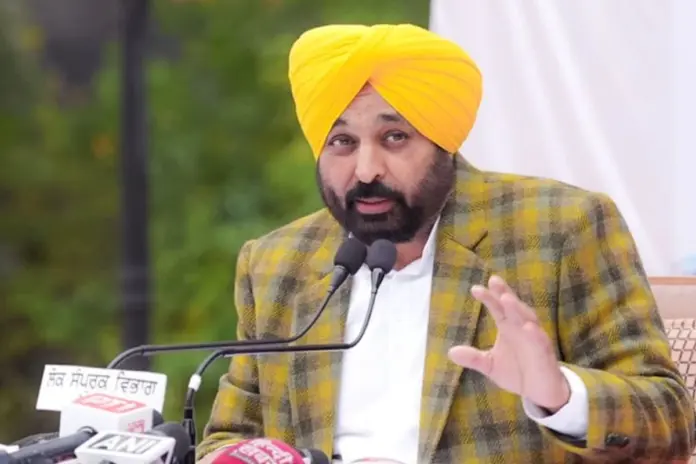
Bhagwant Mann Govt Constitutes 7-Member Coordination Committee To Coordinate With Sri Akal Takht Sahib On Jaagat Jot Sri Guru Granth Sahib Satkar (Amendment) Act

CM Mann

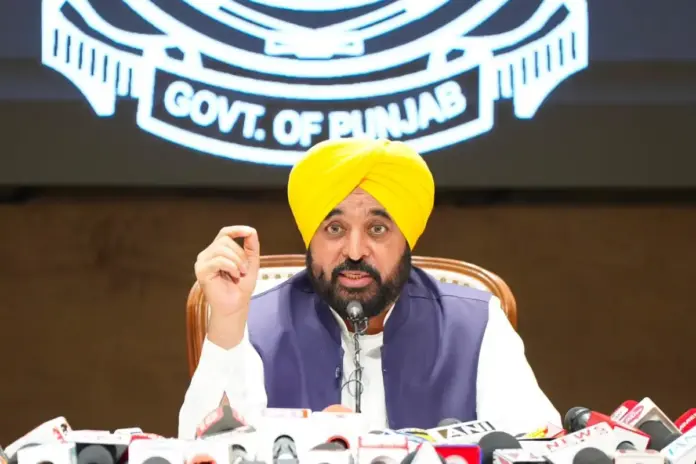
In accordance with the directions of Sri Akal Takht Sahib, the Punjab Government has constituted a seven-member Coordination Committee to maintain continuous coordination with the committee constituted by Sri Akal Takht Sahib in connection with matters concerning the Jaagat Jot Sri Guru Granth Sahib Satkar (Amendment) Act, 2026. The committee will also submit its suggestions and reports on important matters to the Punjab Government for further consideration.

The seven-member Coordination Committee comprises former Jathedar of Sri Akal Takht Sahib Giani Raghbir Singh, head of Damdami Taksal Sant Giani Harnam Singh Khalsa, Sant Baba Sewa Singh of Rampur Khera, retired Justice Jaspal Singh, retired Justice Gurbir Singh, former IPS officer and former Punjab Public Service Commission (PPSC) Chairman Jatinder Singh Aulakh, and Law Officer Preet Inder Paul Singh.

The committee would maintain continuous coordination with the committee constituted by Sri Akal Takht Sahib on matters related to the Act and would submit its suggestions and reports on important issues to the Punjab Government for further consideration.

The committee has been constituted by the Department of Home Affairs and Justice, Government of Punjab, through an order dated 16th September 2026.

AAP Asks BJP 3 Questions Before Its ‘Nasha Mukt Punjab Yatra’

Punjab News

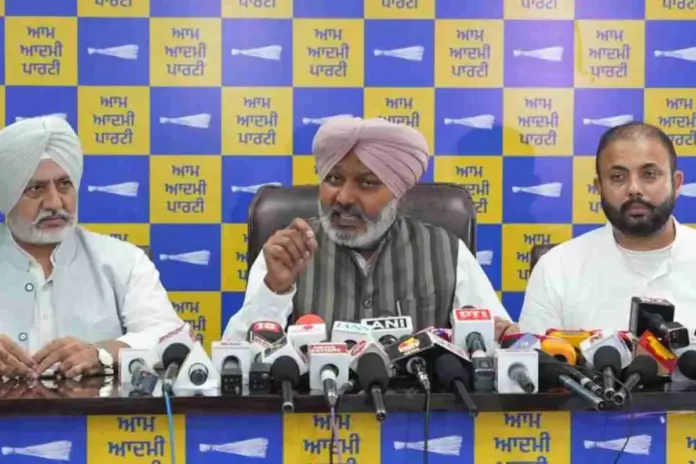
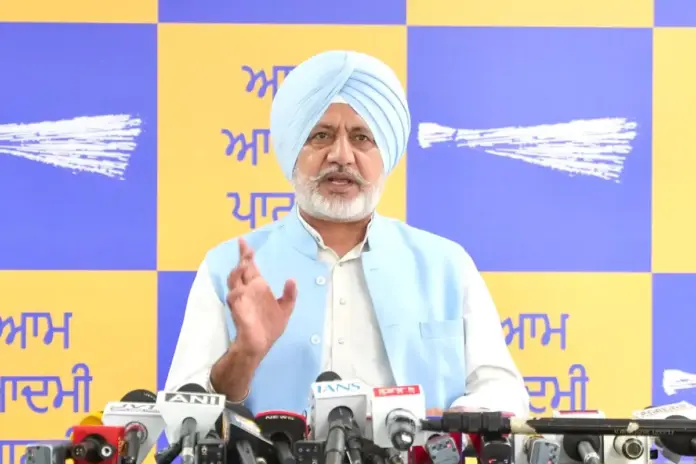
The Aam Aadmi Party (AAP) has hit back at the BJP’s ‘Nasha Mukt Punjab Yatra’, with Senior AAP leader and Cabinet Minister Harpal Singh Cheema asking the BJP to answer three fundamental questions before staging a political march in Punjab: why is it failing to stop drug consignments linked to Gujarat and Rajasthan, why is it targeting Punjab when the 55-km international border belt falls under the BSF, and why does it want Punjab’s water to flow to Haryana and Rajasthan? The Minister said the BJP must first act against drug networks in its own-ruled states, secure the border under the Centre’s responsibility and clarify its stand on Punjab’s rights before attempting to lecture Punjab on the drug menace.

The Minister highlighted the Bhagwant Mann Government’s ‘Yudh Nashean Virudh’, the deployment of anti-drone systems and action by the Punjab Police against traffickers beyond the state. He challenged the BJP to first act against drug networks and strengthen security in BJP-ruled states before taking out a march against drugs in Punjab.

Addressing a press conference along with AAP Punjab Media In-charge Baltej Pannu and Kharar Halka In-charge Parminder Goldy, senior AAP leader and Cabinet Minister Harpal Singh Cheema stated, “The period between 2007 and 2017, when the SAD-BJP government was in power in Punjab, witnessed a major expansion of the drug problem in the state.

He continued, “The term ‘chitta’ emerged, and became widely associated with the drug crisis during that period, and drugs were being openly distributed across Punjab. Government vehicles were also being misused for drug trafficking. When investigations into drug-related cases were underway, an ED (Enforcement Directorate) officer was transferred from Jalandhar.”

Questioning the BJP-led Central Government’s role in securing Punjab’s international border, Minister Harpal Singh Cheema stated, “A 55-kilometre belt along the Pakistan border comes under the BSF. Despite the Centre having direct responsibility in this area, the BJP continues to target Punjab over the drug issue. The Bhagwant Singh Mann Government, on the other hand, has taken action against drug traffickers and strengthened the capabilities of the Punjab Police, including by introducing anti-drone systems to counter the smuggling of drugs through drones.”

The Minister emphasised that the Punjab Government had adopted a two-pronged approach to tackle the drug problem. He stated, “We are taking action against drug traffickers while also ensuring treatment for people suffering from drug addiction. Chief Minister Bhagwant Mann has issued strict directions to officials that no drug trafficker or peddler should be spared. Action must continue against everyone involved in the illegal drug trade.”

Minister Harpal Singh Cheema further stated, “Large drug consignments recovered in the country have frequently been traced to Gujarat and Rajasthan, where BJP governments are in power. If the BJP-led Centre is serious about ending the drug menace, it should first take effective action against drug traffickers in BJP-ruled states and strengthen border security.”

Responding to a media query about the death of Gulzar Singh, he asserted, “The opposition is doing ‘politics over dead bodies’, and I have nothing to do with the matter. The case is currently before the court, and therefore I will not make extensive comments on it. The family’s original statement is already in the public domain. People have seen it and know the facts surrounding the matter.”

Those Responsible For Attempt To Damage Statue Of Baba Sahib Ambedkar Will Face Strictest Action: Harbhajan Singh ETO

Harbhajan Singh ETO

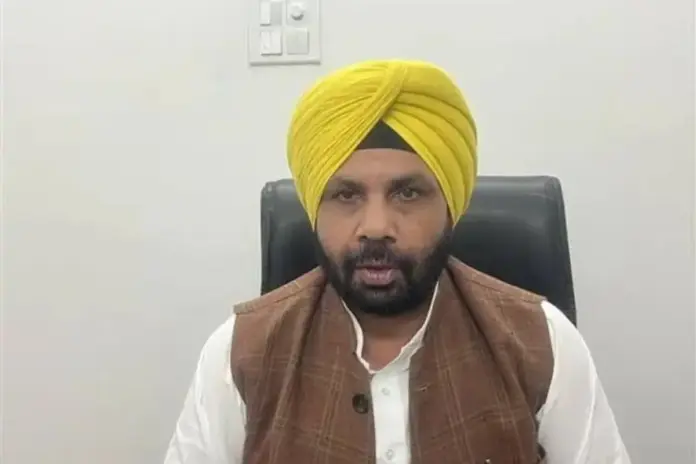
Cabinet Minister Harbhajan Singh ETO strongly condemned the incident involving an attempt to damage the statue of the architect of the Indian Constitution, Baba Sahib Dr BR Ambedkar, at village Barian Kalan in Hoshiarpur district, and adopted a strict stance against the miscreants responsible for the incident. He warned that anti-social elements conspiring to disturb the atmosphere of Punjab and create divisions in social harmony would be dealt with strictly.

On this,Cabinet MinisterHarbhajan Singh ETO stated, “Baba Sahib Dr BR Ambedkar is a source of inspiration for all of us. He gave the country its Constitution and ensured equal rights for every citizen. Such malicious and hateful acts against him are a failed attempt by certain elements to disturb law and order in Punjab, which the government will not tolerate under any circumstances.”

The Minister said that directions have been issued to the police administration to immediately investigate the incident and arrest those responsible at the earliest. “Exemplary and strictest action would be taken against such offenders as per law so that no one dares to commit such a heinous act in the future,” he asserted.

Minister Harbhajan Singh ETO appealed to the entire community to maintain peace and harmony and assured them that the government is committed to protecting the respect of every citizen and great national leaders. “I want to assure everyone that irrespective of how influential those responsible may be, they will soon be in police custody and will be given the strictest punishment as per law for their actions,” he affirmed.

AAP Punjab Media In-charge Baltej Pannu Raises Strong Objection To Draft Chandigarh Health Service Rules 2026, Says Punjab’s Share Being Gradually Eroded

Baltej Pannu

Aam Aadmi Party (AAP) Punjab Media In-charge Baltej Pannu on Wednesday strongly objected to the draft Chandigarh Health Service Rules 2026, saying the proposed changes would undermine Punjab’s established share in Chandigarh’s medical services and violate the understanding that existed between Punjab and Haryana.

In a statement,AAP Punjab Media In-charge Baltej Pannu said, “Earlier, there was a 60:40 arrangement, with 60% for Punjab and 40% for Haryana. Now, under the proposed changes, 40% of the medical officers will be directly recruited under the UT cadre, while the remaining 60% will be divided between the two states. As a result, Punjab’s share will come down to just around 36%.”

The AAP Punjab Media In-charge, “This is not merely a change in recruitment rules. This directly concerns Punjab’s rights in Chandigarh. Chandigarh is the capital of Punjab, and Chandigarh was built by destroying Punjab’s villages. The arrangements made at the time of the reorganisation of Punjab cannot be changed in a manner that continuously reduces Punjab’s share.”

Baltej Pannu said the proposed changes were part of a broader pattern in which Punjab’s rights were being weakened one issue at a time. “First, the Sikh syllabus was removed from Punjab University. Now, another issue has been brought up through these proposed changes to the medical cadre in Chandigarh. One by one, everything belonging to Punjab is being taken away,” he said.

He questioned the BJP’s political position on Punjab, saying, “The BJP keeps saying that it wants to form the government in Punjab and contest elections here. But on the other hand, Punjab’s rights are being taken away one by one. If the BJP genuinely wants to serve Punjab, why is Punjab’s established share being reduced in Chandigarh?”

Baltej Pannu said the 60:40 arrangement between Punjab and Haryana had to be protected and that the proposed introduction of a separate UT cadre should not be allowed to dilute Punjab’s share. “The existing arrangement has a clear history. Punjab’s share cannot simply be reduced by introducing a new cadre structure. The Centre must look at the matter seriously and ensure that the rights and share of Punjab are protected,” he said.

Baltej Pannu demanded an immediate review of the draft Chandigarh Health Service Rules 2026 by the Centre. “We demand that the Central Government review these proposed rules and ensure that the arrangements and rights of Punjab arising from the reorganisation of Punjab are not undermined. Punjab cannot be expected to remain silent while its share in Chandigarh is reduced one issue at a time,” he said.

Jharkhand News:Hemant Soren Welcomes Australian Envoy, Eyes Breakthroughs in Minerals & Skills

Jharkhand- News
Google

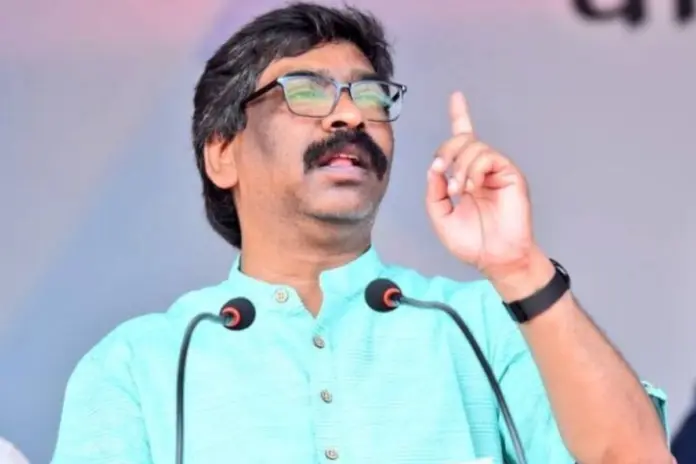
Jharkhand News: Jharkhand Chief Minister Hemant Soren has once again put his state on the global map. This time, he welcomed a top Australian envoy to Ranchi for talks that could open new doors in two key areas: minerals and skill development. The meeting is part of a bigger push by the state government to attract foreign partners and turn Jharkhand‘s natural wealth into long-term growth for its people.

Why Australia Matters to Jharkhand

Australia is a global leader in mining technology and resource management. Jharkhand, on the other hand, sits on rich reserves of coal, mica, uranium, and other critical minerals. Pairing Australia’s expertise with Jharkhand’s resources makes natural sense. During the meeting, both sides discussed how Australian know-how in safe, modern, and sustainable mining practices could help Jharkhand extract more value from its land without harming the environment.

Skills: The Other Big Focus

Minerals alone don’t build an economy people do. That’s why skill development took center stage in these talks. Soren has repeatedly said that Jharkhand’s future should be shaped by “minds,” not just “mines.” Training local youth in modern mining techniques, technical trades, and emerging fields like IT and AI is a core part of this vision. Australian institutions are known for strong vocational and technical education systems, and closer ties could mean new training programs, exchange opportunities, and better-paying jobs for young people in the state.

Part of a Bigger Global Push

This isn’t a one-off event. Over the past year, Soren has met envoys and business leaders from Germany, Singapore, Spain, and Sweden, all with a similar goal bringing investment, technology, and training to Jharkhand. The Australian meeting fits neatly into this pattern of building international partnerships rather than depending only on traditional funding routes.

What It Means for the Common Person

For everyday residents of Jharkhand, talks like these can feel distant. But the real impact shows up over time: better job training centers, safer mining jobs, new factories, and stronger infrastructure. If these mineral and skill partnerships turn into real projects, they could open opportunities for thousands of young people looking for stable, well-paying careers close to home.

What Comes Next for Jharkhand-Australia Ties  

Jharkhand News: No formal agreement has been announced yet, but the direction is clear. Jharkhand wants to be seen as a serious global partner, not just a mineral-rich state. As talks with Australia continue, the coming months will show whether this meeting turns into real projects on the ground.

Bhagwant Mann Launches Ward-level Cleaning Drive as Rural Patiala Evaluates Development Plans

Bhagwant- Mann
Google

Bhagwant Mann: Punjab Chief Minister Bhagwant Mann met councillors of 26 wards of Rural Patiala and Municipal Corporation Patiala officials to assess development works going on in the region. The meeting addressed issues of improving civic amenities and making efforts towards cleanliness in the local areas.

Clean Punjab campaign extended to each ward

One of the main issues discussed in the meeting was the extension of ‘Clean Punjab’ cleanliness campaign in all 26 wards of the region. This effort will be made to promote cleanliness in streets, neighbourhoods and other public places.As per the government, it is important to make collective efforts towards cleaning up the local areas and improving waste management systems. The aim is to ensure cleanliness activities in the ward regularly.

Development works assessed

The meeting also covered the assessment of development works that are being done in the region. There was discussion about development works being done in the area and the civic needs of different areas.

Strengthening local development efforts

The meeting also focused on strengthening development activities at the local level. Officials and councillors discussed the needs of different wards and the importance of ensuring that ongoing projects are implemented effectively. The focus remains on improving public facilities and addressing local infrastructure requirements across Rural Patiala.

Shared responsibility for a cleaner Punjab

Bhagwant Mann: The meeting highlighted the role of local representatives, municipal authorities and residents in maintaining clean and developed neighborhoods. The government has called for continued cooperation to strengthen cleanliness and development efforts across Punjab.The ward-level approach is expected to place greater focus on local civic requirements while supporting the broader objective of creating cleaner, healthier and better-developed communities.

CM Yogi Adityanath Cabinet 2026: Mega Policy Push Anchors Big Gains for Youth, Seniors, and Transit

CM- Yogi- Adityanath
Google

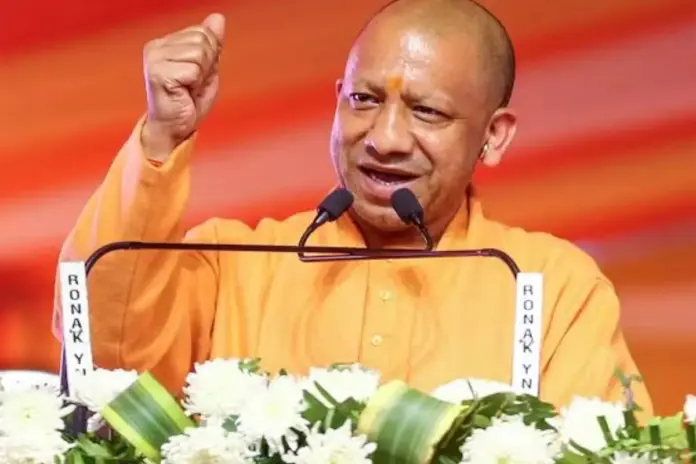
CM Yogi Adityanath: The Yogi Adityanath-led Uttar Pradesh Cabinet has rolled out a fresh set of 24 proposals, and this time the focus is squarely on three groups: senior citizens, young people, and everyday commuters. Announced just ahead of Raksha Bandhan, the decisions are being seen as one of the government’s biggest welfare pushes of the year.

Free Bus Rides for Senior Women

The headline decision is the Lokmata Ahilyabai Matrushakti Yojana, under which women aged 60 and above will now get lifetime free travel on all UPSRTC buses. More than one crore women across the state stand to benefit. The idea is simple: many elderly women skip travel for medical checkups, family functions, or religious trips because of the cost. This scheme removes that barrier entirely, giving them the freedom to move around the state without worrying about bus fare.

Tablets to Power Up UP’s Youth

On the youth front, the cabinet approved purchase orders for 25 lakh tablets under the Swami Vivekananda Yuva Sashaktikaran Yojana. These tablets will be handed out free of cost to eligible young people, helping them access online classes, competitive exam material, and digital government services. The scheme runs over five years, with a budget of around Rs 2,374.60 crore set aside for 2026-27 alone. Importantly, officials say this won’t add any extra financial burden on the central government.

A Longer Ganga Expressway

Transit infrastructure got a boost too. The cabinet cleared a major expansion of the Ganga Expressway, extending it all the way to Haridwar in neighbouring Uttarakhand. Once complete, this stretch will cut travel time between UP and Uttarakhand significantly, benefiting both commuters and religious tourists heading to the hill state.

What This Means for UP Residents

CM Yogi Adityanath:Put together, these three decisions touch millions of households, grandmothers who can now travel freely, students getting digital tools for free, and commuters who will soon have faster road connectivity. It’s a mix of welfare and infrastructure that the state government is betting will resonate widely, especially with elections and public sentiment always on the radar in India’s most populous state. For now, the message from Lucknow is clear: mobility, for people and for the state’s economy, is the priority.

“Never Imagined ‘Udta Haryana’ Would Become Reality” Anurag Dhanda’s Sharp Attack on Nayab Singh Saini Govt

Anurag- Dhanda
Google

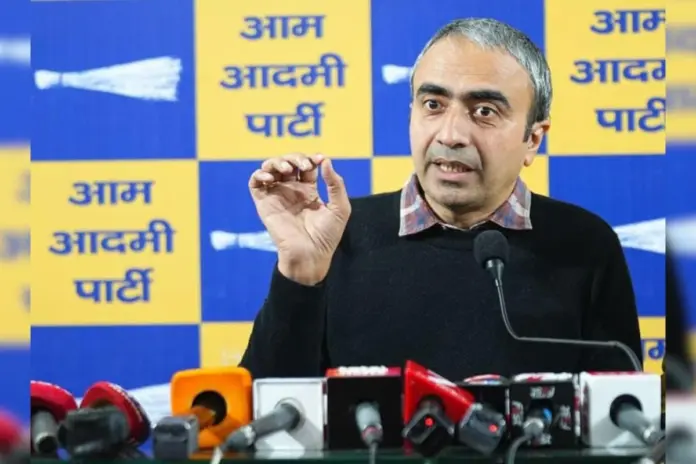
Anurag Dhanda: Aam Aadmi Party (AAP) leader Anurag Dhanda has launched a fresh and sharp attack on the Nayab Singh Saini-led Haryana government, saying he never imagined that the phrase “Udta Haryana” would actually become the state’s reality. For years, this term was used as a warning sign about the growing drug problem in areas bordering Punjab. Today, according to Dhanda, that warning has turned into a lived experience for thousands of families across the state.

What Dhanda Actually Said

Speaking out against the BJP government, Dhanda accused Chief Minister Nayab Singh Saini of failing to control the spread of narcotics in districts like Sirsa, Fatehabad, and other areas along the Punjab border. He pointed out that young lives are being lost every month to drug overdoses, and that families are struggling to get their loved ones proper de-addiction support. His comment reflects growing anger among opposition leaders who believe the state government has been slow, or even indifferent, in tackling the crisis.

Why This Matters to Common People

For an average Haryana resident, this isn’t just political noise. Drug addiction affects real families — a son, a brother, a neighbour. When leaders like Dhanda raise these issues publicly, it puts pressure on the government to act faster, whether that means opening more de-addiction centres, increasing police action against traffickers, or improving support systems for affected youth.

The Bigger Political Picture

This isn’t the first time Dhanda has targeted the Saini government. He has previously criticised the administration over law and order, unfulfilled welfare promises, and poor infrastructure. His “Udta Haryana” remark adds a sharper, more emotional edge to AAP’s ongoing campaign, aiming to position the party as the voice raising real, on-ground issues ahead of future elections.

Political Heat Set to Rise Ahead of Elections

Anurag Dhanda: The Haryana government has yet to issue a detailed response to this specific remark. However, with opposition pressure mounting, the drug menace is likely to remain a major talking point in state politics in the coming months.

UP Government’s Big Gift: 119 Development Projects under CM Yogi Adityanath, New Kalyan Mandapam Inaugurated in Gorakhpur

CM- Yogi- Adityanath
Google

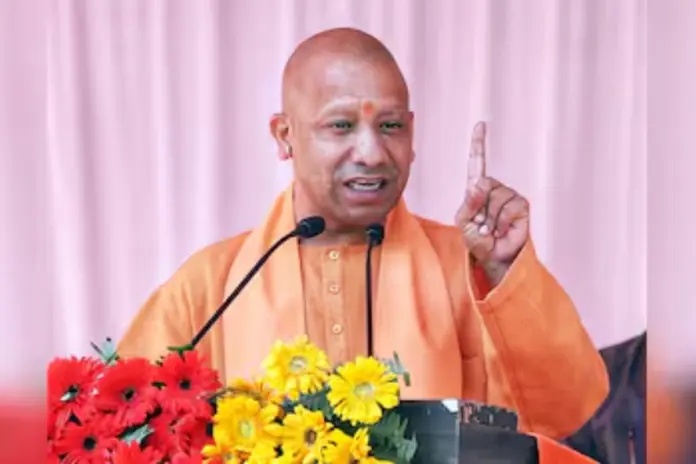
CM Yogi Adityanath: The Uttar Pradesh government has once again put Gorakhpur in the spotlight. Chief Minister Yogi Adityanath recently launched 119 development projects in the district, covering roads, drainage, public facilities, and civic infrastructure. Alongside this, he inaugurated a brand-new Kalyan Mandapam, a community hall built to make weddings and social functions more affordable for common families.

This move is part of the state’s larger “double-engine government” push, where the Centre and state work together to speed up infrastructure and welfare projects across Uttar Pradesh, with Gorakhpur, the CM’s home turf, receiving special attention.

What the New Kalyan Mandapam Means for Residents

Kalyan Mandapams are community marriage halls built by the state government to give lower and middle-income families an affordable venue for weddings and other functions. Instead of spending heavily on private banquet halls, families can now book this new facility at a reasonable cost, complete with a hall, guest rooms, lawn space, and parking.

This is not the first such facility in Gorakhpur, but each new addition eases pressure on existing venues and brings the service closer to more neighbourhoods, especially benefiting families who previously had to travel far or pay high rental costs for similar spaces.

Roads, Infrastructure, and Everyday Convenience

The 119 projects inaugurated or foundation-laid span several departments, including public works, housing development, and urban infrastructure. Better roads, upgraded drainage systems, and improved civic amenities are aimed at reducing waterlogging, easing traffic movement, and improving daily life for residents across the city and surrounding areas.

CM Yogi Adityanath has repeatedly highlighted Gorakhpur‘s transformation over the past several years, pointing to new medical institutions, sports facilities, and industrial investment as signs of steady progress in the region.

Impact on Gorakhpur’s Common Man 

CM Yogi Adityanath: For an average resident, these announcements translate into tangible changes: smoother roads, fewer flooding problems during monsoons, and an affordable venue for family celebrations. As Gorakhpur continues to grow, this steady rollout of projects reflects the government’s stated priority of balanced urban development paired with welfare schemes for the common man.

With more projects in the pipeline, Gorakhpur’s civic landscape is expected to keep evolving in the months ahead.