
Home Blog Page 60

Uttam Nagar: High Security Lined Up For Hastsal Colony Until Navratri 2026! Who Is Instigating Hindu Muslim Riots?

Uttam Nagar
Image Credit: Google

Uttam Nagar: Deputy Commissioner of Police (Dwarka) Kushal Pal Singh has remarked that security arrangements in Hastsal JJ Colony would continue until Navratri 2026 is concluded on Friday, in line with the directives of the Delhi High Court.

The festival of Navratri would come to an end of March 27, 2026 on Ram Navami, the birthday of Lord Ram.

Uttam Nagar-Turn Of Events

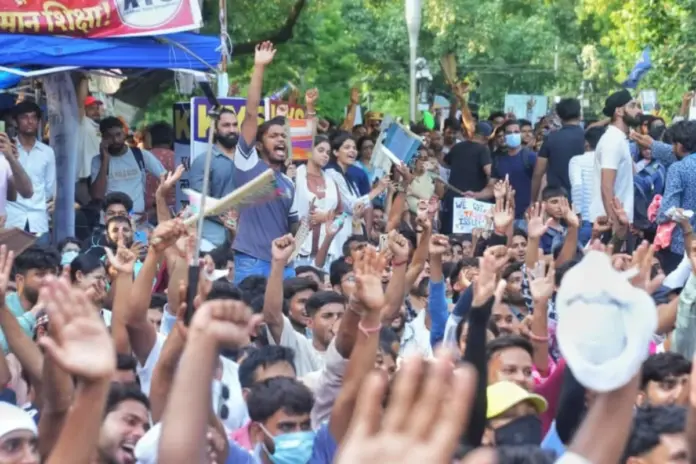
Communal tensions gripped Uttam Nagar in New Delhi after Tarun, a 26-year-old Hindu, was killed in a Holi clash between his family and neighbours on March 4. The violence started soon after water from a balloon thrown by a 7-year-old girl from the family of Tarun splashed on a woman from the minority community.

DCP Kushal Pal had then remarked that both families knew each other for more than five decades. Originally from Rajasthan, both families shifted in 2004 to Uttam Nagar and had a history of occasional disputes in the past, including parking disagreements.

Who Is Instigating Hindu Muslim Riots?

People and political parties with intent to create Hindu Muslim riots are “utilizing” the Tarun murder case to create a communal divide.

In response, Delhi Police has set up more than 100 pickets. Police personnel have been deployed on rooftops and at important junctions so a close watch on movements is maintained at sensitive pockets. Social media platforms are also been increasingly monitored to track and curb the spread of content that is inflammatory in nature. Delhi Police has flagged down several objectionable posts till now.

Muslims showered rose petals on the police and security forces, expressing gratitude to the Delhi Police after they offered Eid-al-Fitr prayers at the Eidgah in Uttam Nagar.

Some peace and harmony has been restored in Delhi’s Uttam Nagar and Delhi Police is working on a series of peaceful measures to ensure that things stay peaceful without any mishappenings.

Mohsin Naqvi Frets and Fumes as Another Player Ditches PSL for IPL, Pakistan in Soup

Mohsin- Naqvi
Google

Mohsin Naqvi: The Pakistan Cricket Board (PCB) has made a strong statement after a number of international cricketers dropped out of the Pakistan Super League (PSL) 2026 to play in the Indian Premier League (IPL). Chairman Mohsin Naqvi said he was very disappointed and warned that players who break contracts could face legal action.

Key Players Leaving Makes People Worried

Dasun Shanaka is one of the most important players to leave. He left Lahore Qalandars to join Rajasthan Royals as a replacement for Sam Curran, who is hurt.

In the same way, Blessing Muzarabani left Islamabad United after signing with them and later joined the Kolkata Knight Riders.

Spencer Johnson, Gudakesh Motie, and Jake Fraser-McGurk are just a few of the other players who have left for personal reasons. Reports say that at least nine people have dropped out so far.

Naqvi Says There Will Be Strict Action

Naqvi made it clear that the PCB will follow its rules to the letter. He talked about how players have been punished in the past for similar withdrawals, like being banned, and said that the board is ready to take legal action if necessary.

He said that it was hard for PSL and IPL to have overlapping schedules for the second year in a row, but he stressed that contracts must be followed.

PSL 2026 Has Its Own Set of Problems

On March 26, the PSL 2026 season will start with games in Lahore and Karachi. Reports say that the tournament will take place without fans because of security concerns in the area related to an oil crisis in West Asia.

Even with these problems, the PCB is still hopeful that it will be able to keep a lot of international players and be competitive.

West Asia Crisis: India To Increase Commercial LPG Supply By 50 Percent! Would This Restore Lifeline For Roadside Eateries, Dhabas, Canteens, Hotels And Restaurants?

West Asia Crisis
Image Credit: Google

West Asia Crisis: Indian Prime Minister Narendra Modi held a meeting with senior cabinet ministers to evaluate the situation related to gas, crude and other petroleum products amid evolving West Asia situation. In the meeting, it was decided that commercial liquefied petroleum gas (LPG) would be restored by 50 percent, offering respite to roadside eateries, dhabas, canteens, hotels and restaurants.

For several weeks, roadside eateries, dhabas, canteens, hotels and restaurants across the country struggled to stay running. Many were forced to temporarily shut down or trim their food menus significantly.

Meeting Purpose

The meeting was held to evaluate the ongoing West Asia crisis related to power, fertilizer, crude, gas and petroleum products.

On February 28, the joint forces of Israel and the United States attacked Iran after which Tehran blocked the strategic Strait of Hormuz. This caused in severe disruptions across the world, including India. Since the conflict, New Delhi has tried to garner support from several countries including Jordan, Malaysia, Iran, Bahrain, Kuwait, Qatar, UAE, Saudi Arabia and France.

West Asia Crisis-Meeting Attendees

Union Ministers J P Nadda (Health), Piyush Goyal (Commerce and Industry), Ashwini Vaishnaw (Railways), Rajnath Singh (Defence), Amit Shah (Home), Shivraj Singh Chouhan (Agriculture), S Jaishankar (External Affairs) and Nirmala Sitharaman (Finance) were among those who attended the cabinet meeting.

The meeting was also attended by Union ministers Pralhad Joshi (Food and Consumer Affairs), Kinjarapu Rammohan Naidu (Civil Aviation) and Hardeep Singh Puri (Petroleum), NSA Ajit Doval, Sarbananda Sonowal (Ports and Shipping) and Manohar Lal Khattar (Power) along with PM’s two principal secretaries, P K Mishra and Shaktikanta Das.

Commercial LPG Cylinder Push

The Modi government has pushed for the delivery of commercial LPG cylinders. States would now be able to receive as much as 50 percent of their estimated commercial liquefied commercial gas requirements, offering much-needed relief to roadside eateries, dhabas, canteens, hotels and restaurants.

Relief, Excitement and Emotional Moment for Lakhs of Students Across Rajasthan, RBSE Board 10th Result 2026 Declared

RBSE- Board- 10th- Result- 2026
Google

The wait has finally come to an end for lakhs of students across Rajasthan as the Rajasthan Board of Secondary Education (RBSE) officially declared the RBSE Board 10th Result 2026. This moment has brought a mix of relief, excitement, and deep emotions for students and their families.

A Day Filled with Mixed Emotions

Result day is never just about marks. It is a culmination of months of hard work, stress, and expectations. Students who had been anxiously waiting for this day rushed to check their results online as soon as they were announced. For some, it was a moment of celebration and happiness. For others, it was a time to reflect and accept outcomes that may not have met expectations. This day carries a unique emotional weight for every student.

Relief After Months of Pressure

Examinations often come with immense pressure from studies, family expectations, and future plans. With the declaration of the RBSE Board 10th Result 2026, many students felt a sense of relief as the long period of uncertainty finally ended. Regardless of the outcome, reaching this stage itself is a significant achievement. Every student has put in effort, dedication, and time to reach this point.

Celebration for Many, Reflection for Some

Students who achieved their desired results are celebrating their success, marking the beginning of new academic opportunities. Their hard work has paid off, and this moment belongs to them. At the same time, students who did not score as expected should remember that this is not the end of their journey. It is only a phase that offers lessons and opportunities for growth. Academic results are important, but they do not define a person’s entire future.

US Israel Iran War: Tehran threatens Hormuz shutdown! Iran’s $2M Ransom Demands Spell Doom for Oil-Dependent World!

US Israel Iran War
Image Credit: Google

US Israel Iran War: The Islamic Republic of Iran has issued a stern warning to the Donald Trump administration that it would completely close the strategic Strait of Hormuz if its power plants get hit by United States or Iran.

Iran also warned that all energy facilities, power plants, and information & communications technology infrastructure of Israel and the United States would be targeted on a massive scale if its targets are hit. It also issued a warning to power plants in the Middle East countries that presently host American bases.

US Israel Iran War-Retaliation To Trump Warning

Ebrahim Zolfaghari, a spokesperson for the Khatam al-Anbiya Central Headquarters, said in a statement that the Strait of Hormuz would be completely closed by Iran if US President acted on his threats to blast the country’s power plants.

Earlier, Trump had issued a 48-hour ultimatum to Iran so it fully opens the Strait without any condition whatsoever else its power plants would be erased forever.

In another development, Iranian President Masoud Pezeshkian commented that the Strait of Hormuz is open to everyone except the adversaries of the Islamic Republic.

$2 Million “Ransom” Tax By Iran

Presently, Iran is charging $2million from some vessels before allowing them to pass through the strategic Strait of Hormuz. Iranian lawmaker Alaeddin Boroujerdi commented that the toll marks a new approach to control the strategic waterway.

Boroujerdi added war has costs and Iran is fully justified to claim its “authority” by charging transit fees from ships passing via the Strait.

The Islamic Revolutionary Guard Corps (IRGC) commented that the Strait would stay shut completely and would not be opened before the destroyed power plants get rebuilt. On February 28, Iran shut the route after the joint forces of Israel and the United States waged a war against the Islamic Republic of Iran. This has resulted in reduced movements of oil tankers, pushing up fuel prices across the world. For instance, India has been facing acute LPG shortage along with scarcity of LNG and other fuels due to delayed shipments passing via the Strait of Hormuz.

Chaitra Navratri 2026 Day 5: Facing Family Problems, Want To Be Blessed With A Child? Astrologer Shares Skandamata Puja Rule For Couples

Chaitra Navratri Day 5 Maa Skandamata
Photo Credit: Google Images

Chaitra Navratri 2026 is a sacred festival dedicated to the nine forms of Goddess Durga. Each day of Navratri is believed to have special spiritual importance, and devotees perform different rituals to seek blessings for health, peace and prosperity. Many people also pray during Navratri to solve family problems, remove obstacles and seek happiness in married life. The fifth day of Navratri is considered very powerful because it is dedicated to Maa Skandamata, the mother of Lord Kartikeya. 

According to astrologers and religious beliefs, worshipping Maa Skandamata on this day can bring peace at home and blessings of a child for couples.

Chaitra Navratri 2026 Day 5: Why Maa Skandamata Is Worshipped

Maa Skandamata is the fifth form of Goddess Durga and is worshipped on the fifth day of Navratri. Her name comes from her being the mother (Mata) of Lord Skanda, also known as Kartikeya, who is the commander of the divine army. She is usually shown with four arms, holding lotus flowers in her hands, while carrying child Kartikeya in her lap. One of her hands remains in Abhaya Mudra, which means protection and blessings. She rides a lion and is also called Padmasana Devi because she is sometimes shown sitting on a lotus.

The story of Maa Skandamata is linked to the demon Tarakasura, who had received a boon that only Lord Shiva’s son could defeat him. Because Lord Shiva lived as a yogi, the demon believed no one could kill him. Goddess Parvati performed severe penance to marry Shiva, and their son Skanda was later born with divine power to destroy Tarakasura. Maa Skandamata is believed to represent both motherly love and strong protection. Devotees worship her to receive wisdom, prosperity, and fulfilment of wishes.

Skandamata Puja Rule For Couples

The fifth day of Chaitra Navratri 2026 is very special for couples who want peace in their married life or wish to be blessed with a child. In a video released on the Jyotish Ratan Kendra YouTube channel, an astrologer said, “On the fifth day of Chaitra Navratri, worshipping Maa Skandamata brings the blessings of children, love in the family and peace at home. Maa Skandamata is seen holding Lord Kartikeya in her lap, which symbolises motherhood, protection and family unity.”

He also shared some simple puja rules to follow on this day:

  • Offer yellow flowers and bananas to Maa Skandamata.
  • Chant the mantra “Om Devi Skandamataye Namah” at least one mala (108 times) in the morning and evening.
  • If there are frequent fights at home, take a yellow cloth, tie a small knot in it, apply turmeric, and keep it in the temple.
  • Pray to Maa Bhagwati for peace and happiness in the family.

The astrologer further said, “Couples who are facing problems in having children should perform this remedy with a true heart on the fifth day of Navratri. Have faith, Maa Skandamata will surely fill your home with peace, happiness and love.”

Devotees believe that sincere prayers on this day can remove negativity and bring harmony to the family. During Chaitra Navratri 2026, many people will perform these rituals with hope and devotion to receive the blessings of Maa Skandamata.

CM Yogi Adityanath Calls for Collective Responsibility on World Water Day, Urges Citizens to Protect Every Drop as a Shared Duty

CM- Yogi- Adityanath
Google

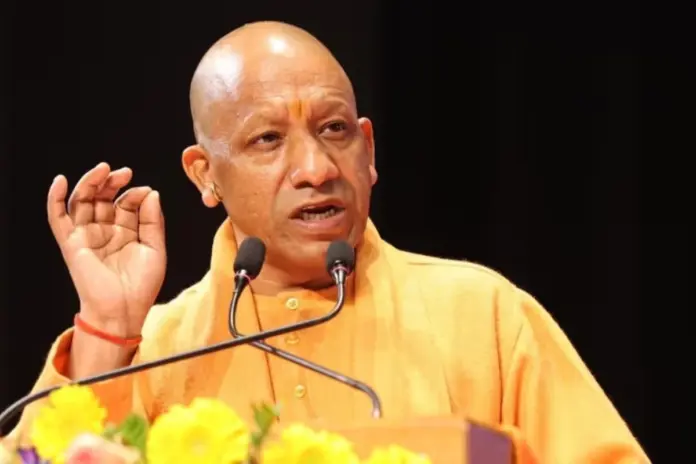
CM Yogi Adityanath: On the occasion of World Water Day, Yogi Adityanath urged citizens to treat water conservation as a collective responsibility.

He stressed that every drop of water is precious and must be protected through conscious efforts at both individual and community levels.

Emphasis on Sustainable Usage

The Chief Minister highlighted the importance of using water wisely in daily life, warning that unchecked wastage could lead to serious challenges in the future.

He encouraged people to adopt simple practices such as reducing unnecessary usage, fixing leaks, and promoting rainwater harvesting to ensure long-term sustainability.

Government’s Ongoing Efforts

The Uttar Pradesh government has been implementing several initiatives aimed at water conservation, including pond rejuvenation, river cleaning, and groundwater recharge projects.

Officials say these measures are part of a broader strategy to secure water resources for future generations while supporting agriculture and urban needs.

Public Participation Key to Success

Yogi Adityanath emphasized that government efforts alone are not enough. He called on citizens, communities, and institutions to actively participate in conservation drives.

He noted that real change can only happen when people adopt water-saving habits in their everyday lives.

A Message for the Future

CM Yogi Adityanath: The message on World Water Day serves as a reminder of the growing importance of water security.

By promoting awareness and shared responsibility, the state aims to build a culture of conservation—ensuring that water remains available for both present and future generations.

“Whenever Gurudev visits Delhi, the entire city comes alive with a renewed vibrance”— Smt. Rekha Gupta, Honourable Chief Minister, New Delhi

Gurudev Sri Sri ravi Shankar

Delhi was the global centre of devotion, science and community across a landmark weekend as global humanitarian and spiritual master Gurudev Sri Sri Ravi Shankar presided over two historic events, a sacred Durga Homa at Dhyan Chand Stadium and the world’s largest Bhajan Clubbing event at Jawaharlal Nehru Stadium. The Honourable Chief Minister of New Delhi, Smt. Rekha Gupta, graced Sunday’s event as Chief Guest.


21 March : Durga Homa, Gantanad and 12,000 Voices Pray for Peace
On Saturday evening, Dhyan Chand Stadium became a powerful confluence of ancient wisdom and modern inquiry. The Durga Homa, a Vedic ritual invoking inner strength, courage and the dissolution of fear and ignorance, was accompanied by Gantanad, the collective ringing of temple bells by thousands, and the chanting of the Devi Kavacham by 12,000 voices in unison during the ongoing Chaitra Navaratri.
In a first-of-its-kind effort, scientific studies were conducted alongside the Homa in collaboration with AIIMS and ICMR, with monitoring support from Max Hospital. One study measured environmental parameters and microbial content before and after the ritual; the other tracked physiological changes — heart rate, blood pressure, respiratory rate, oxygen levels and well-being indices, in approximately 100 participants, generating empirical data on the measurable impact of these ancient practices.


22 March – 75,000 Sway as One: World’s Largest Bhajan Clubbing Event
Sunday evening saw Jawaharlal Nehru Stadium come alive as over 75,000 youth swayed and clapped in unison to beloved Art of Living bhajans in the presence of Gurudev, a spectacle that set a new benchmark for devotional gatherings worldwide. Organised by the Safe Shop, the event offered Delhi’s Gen Z a vibrant, substance-free space for social connection, emotional release and inner renewal.
In an address that wove together ancient wisdom and contemporary relevance, Gurudev Sri Sri Ravi Shankar spoke to the hearts of the 68,000 gathered youth. Reflecting on the unique spirit of Delhi, he remarked: “Ever since you all have gathered here, it is the entire city of Delhi that has come alive with renewed energy.”
Drawing from ancient Sanskrit wisdom – “Bhukshitaḥ kim na karoti pāpam?” (What sin will a hungry person not commit?), Gurudev underscored the importance of building economic activity on the foundation of dharma. “If we build our economic activities on the foundation of dharma, not only do we flourish, but the nation flourishes and society is uplifted,” he said.
Gurudev reminded the gathering of the balance needed in modern life: “Life, like a tree, needs both, “roots that are old, and leaves that are fresh.” He called upon all present to carry both industry and spirituality, modernity and tradition, as they move forward in life.

MoU: Leadership Excellence Associate Program for Safe Shop
The weekend’s celebrations were anchored by the signing of a Memorandum of Understanding between Sri Sri University and Safe Shop, launching the Leadership Excellence Associate Program — a transformative curriculum designed exclusively for Safe Shop associates. The programme covers personality development, skill training, leadership capabilities, mind management, and the Art of Living’s core practices of pranayama and Sudarshan Kriya, with modules specially designed and delivered by Sri Sri University to ensure a holistic blend of professional knowledge and inner well-being. The partnership also opens pathways to formal certifications and degree programmes for associates.

Businesspersons’ trust in Bhagwant Mann Govt evident as ₹111.16 crore recovered under OTS scheme from key districts

Cheema

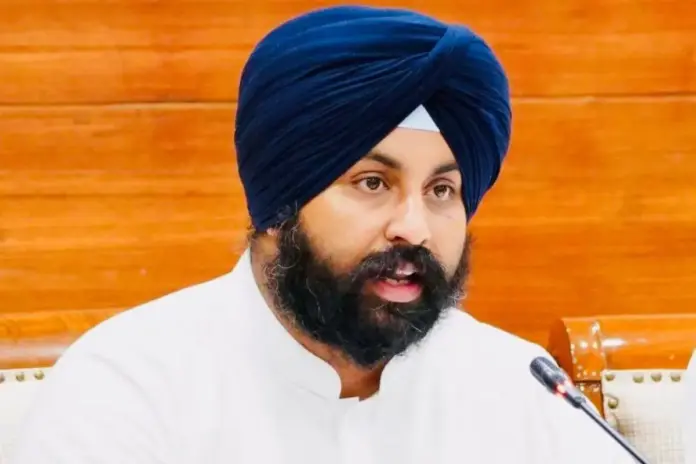
Punjab Finance Minister Advocate Harpal Singh Cheema on Sunday said the One-Time Settlement (OTS) Scheme for VAT arrears has witnessed an overwhelming response, with 7,845 applications covering dues of around ₹298.39 crore and ₹111.16 crore already recovered. Positioning it as a decisive push to clean up legacy tax burdens while boosting revenue, he warned that the relief window closes on March 31, after which the government will shift to strict recovery mode, with nearly 8,000 properties already identified for action.

Finance Minister Harpal Singh Cheema stated, “The scheme has already resulted in a total realisation of ₹111.16 crore. The active participation from the Ludhiana, Amritsar, Jalandhar, Patiala, and Ropar divisions is commendable. The strong response from these key districts demonstrates a growing awareness of the scheme’s immense financial benefits.”

Issuing a strong appeal, he said, “All eligible taxpayers must step forward and contribute to the state’s growth as the scheme approaches its definitive conclusion on March 31, 2026. Businesspersons must not miss this last opportunity to resolve pending VAT arrears and seamlessly align with the state’s taxation frameworks before the OTS window closes permanently. The unprecedented leniency and substantial waivers offered under this scheme are strictly time-bound.”

Encouraging taxpayers to utilise the final window, he cautioned, “The state government’s current posture of facilitation and waiver will naturally transition back to strict statutory compliance and uncompromising recovery protocols once the deadline lapses, leaving unresolved legacy accounts subject to standard regulatory scrutiny without the shield of these concessions.”

The Finance Minister added that after 31st March 2026, recovery proceedings will be carried out in accordance with the provisions of law in cases where dues remain unpaid. As part of preparedness, approximately 8,000 properties have already been identified for necessary action, wherever required.

Emphasising the core philosophy, Harpal Singh Cheema said, “The overwhelming response to the OTS scheme reflects the trust of taxpayers in the transparent and business-friendly policies of the CM Bhagwant Singh Mann-led Punjab Government. This initiative is aimed at providing relief, reducing litigation, and strengthening the State’s revenue system.” He further added that the scheme was specifically designed to offer a golden opportunity to settle old VAT liabilities with substantial relief in interest and penalties, enabling businesses to start afresh with a clean financial slate.

Bhagwant Mann Govt’s Universal Healthcare Model Surpasses Ayushman Bharat, Covers Every Family Without Conditions

CM Mann

At a time when rising medical costs continue to push Indian families into financial distress, a stark contrast is emerging in how healthcare is being funded and delivered. While the Centre’s Ayushman Bharat allocates ₹9,500 crore for a population of 140 crore, Punjab’s Mukh Mantri Sehat Yojna commits ₹2,000 crore for just 3 crore residents, translating into nearly ten times higher investment per person.

The difference is not just financial, but structural. Where the national scheme limits both eligibility and coverage at ₹5 lakh, Punjab’s model extends ₹10 lakh cashless healthcare to every resident without conditions. Under the leadership of Chief Minister Bhagwant Singh Mann, the Punjab Government has positioned universal healthcare not as a targeted benefit, but as a guaranteed right, ensuring that access to treatment is determined by need, not by inclusion in a government list.

For most Indian families, a medical emergency brings two immediate worries: how quickly treatment can begin, and how the cost will be managed. Addressing both concerns through a universal approach, the Punjab Government under the leadership of CM Bhagwant Singh Mann has allocated ₹2,000 crore in the 2026–27 Budget for the Mukh Mantri Sehat Yojna (MMSY), extending cashless health coverage of up to ₹10 lakh per family to nearly 3 crore residents across 65 lakh families.

Unlike targeted schemes such as Ayushman Bharat, the Punjab model is built on universal coverage, ensuring that every resident is included without eligibility barriers.

The difference between the two approaches is fundamental. MMSY does not ask who qualifies. Every resident of Punjab is covered, regardless of income. Ayushman Bharat, launched in 2018, is limited to families identified as economically vulnerable through the SECC database. A large section of the population, particularly the lower and middle-income groups not captured in that database, continues to remain outside its ambit.

The extent of coverage further highlights this gap. Ayushman Bharat has offered ₹5 lakh per family per year since its launch, a limit that has remained unchanged despite rising healthcare costs. MMSY doubles this coverage to ₹10 lakh, while also extending protection to families who were previously excluded from government-backed healthcare altogether.

The difference is equally visible in financial commitment. The Central Government’s allocation of ₹9,500 crore for a population of 140 crore contrasts with Punjab’s ₹2,000 crore for 3 crore residents. On a per capita basis, Punjab’s investment is significantly higher, reflecting a clear prioritisation of accessible and comprehensive healthcare.

MMSY also expands the scope of treatment. Beneficiaries can access cashless care for a wide range of serious conditions, including heart disease, cancer, kidney ailments, orthopaedic procedures, and accident-related injuries, across 2,300 treatment packages. In comparison, Ayushman Bharat covers around 1,900 packages. The underlying principle is clear: treatment decisions are driven by medical need, not financial capacity.

The process of accessing the scheme marks another shift. Under Ayushman Bharat, families must first verify whether they are listed in the SECC database, and those excluded must navigate additional documentation to establish eligibility. In contrast, MMSY simplifies access. Residents can enrol at Seva Kendras or Common Service Centres, or apply online using Aadhaar or Voter ID, without the need for income certificates or occupation proof. To ensure wider reach, trained youth club members are conducting door-to-door campaigns, helping families register and receive their Sehat Cards at home.

For families previously outside the scope of government healthcare, the impact is already visible. In Moga, a 98-year-old woman, Mukhtiar Kaur, received specialised treatment, including chemotherapy-related care, fully covered under the scheme. At an age where continuity of care is critical, access through the Sehat Card ensured that treatment began without delay or financial stress.

Minister of Health and Family Welfare Dr. Balbir Singh said the scheme reflects a deliberate shift in policy direction. “Under the leadership of Chief Minister Bhagwant Singh Mann, the Mukh Mantri Sehat Yojna is built on a clear approach, that healthcare coverage should extend to every resident, not just a selected few. With higher per-person investment, Punjab is ensuring that access to treatment is defined by need, not eligibility or income,” he said.

With more than 9 lakh Sehat Cards already issued, beneficiaries are accessing treatment across a growing network of 900 empanelled hospitals, expanding the reach of healthcare across Punjab.

In a country where a single hospital bill can push families into debt, the contrast is no longer just administrative, it is philosophical. One model limits care through eligibility lists; the other guarantees it as a public right.

AAP Govt laying strong network of world-class roads across Punjab, CM Bhagwant Singh Mann lays foundation stone for 300 km of new roads

Bhagwant Mann

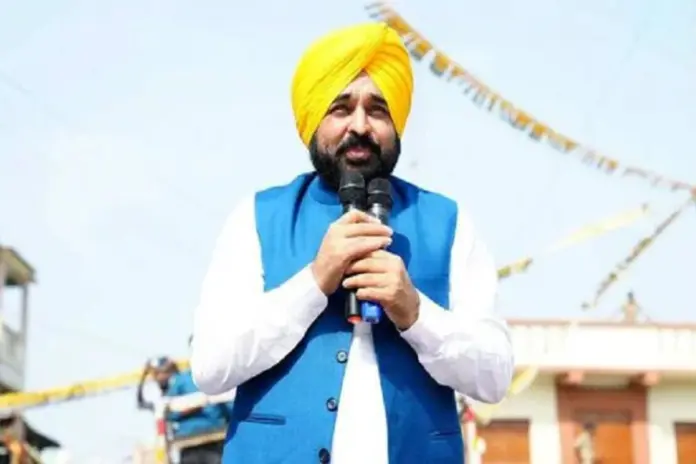
Rolling out an expansive network of world-class roads across Punjab, the Aam Aadmi Party (AAP) Government has accelerated its infrastructure push with Punjab Chief Minister Bhagwant Singh Mann laying the foundation stone for 300 km of new roads and initiating repair work for 350 km in Jalalabad, Fazilka. The Chief Minister asserted that the era of corruption-driven, poor-quality construction is now firmly behind the state.

Positioning this as part of a massive 43,000 km road network being built across Punjab, CM Bhagwant Singh Mann underlined that strict accountability will ensure durability, announced plans to eliminate electricity poles through underground wiring, and expressed confidence that a satisfied electorate will return the government with a decisive mandate.

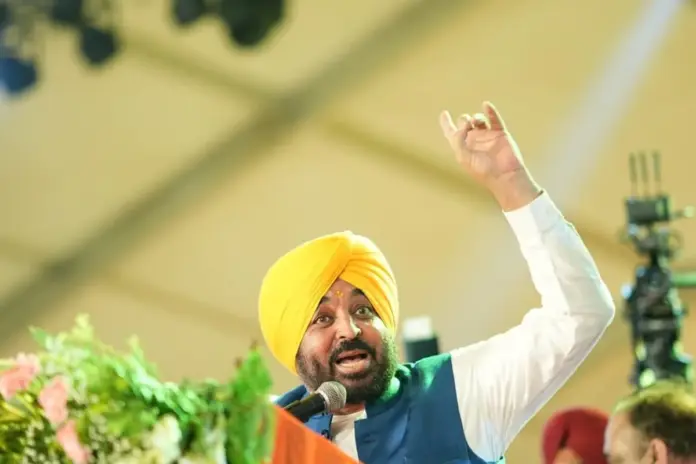
Addressing the rally, Punjab Chief Minister Bhagwant Singh Mann said, “In the last four years, the state government has done more work than others did in 70 years. The state government is moving forward, and in 2027, the state will take this development to the next level. The development is coupled with a number of pro-people policies aimed at ensuring the well being of the common man.”

Expressing confidence in public support, he added, “It is a writing on the wall that with the active support of the common man, the Aam Aadmi Party will again form the government in 2027. Owing to the pro-people and development oriented policies of the state government, we will again win more than 100 seats in the ensuing Vidhan Sabha polls. The massive support shown by the people is a testimony to this fact that people are waiting to teach traditional parties a lesson by again showing them the door.”

Highlighting the contrast with opposition parties, CM Bhagwant Singh Mann said, “The AAP government is working tirelessly for welfare of people whereas the opposition has always sought share in the successful ventures during their days in power.” He added, “These leaders want to ruin the state by patronizing drugs and criminals due to which people had ousted them from power. Now all these anti-Punjab forces have joined hands to ruin Punjab and the time has come when Punjabis should also join hands to show them the door.”

Taking a dig at the Akali Dal, he said, “The real name of this gimmick of Akali Dal is ‘parivar bachao yatra’. After looting the state for 15 years, from whom are they trying to save Punjab? Akalis have plundered the state mercilessly, bruised the psyche of Punjabis emotionally and patronized several mafias.” He added, “People are well aware of the dubious character of the Akalis and Badal family due to which their theatricals won’t work now.”

The Chief Minister further said, “These leaders had patronized the gangsters in the state and infused drugs in the veins of the youth by shielding the drug smugglers. Akali Dal has always misused religion for their vested political interests but this time people will not get swayed away by it. The Akali leadership is building castles in the air to mislead the people of the state, but Punjabis will not fall prey to it.”

Targeting the Congress, CM Bhagwant Singh Mann said, “Congress leaders are daydreaming to assume power in the state. The Congress party is a divided house that will collapse due to their infighting. It is a pity that top Congress leaders are squabbling for power and have no vision for the state. Their only aim is to plunder the wealth of Punjab by assuming power, but their dreams will never be fulfilled.” He added, “Earlier these traditional parties just waited for their turn to grab power but now the broom is there to clean the mess created by these parties.”

Announcing a major welfare initiative, he said, “The state government has started Maavan Dhian Satkar Yojana under which every woman will be entitled for ₹1,000 per month and ₹1,500 per month for women belonging to Scheduled Castes. Funds will be directly transferred to bank accounts and women already receiving social security pensions will also be eligible. Around 97% of women in Punjab are expected to benefit and the state government has allotted ₹9,300 crore in the budget. Registration will begin from April 13.”

Responding to criticism of the scheme, CM Bhagwant Singh Mann said, “Those who are mocking the state government over the launch of the scheme or are raising baseless queries don’t know the value of ₹1,000 for the common man. These people who spend more than ₹5,000 per meal from illegally minted money don’t value this amount, which is a big financial assistance for those who have to work hard even on festivals. The wives of these affluent leaders don’t need ₹1,000 as they spend more on cosmetics.”

On infrastructure, he said, “The AAP Government has embarked on a major program for repair of link roads across the state. There are a total of 43,000 kilometers of link roads and the state government has launched a project for their repair and upgradation. Along with repairing these roads, their maintenance will also be carried out for the next five years.”

Highlighting regional development, CM Bhagwant Singh Mann said, “It is a matter of immense pride and satisfaction that this development meeting has been transformed into a massive rally. Punjab has seen a massive transformation in the last four years as water has reached areas where it hadn’t for 50–60 years.” He added, “This is a border area where professionals like doctors and teachers hesitate to serve, which is why the state government has made it mandatory for them to serve at least two years in border areas.”

He further said, “These teachers and doctors will receive extra allowance and additional points for promotions. The children of this region are extremely talented.” Sharing an anecdote, he added, “In 2008–09, I visited Donana village where a girl topped Punjab in 5th grade. Her family couldn’t afford further education, so I arranged sponsorship and got her admitted to Baru Sahib Academy. When veterinary doctors were appointed, she was among them.”

Emphasising opportunity creation, the Chief Minister said, “This proves that our children are not lacking, only opportunities are missing, and the state government is now providing these opportunities.” He added, “Earlier leaders like Sukhbir Badal were MLAs and even Deputy Chief Ministers from this region but no real work was done. They deliberately kept people poor so that voters would ask only for small favors during elections. They called this region ‘tail end’, but I consider it the ‘frontline’.”

Criticising past governance, CM Bhagwant Singh Mann said, “This area has small shopkeepers, traders and farmers. People voted massively for traditional parties in the past, but previous governments looted Punjab. These leaders drained resources like parasites and even today they have no agenda, only hunger for power. They try to outdo each other in abusing me and sending videos to their high command for mercy.”

Outlining achievements, he said, “The state government has provided free electricity to 90% of households, jobs to over 65,000 youth without corruption, improved roads, closed toll plazas saving ₹70 lakh daily, and is building infrastructure. The tax money of people belongs to the state and we are judiciously spending it on their welfare. People’s money is coming back to them through development, schools, hospitals and roads.”

He added, “Earlier this money was misused due to corruption, but now we have checked these pilferages for the well being of the people and the state.” Highlighting a breakthrough, CM Bhagwant Singh Mann said, “The state government has traced the 22 km long Sarhali Minor canal in the Majha region which was buried underground. This canal is now operational due to the concerted efforts of the state government.”

On irrigation reforms, he said, “Bhakra Canal has a capacity of 9,500 cusec, but due to our efforts supply of 10,000 cusec has been ensured. In that sense, the state has carved out a new Bhakra canal without acquiring even a single inch of land.” He added, “For decades farmers drew water from Ferozepur and Sirhind canals in rotation, but for the first time this system has ended, providing major relief.”

On groundwater recovery, CM Bhagwant Singh Mann said, “Groundwater extraction rate has reduced from 61.49% in 2022 to 31.6% in 2025. Groundwater has recharged up to 4 metres in several villages, which is heartening.”

Looking ahead, he said, “This is the result of honest governance and in the coming times we aim to implement underground electricity lines across Punjab. This will make fields cleaner, prevent accidents and ensure better supply. If the pilot succeeds, it will be expanded.”

Reiterating his government’s approach, CM Bhagwant Singh Mann said, “People used to say nothing would change, no jobs, no roads, no development, but we have proven them wrong.”

Cabinet Ministers, MLAs and other dignitaries were also present on the occasion.

Diabetes Control Tips: Celebrity Nutritionist Suggests Gond Katira (Tragacanth Gum) For High Blood Sugar – Here’s How To Make This Natural Drink

Diabetes Control - Gond Kathira Drink To Control Blood Sugar
Photo Credit: X

Diabetes Control Tips: Managing blood sugar levels has become a daily challenge for many people. With diabetes cases rising every year, people are now looking for natural ways to support their health along with medicines and diet control. From herbal drinks to traditional remedies, many old methods are becoming popular again. Recently, celebrity nutritionist Shweta Shah shared one such simple remedy that may help in diabetes control. In a video on Instagram, she talked about using Gond Katira (a natural edible gum) and explained how it can be consumed as a drink.

Before trying any natural remedy, experts always advise understanding how it works and using it in the right way. Here is what the nutritionist said and why this ingredient is commonly used in traditional health practices.

Diabetes Control Tips: Nutritionist Explains How Gond Katira May Help

Gond Katira, also known as Almond Gum or Tragacanth Gum, is a natural edible gum obtained from the sap of the plant Astragalus gummifer. It is widely used in India, especially during summer, because of its cooling nature. When soaked in water, it turns into a soft, jelly-like substance that is tasteless and odourless.

Celebrity nutritionist Shweta Shah shared a simple method to use it for diabetes control. She said, “If your blood sugar level increases again and again, then I will tell you one natural hack. That is Gond Katira. Many of you may know it by different names, but it is a natural edible gum often used in traditional remedies.”

She further explained the method, “What you need to do is take one tablespoon of Gond Katira and soak it in one glass of water. Leave it for some time so that it dissolves properly. After soaking, it becomes thick and looks like crushed ice or jelly. Then take one spoon of this soaked Gond Katira, mix it in water, and drink it. It may help in improving insulin resistance and can also support better sugar control. Moreover, it has cooling properties and is considered helpful for overall health.”

She also advised caution and said that this is a natural remedy, but you should always consult your doctor before trying it regularly, especially if you already have diabetes or are taking medicines.

Benefits Of Gond Katira And Why It’s Used In Traditional Remedies

Gond Katira has been used for many years in home remedies and summer drinks. According to nutrition experts and traditional health practices, it is valued for its cooling and soothing properties.

Some common benefits often mentioned are:

  • Cooling effect on the body: It helps prevent heatstroke and dehydration, which is why it is added to summer drinks.
  • Supports digestion: It is believed to help in improving gut health when taken in small amounts.
  • May help in diabetes control: As mentioned by the nutritionist, it may support insulin response when combined with a healthy lifestyle.
  • Hydration support: When soaked, it absorbs a lot of water and helps keep the body hydrated.
  • Natural and easily available: It can be found in local grocery stores, especially during the summer.

Experts say that natural remedies like Gond Katira may support health, but they should not replace proper medical treatment. A balanced diet, regular exercise, and a doctor’s advice are still the most important parts of diabetes control.

If you are planning to try this drink, use it in moderation and always consult a health professional, especially if your blood sugar levels are already high.

Disclaimer: This content is for general information only and not a substitute for professional medical advice. DNP India neither confirms nor denies the claims. Always consult a doctor before following any suggestions, treatments or diets.

Tea Side Effects: Addicted To Chai? AIIMS Doctor Reveals Hidden Dangers Of Daily Intake — 3 Reasons To Cut Down Today

Tea Side Effects - Iron Absorption, Gas, Kidney Stones
Photo Credit: Created with Gemini

Tea Side Effects: For many people, the day does not start without a cup of tea. From morning chai to evening breaks, tea is one of the most commonly consumed drinks in India. While tea has some health benefits, drinking too much of it every day may not be good for your body.

Recently, an AIIMS doctor explained why reducing tea intake can help avoid several health problems. Her video is now getting attention on social media, especially among people who drink tea multiple times a day.

Tea Side Effects: AIIMS Doctor Explains Why Too Much Tea Can Harm Your Body

AIIMS doctor Priyanka Sehrawat shared important health advice in a recent Instagram video. She said, “Tea is made on gas, and when we drink too much tea, it can also cause gas in our stomach. So it is better to reduce tea or even stop it if possible.”

She further explained that one of the main tea side effects is related to iron absorption. According to her, “The second reason to reduce tea is that tea contains tannin-like molecules, which reduce the absorption of iron in the body. Many people say that their haemoglobin level never increases beyond a certain point. One reason is that iron in the diet is already low, and on top of that, drinking too much tea stops the body from properly absorbing whatever iron you consume. This is another important reason to reduce tea intake.”

The doctor also warned about the risk of kidney stones. She said, “The third reason is that tea contains oxalates, which can combine with calcium in the body and may lead to kidney stones. So these are three main reasons to reduce or stop drinking too much tea.”

She advised that people who drink tea many times a day should slowly cut down the quantity instead of stopping suddenly.

Other Side Effects Doctors Often Talk About

Apart from these three reasons, health experts also mention other problems linked to excessive tea drinking. According to the World Health Organisation and several nutrition studies, too much caffeine intake can affect sleep, digestion and heart rate.

Some common tea side effects include:

  • Acidity and bloating: Drinking tea on an empty stomach may irritate the stomach lining.
  • Low iron levels: As mentioned by doctors, tannins in tea can reduce iron absorption.
  • Sleep problems: Too much caffeine may lead to poor sleep or restlessness.
  • Kidney stone risk: Oxalates in tea may contribute to stone formation in some people.
  • Dependency on caffeine: Drinking tea many times a day can make the body dependent on it.

Experts say tea is safe when taken in limited amounts, but drinking it too often can slowly affect health. If you feel gas, weakness or low haemoglobin despite eating well, reducing tea intake may help.

So, if you are addicted to chai, it may be the right time to cut down and give your body a break.

Disclaimer: This content is for general information only and not a substitute for professional medical advice. DNP India neither confirms nor denies the claims. Always consult a doctor before following any suggestions, treatments or diets.

Vivo Y11 5G Challenges Vivo Y21 5G with Focus on Battery Life and Smooth Performance in Daily Use

Vivo-Y11-5G

The Vivo Y11 5G is taking center stage and competing directly against the Vivo Y21 5G in the entry-level smartphone market, where consumers are most concerned about having a long battery life and being able to use their phone without any lag during day-to-day activities. Both phones also strive for a balance between providing the user with reliable performance and being budget-friendly.

Battery Life Becomes the Deciding Factor

The Vivo Y11 5G has a large 5000 mAh battery that is built to provide enough power to last through a user’s entire day of moderate to heavy use. Users who stream and browse social media or perform similar activities will now see less time that they have to spend charging their device during the day.

The Vivo Y21 5G also has a battery capacity that is roughly the same as that of the Vivo Y11 5g; however, real-world battery life will depend on the optimisation of the operating system and the efficiency of software. From the impression of how the two phones have performed thus far, the Vivo Y11 5G will likely provide slightly better battery management than the Vivo y21 5G.

Smooth Performance for Everyday Tasks

With each product category increasingly competitive, the Vivo Y11 5G’s emphasis on providing a seamless everyday experience when performing tasks such as browsing, texting and light gaming has led to the phone’s hardware and software being designed to minimise lag.

While the Vivo Y21 5G has more than enough power to complete everyday tasks with consistency, it may not perform as consistently when multitasking heavily. Therefore, if you’re someone who values consistency then the Y11 5G is definitely the more polished option.

Design, Display, and User Experience

Both phones come with the same sleek design and user-friendly interface that Vivo has been known for. Display specifications are comparable between both phones; however, where you will see the greatest difference between these two devices is in the optimization of the phone rather than the raw hardware.

Vivo Y11 5G vs Vivo Y21 5G: What This Means for Buyers

What this means for users is that the Vivo Y11 5G can be seen as a practical upgrade for those who need their phones to deliver reliably on battery life and provide a smooth user experience using everyday functions, instead of being distracted by flashy features or excessively aggressive pricing.

Vishal Dadlani MOCKS Dhurandhar 2 With REAL Details On Demonetisation, Terrorist Attacks – ‘Watch Films For Fun But…’

Vishal Dadlani Mocks Ranveer Singh starrer Dhurandhar 2
Photo Credit: X

The success of Dhurandhar 2 at the box office has been massive, but the film is also facing strong reactions online. While many viewers are praising the action drama, some critics have called it propaganda because of its political references. Now singer-composer Vishal Dadlani has shared posts on social media that many believe are aimed at the Ranveer Singh starrer, especially its demonetisation storyline.

Directed by Aditya Dhar, the film has created discussion for linking real-life events with a fictional spy mission. Without directly naming the film, Vishal posted facts about demonetisation and terror attacks and his comments quickly caught the attention of fans.

Vishal Dadlani REACTS To Dhurandhar 2 Demonetisation Storyline

On Saturday, Vishal Dadlani shared a series of Instagram stories that appeared to question the way demonetisation was shown in Dhurandhar 2. In the film, the 2016 demonetisation announcement by Prime Minister Narendra Modi is presented as part of a secret mission called Operation Green Leaf. In the story, the move is shown as a planned strategy to break terror funding networks linked to Pakistan.

Vishal posted a statement that read, “The high percentage of cash return led to widespread analysis that the move failed to permanently eliminate a large portion of black money from the economy, as intended.”

Along with this, he added his own note saying, “In light of the new BS doing the rounds, it’s important to remember that…A film is just entertainment. Facts are facts no matter what.”

He then shared more details related to terror incidents after demonetisation. The statement said, “Terror attacks and violence in India continued after the 2016 demonetisation, with major incidents like the 2019 Pulwama attack and ongoing border disturbances. While aimed at curbing terror funding, analysis indicates aggregate terror incidents remained unchanged, showing varied impacts: capital-intensive attacks fell in the Northeast while Left-Wing Extremism areas showed no disruption.”

He also added a short message of his own and wrote, “Watch films for fun, but get your information from better sources.”

Although Vishal did not mention Dhurandhar 2 directly, he used the song “Jaiye Sajana” by Satinder Sartaaj in one of the posts, which many fans felt was a clear hint towards the film.

Film’s Story And Controversy Explained

Dhurandhar 2 works as both a sequel and an origin story. The film follows Ranveer Singh’s character Hamza Ali Mazari, also known as Jaskirat Singh Rangi, who is shown fighting a powerful terror network. The story also explores his past and connects several real-life incidents with the fictional mission.

In the film, demonetisation is shown as “Operation Green Leaf”, a secret plan to destroy fake currency and stop terror funding. The narrative also refers to major events like the Uri attack, the 26/11 Mumbai attacks, and the 1999 Kandahar hijacking. Because of this mix of fiction and real history, the film has sparked debate among viewers. Some see it as a strong patriotic story, while others feel it presents a political viewpoint.

Apart from Ranveer Singh, the film also stars Arjun Rampal, R Madhavan, Sanjay Dutt, Sara Arjun and Rakesh Bedi in important roles. Released on March 19, the film has performed exceptionally well and crossed the Rs 300 crore net mark in India within just three days.