
- Advertisement -
Home Blog Page 64

Priyanka Chaturvedi: ’Slap on the Face….’ Shiv Sena UBT MP Castigates SM, BCCI After Pakistan Announces T20 World Cup 2026 Match Boycott Against India

T20 World Cup 2026
Google

The Pakistan government announced its decision to boycott the T20 World Cup 2026 match against India which has received strong political and sports reactions across all segments of society. The most vocal response came from Shiv Sena UBT MP Priyanka Chaturvedi who described the boycott as a “slap on the face” of Indian cricket and its governing bodies.

Priyanka Chaturvedi’s Strong Reaction

Priyanka Chaturvedi accused both the Sports Ministry SM and the Board of Control for Cricket in India BCCI because they damaged India’s cricketing diplomacy and sports relationship maintenance efforts. She expressed her disappointment over Pakistan’s unilateral decision which she described as a blow to cricket fans and the spirit of the game.

The Context: Pakistan Boycott of T20 World Cup 2026

Pakistan’s announcement came as a surprise to the cricketing world, raising questions about political tensions affecting international sports. The boycott means Indian fans might miss out on what is typically one of the most anticipated matches of the tournament, and it highlights the fragile nature of sporting relations between the two nations.

Political and Public Reactions

The decision has sparked debates on social media and news platforms, with many supporting Priyanka Chaturvedi’s stance. She urged the government and BCCI to take a strong stand against such politically motivated decisions, emphasizing that cricket should remain a unifying sport, free from diplomatic disruptions.

Impact on Cricket and Fans

The boycott is likely to impact ticket sales, broadcast viewership, and overall fan engagement, as India-Pakistan matches are among the most-watched and celebrated events in world cricket. For players, it also affects the competitive spirit and preparation, as India now has to adjust its strategies and schedules accordingly.

Epstein Files: ’I Would Be Smeared….’ Epstein Files : Elon Musk Denies Wrongdoing Amid Raging Controversy, Defends Transparency Push

Epstein Files
Google

Elon Musk has publicly addressed references to his name in the recently released Epstein files, firmly denying any wrongdoing and emphasising his commitment to transparency. The files, released by the U.S. Department of Justice in late January 2026, have attracted global attention for mentioning numerous high-profile figures.

Massive File Release

The Epstein Files Transparency Act, signed by former President Donald Trump, mandated the release of nearly 3 million pages of documents. Delayed past the December 19, 2025, deadline, the release includes emails, videos, and photographs. High-profile names mentioned include Elon Musk, Bill Gates, and several other business and political leaders. The files provide new insight into Jeffrey Epstein’s network and operations, but also raise concerns about the misinterpretation of correspondence.

Musk’s Clarification

Taking to X, Musk stressed that he had consistently pushed for the files’ release and welcomed the transparency. He described his interactions with Epstein as limited, consisting only of minimal correspondence. Musk said he repeatedly declined invitations to Epstein’s private island and the “Lolita Express” plane, anticipating that critics might try to twist his emails to suggest wrongdoing.

Strong Denials

Musk categorically denied attending any parties, flying on Epstein’s plane, or visiting his island. Instead, he highlighted his focus on holding accountable those responsible for underage exploitation. He expressed frustration over personal attacks but reiterated that his priority remains prosecuting serious crimes rather than defending himself against baseless allegations.

Chappell Roan Scripts History! Takes Fashion Dressing to the Next Level, Goes Topless on Red Carpet in Grammys 2026

Chappell Roan
Google

Chappell Roan made one of the most talked-about entrances at the 2026 Grammy Awards, redefining red-carpet risk with a dramatic Mugler creation that blended archival inspiration with contemporary performance fashion. The look instantly dominated social media and fashion commentary, cementing her reputation as an artist unafraid to challenge convention.

A Mugler Look Rooted in Couture History

Roan’s gown was inspired by Thierry Mugler’s 1998 haute couture collection, often remembered for its provocative take on lingerie as outerwear. Crafted in merlot-toned silk georgette, the dress created the illusion of nudity while relying on intricate construction rather than excess embellishment. The design was suspended using statement nipple-ring detailing, a direct nod to Mugler’s theatrical approach to the female form, while still adhering to red-carpet norms through careful styling.

Styling Choices and Dramatic Reveal

Adding an element of performance, Roan arrived wearing a removable cape that offered a moment of modesty before she shed it on the carpet. Temporary tattoos across her chest and back enhanced the sculptural quality of the outfit, while her curled and braided hair echoed the deep wine hue of the dress. The overall styling balanced shock value with intention, making the look feel curated rather than chaotic.

Grammys Night Context

The appearance took place at the 68th Grammy Awards on February 1, 2026, at Los Angeles’ Crypto.com Arena. Roan entered the night as a major contender, nominated for Record of the Year and Best Pop Solo Performance for her track “Subway.” The bold fashion moment followed her 2025 Best New Artist win, signalling her continued evolution from breakout star to cultural force.

Fashion World and Social Media Buzz

The reaction was swift and intense. Fashion critics praised the look as a respectful yet fearless reinterpretation of ‘90s runway heritage, while online audiences debated its boundaries and symbolism. Many noted how Mugler’s archival language felt newly relevant through Roan’s confident presentation.

Will Skipping India at T20 World Cup 2026 Prove Costly to PCB? Here’s Why Pakistan Could Pay a Heavy Price

T20 World Cup 2026
Google

T20 World Cup 2026: Pakistan’s decision to skip its T20 World Cup 2026 match against India has shocked cricket fans and put the Pakistan Cricket Board (PCB) at risk. The game, scheduled for February 15 in Sri Lanka, is one of the tournament’s most-watched and commercially important matches. While Pakistan will play other fixtures, this boycott has drawn criticism from the International Cricket Council (ICC).

ICC Warns Over Rules Breach

The ICC says all teams must play their scheduled matches. Skipping a game, especially one as high-profile as India vs Pakistan, could break tournament rules. The board could face fines or restrictions on future events. Officials warn that missing the match undermines competition fairness.

Huge Financial Risks

The financial stakes are huge. India-Pakistan games generate massive revenue from TV rights, sponsors, and ads. By skipping the match, Pakistan could lose between $34 million and $50 million. Broadcasters might also demand compensation, adding up to another $38 million. The PCB signed agreements to play all matches, so the boycott could trigger legal and financial penalties.

Impact on Pakistan’s Chances

Forfeiting the match gives India a win by default. This hurts Pakistan’s net run rate and reduces their chances of reaching the knockout stage. In a tight group schedule in Sri Lanka, every match matters. If both teams reach the finals, another boycott could hand India the trophy, making the stakes even higher.

Long-Term Consequences

The move could affect Pakistan cricket beyond this World Cup. The ICC could ban bilateral series, block player approvals for leagues like the PSL, or restrict Pakistan from future Asia Cup events. These steps would damage the PCB’s reputation and disrupt its cricket ecosystem.

Border 2 Box Office Collection Day 10_ Sunny Deol, Varun Dhawan Film Shines on Weekend, Worldwide Numbers Cross 370 Cr

Border 2 Box Office Collection Day 10
Google

Border 2 continues its strong run at the box office, proving that patriotic drama still connects deeply with audiences. On Day 10, the film witnessed a solid weekend jump, driven by positive word of mouth, emotional storytelling, and the powerful on-screen presence of Sunny Deol and Varun Dhawan. The result? A massive milestone as the film’s worldwide box office collection crosses ₹370 crore.

Sunny Deol’s Mass Appeal Still Works

Sunny Deol remains the backbone of Border 2. His larger-than-life screen presence, powerful dialogues, and emotional connection have struck a chord with fans across generations. For many viewers, his role evokes nostalgia for the original Border, adding emotional depth to the sequel’s success.

Varun Dhawan Adds Youth Energy

Varun Dhawan performance has played a key role in attracting younger audiences. His balance of action and emotion has been widely appreciated, helping the film expand its reach beyond the traditional patriotic-film audience. The Sunny–Varun combination has proven to be a strong box-office formula.

Border 2 Box Office Collection Day 10

According to Sacnilk On Day 10, Border 2 earned around ₹22.50 crore, showing a strong weekend boost. The jump in collections highlights solid audience interest, higher footfalls on Sunday, and the film’s continued momentum at the box office driven by positive word of mouth and patriotic appeal.

Worldwide Border 2 Box Office Collection Day 10: Box Office Crosses ₹370 Crore

The biggest highlight of Day 10 is Border 2 crossing the ₹ 370-crore global mark. Strong overseas collections, especially from markets with a large Indian diaspora, have added to the film’s impressive total. With steady domestic earnings and stable international numbers, the film continues to dominate the box office.

From Reforms to Growth and Politics to Fiscal, Budget 2026 Decoded Threadbare

Budget 2026
Google

The Union Budget shows government priorities and political goals through its numerical presentation, which serves as a budgetary representation. Budget 2026 follows the same pattern. The Budget attempts to manage multiple elements, which include permanent reforms and immediate financial control measures and its primary objective of economic growth together with its hidden political indicators. We will examine the document in its entirety.

From Reforms to Growth

Budget 2026 shows how the government is linking reforms directly with economic growth. Policy changes focus on simplifying systems, strengthening digital governance, and improving ease of doing business. These reforms are meant to create a stable environment in which industries can expand, infrastructure can grow, and jobs can be created. 

From Politics to Fiscal

Budget 2026 also reflects a careful balance between political expectations and fiscal responsibility. While the government addresses key voter groups through support for employment, MSMEs, and social development, it avoids excessive populist spending. At the same time, efforts to control the fiscal deficit and manage borrowing show a clear focus on economic discipline. This approach highlights a shift from short-term political gains to long-term fiscal stability.

The Middle Class Perspective

For the middle class and salaried taxpayers, Budget 2026 brings mixed reactions. There are limited direct tax benefits, which may disappoint many. However, indirect advantages come through better infrastructure, improved public services, and long-term economic stability.

Decoded Threadbare: What Budget 2026 Really Says

When Budget 2026 is decoded threadbare, it appears as a balancing act. Reforms are steady, long-run growth is planned, politics is subtle, and fiscal discipline is maintained cautiously. It may not deliver instant excitement, but it reflects a mature approach to economic management, one that values stability, patience, and sustainable progress over headline-driven populism.

Union Budget 2026–27: Education Between Intent and Institutional Reality

Kunwar Shekhar Vijendra

Union Budget 2026–27 has been presented at a time when India’s education system stands at a critical inflection point. Over the last few years, education has steadily moved from being viewed as a social obligation to being recognised as an economic and strategic asset. This year’s Budget reinforces that direction, but also brings into focus the deeper question that now confronts policymakers: can intent translate into institutional strength on the ground?

The overall macro framework of the Budget is disciplined and growth-oriented. With GDP growth projected at around 7 percent, moderate inflation, and a fiscal deficit targeted at 4.3 percent of GDP, the government has signalled continuity, stability, and reform momentum  . Education finds place within this broader vision of Viksit Bharat, youth-centric development, and people’s capacity building.

In absolute terms, education expenditure has been placed at ₹1.39 lakh crore, positioning it among the major heads of Union spending  . The intent to strengthen the education–employment–enterprise continuum is further reflected in the proposal to set up a High-Powered Standing Committee on Education to Employment and Enterprise, acknowledging services and skills as key drivers of future growth.

Several announcements merit attention. The proposal to develop five University Townships along major industrial and logistics corridors is a structurally important idea. If implemented well, it can anchor regional universities to industry clusters, research, and employment pathways, especially beyond metropolitan centres. Equally significant is the announcement of a girls’ hostel in higher education STEM institutions in every district, which directly addresses access, safety, and participation of women in advanced learning.

The Budget also places visible emphasis on emerging sectors that intersect with education—AVGC content labs in schools and colleges, design education through a new National Institute of Design in eastern India, allied health professionals, caregivers, sports education, and AYUSH institutions  . Together, these signal a widening imagination of education beyond degrees, towards employability, creativity, care, and services.

Yet, while intent is visible, the deeper institutional challenge remains unresolved.

Over the past few years, one persistent issue has been the gap between Budget Estimates and actual absorption, particularly in higher education and state-linked schemes. This Budget does not yet articulate a clear execution architecture to address that deficit. Regional universities—especially state universities and private institutions in Tier-II, Tier-III towns—continue to struggle with fragmented approvals, delayed releases, and compliance-heavy frameworks. Without predictable multi-year funding and simpler delivery mechanisms, even well-designed initiatives risk remaining aspirational.

Another concern is the silent cost burden on students. While core education services remain protected, allied services—hostels, transport, sanitation, digital infrastructure—continue to attract indirect taxes, raising the real cost of education for families. The Budget is progressive on ease of living and trust-based governance in many sectors, but education still awaits similar treatment in this regard.

On research and innovation, the Budget strongly supports manufacturing, frontier technologies, AI, semiconductors, and biopharma. However, universities are not yet explicitly positioned as the central pipelines for this innovation ecosystem. Globally, deep-tech leadership flows through strong university–industry research corridors. India’s ambition to be a technology creator will require more deliberate integration of public and private universities into national R&D frameworks.

The larger takeaway

Union Budget 2026–27 reinforces the right direction: youth-centric growth, regional development, and institutional reform. The opportunity now lies in execution depth. Strengthening regional universities, empowering rural and first-generation learners, and recognising private institutions as partners in national capacity building will determine whether this Budget delivers lasting transformation.

A developed nation is not built by announcements alone. It is built when budgets consistently strengthen institutions, convert learning into capability, and capability into shared prosperity.

Contributed by: Kunwar Shekhar Vijendra | Co-founder & Chancellor, Shobhit University, and Chairman, National Education Council, ASSOCHAM. He has been engaged in institution-building and education policy discourse, with a focus on regional universities, rural youth empowerment, and inclusive growth.

Union Budget once again betrayal for Punjab and Haryana farmers: Harpal Cheema

Harpal Cheema

Reacting to the Union Budget, Punjab Finance Minister Harpal Singh Cheema said that the Union government has once again ignored the legitimate concerns of Punjab and Haryana farmers, exposing its hollow claims of being pro-farmer. Cheema pointed out that there has been no increase in the Agriculture Infrastructure Fund nor any concrete assistance to strengthen market infrastructure, leaving the agrarian states in a state of disbelief.

He said that the farmer of Punjab feeds the nation, yet the Union government is continuously neglecting investment in systems that ensure food security. The Finance Minister also criticised the selective approach adopted to promote high-value crops. While the budget mentions crops like coconut, cashew, sandalwood and dry fruits, there is nothing for farmers in North India who depend on crops suited to their agro-climatic conditions. Harpal Singh Cheema said that this budget clearly shows the Centre’s bias and its continued indifference towards the farmers of foodgrain producing states, especially Punjab. These farmers deserve respect, support and appropriate investment, not empty slogans.

Punjab Finance Minister Advocate Harpal Singh Cheema said that there is nothing for Farmers of Punjab and Haryana in terms of increased allocation to Agriculture Infra Fund or strengthening Mandi Infrastructure in this Union Budget 2026. He added that States will have to do it from their own funds for the development. Talked about development of High-Value Crops but left out Punjab fully.

He said Urea Subsidy reduced from 1,26,475 Crore last year to 1,16,805 Crores. Nothing for “Aam Aadmi” in this budget, Zero tax relief in today’s times when incomes are not increasing and inflation is eating up savings of common man. Infact, Government of India has increased STT (Securities Transaction Tax) which will adversely affect common man. No relief on Long-Term Capital Gains since STT has been increased. It is like squeezing the common man from all sides.

Speaking on Defence he said we were hoping that Union FM would announce major schemes to make India stronger on Defence Production and meaningfully increase the Defence Budget in view of last year’s tensions with Pakistan. Nothing of that sort has happened. Total mention of defence was “Four (4)” Times in Union FM’s Speech.

Highlighting PM-Vishwakarma Scheme, he informed that launched with so much fan-fare last year to provide holistic, end-to-end support to traditional artisans and craftspeople, offering skill training. Budget reduced from 5,100 Crore to 3,861 Crore. On one side they say this budget is aimed at developing legacy industries and a Yuva-Shakti Budget ; then they cut budget for scheme meant exactly for this.

Speaking on 16th Finance Commission,he said the vertical devolution (total share of all states in tax pool) is kept at 41 percent. No change. Finance Commission has completely ignored the plight of states and failed to increase this share despite the fiscal stretch faced by states. Horizontal Devolution to Punjab increased to 1.996 percent from 1.807 percent in 15th Finance Commission. No Revenue Deficit Grants from 16th FC. 15th FC had recommended these grants. Conditions on SDRF are overly restrictive and will affect the State like Punjab’s ability to effectively mitigate and manage disasters. He added that No Mention of State in Budget Speech. They have completely forgotten about Punjab and Punjabis.

On Education front, it is very Uninspiring. He said Less than 10% Growth from last year (~8%) on Education buget. Budget remains unchanged from last year at 7,500 Crore on PM- SHRI scheme.

 Special Assistance to States for Capital Creation (SASCI)- he said No mention of the scheme. All states has requested extending and enhancing the outlay of scheme meaningfully to continue high-levels of CAPEX.

On Health point of view, he said AYUSHMAN Bharat Scheme Budget remains unchanged at 9,500 Crore. Swacchh Bharat Mission Budget halved at 2,500 Crore from 5,000 Crore last year. VB-G-RAM-G Budget at Rs 95,692 Crore up from Rs 88,000 Crore under MGNREGA.

Furthermore he added that Border Infrastructure and Management Scheme (Central Scheme) Budget reduced from 5,597 Crore last year to 5,577 Crore in the current budget.

Harpal Singh Cheema said that this Budget is more inclined towards South and Nort-East India side. Nothing for Punjab or even North India. Nothing for Farmers and Agriculture. Nothing for Jobs and Youth in this union budget.

Union Budget Fails Punjab Once Again: CM Bhagwant Mann

CM Bhagwant Mann

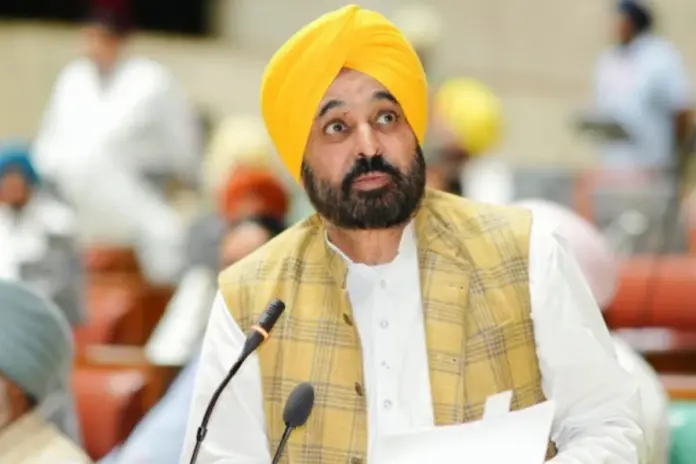
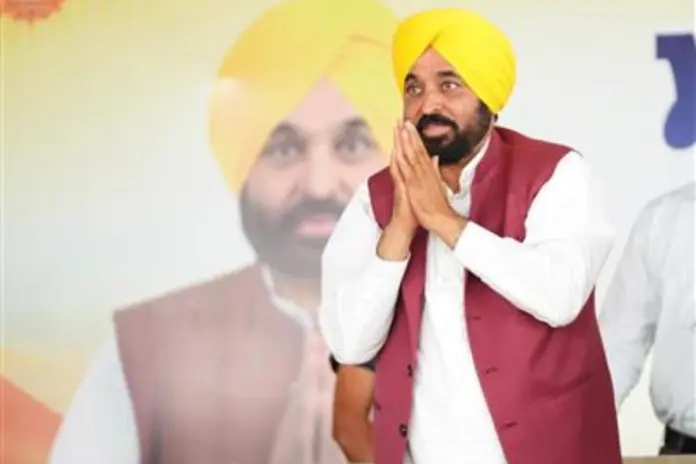
Punjab Chief Minister Bhagwant Mann said the Union Budget has once again failed to meet the expectations of Punjab. He stated that the Budget offers no MSP guarantee for farmers, no employment assurance for the youth, and no relief for industry or taxation. The Centre has taken no concrete steps to strengthen Punjab’s economy, once again treating the state and its people unfairly.

CM Mann said Punjabis are hardworking and resilient, and despite repeated neglect by the Centre, AAP government and Punjab’s people will unite to rebuild Punjab and make it economically strong on their own.

Union Budget Betrays Punjab & Haryana Farmers Once Again: Harpal Cheema

Centre Turns Its Back on MSP, Ignores Mandi and Agriculture Infrastructure Needs:  Punjab FM

Punjab Finance Minister Harpal Singh Cheema, reacting to Union Budget, said that the Centre has once again ignored the legitimate concerns of farmers from Punjab and Haryana, exposing its hollow claims of being farmer-friendly. Cheema pointed out that there has been no increase in the Agriculture Infrastructure Fund, nor any concrete support for strengthening mandi infrastructure, leaving agrarian states to fend for themselves.

He said Punjab’s farmer feed the nation, yet the Union Government continues to neglect investment in the very systems that ensure food security. The Finance Minister also criticized the selective approach adopted in promoting high-value crops. While the Budget mentions crops like coconut, cashew, sandalwood and nuts, there is nothing for North Indian farmers who depend on crops suited to their agro-climatic conditions.

Cheema asserted that this Budget clearly reflects the Centre’s bias and its continued indifference towards the farmers of food-grain producing states, particularly Punjab, who deserve respect, support and fair investment, not empty slogans.

Union Budget Turns Its Back on Punjab’s Annadatas: Punjab Agricultural Minister

Union Budget a Big Disappointment, No MSP Roadmap, No Diversification Support, No Relief for Flood-Hit Farmers: Gurmeet Singh Khuddian

Punjab Agriculture Minister Gurmeet Singh Khuddian strongly criticized the Union Budget, stating that despite Punjab filling the national granary, its farmers have once again been left empty-handed. He said the Budget offers no clear roadmap for MSP beyond wheat and rice, exposing the Centre’s lack of seriousness towards farmers’ income security.

Khuddian pointed out that there is no concrete package for crop diversification, which is crucial for sustainable agriculture in Punjab, nor any financial support for farmers affected by repeated floods. He asserted that the Centre has once again turned its back on the country’s Annadatas, ignoring their hardships while making hollow promises.

The Minister said Punjab’s farmers deserve genuine support and fair policies, not continued neglect by the Union Government.

Union Budget Brings Only Disappointment for People: Aman Arora

Says, BJP Continues Step-Motherly Treatment Towards Punjab

AAP Minister Aman Arora strongly condemned the Union Budget presented in Parliament, stating that, like every year, it has left people across the country deeply disappointed. He said the BJP came to power on tall promises, but the Budget offers nothing meaningful for farmers, youth, women or common citizens.

Arora said that Punjab, in particular, has once again been subjected to step-motherly treatment. There is no provision for any new major project for the state, despite Punjab’s historic contributions, from independence, then feeding the nation during food shortages to standing at the forefront during difficult times.

He termed the Centre’s approach extremely unfortunate and said that repeated neglect of Punjab is unacceptable. Aman Arora rejected the Budget outright and urged the Prime Minister and the Union Government to stop discriminating against Punjab, reminding them that Punjab is an integral part of the nation and deserves fairness, respect and due support.

Union Budget Shows Gross Discrimination Against Punjab: Kuldeep Singh Dhaliwal

Dhaliwal Strongly Criticised the Budget: No MSP Guarantee, No Jobs Assurance, No Major Projects for Punjab

AAP Chief Spokesperson and MLA Kuldeep Singh Dhaliwal strongly condemned the Union Budget, stating that it reflects blatant discrimination against Punjab. He said the Centre has once again betrayed the state by offering nothing for farmers, youth or development. There is no legal guarantee on MSP, no assurance of employment for young people, and no approval for any major projects for Punjab.

Dhaliwal reminded that Punjab has made the highest sacrifices for the nation, from the freedom struggle to safeguarding the country’s borders even today. Despite this, the Centre continues to deny Punjab its due by withholding funds and ignoring the state’s needs.

He said Punjabis are hardworking and resilient and will continue to stand on their own feet, but the Centre will one day have to answer for its continued neglect. Dhaliwal sharply criticized the Prime Minister and the Union Finance Minister for repeatedly doing injustice to Punjab, calling it deeply painful and unacceptable.

Union Budget Denies Punjab Farmers Their Due: Laljit Singh Bhullar

Condemning the Union Budget, Punjab Minister Laljit Singh Bhullar said the Centre has once again ignored the vital contribution of Punjab’s farmers. He stated that the Budget makes no serious provision for MSP, crop diversification, or protection of farmers from natural disasters.

Bhullar said the BJP-led Union Government should be ashamed of repeatedly rejecting the rightful demands of Punjab’s farmers. He asserted that by denying farmers security and support, the Centre has once again trampled upon their rights and exposed its anti-farmer mindset.

Union Budget Lacks Vision for Punjab’s Farmers: Lalchand Kataruchakk

Punjab Minister Lalchand Kataruchakk criticized the Union Budget, stating that the state which fills the nation’s food granary has been given no direction or welfare support. He said the Budget offers no MSP assurance, no plan for crop diversification, and no scheme for farmers affected by natural disasters.

Kataruchakk asserted that this Budget clearly reflects the BJP-led Centre’s anti-farmer mindset and its continued neglect of Punjab and its farmers.

Centre Silent on Punjab’s Rights, No Special Support for Punjab in Union Budget: Dr Ravjot

Punjab Minister Dr Ravjot said that whenever Punjab’s rights are concerned, the Central Government chooses silence. He stated that despite tall claims on health, education and agriculture, the Union Budget provides no special assistance for Punjab.

Dr Ravjot asserted that this approach is neither fair nor just, but a clear case of deliberate neglect of Punjab and its people.

Union Budget Big on Claims, Empty on Substance: Neel Garg

Says, Punjab, Farmers, Youth and Common People Left Disappointed Once Again

AAP senior leader Neel Garg strongly criticized the Union Budget, comparing it to the Punjabi saying “Patteya pahaar, nikliya chooha”, big announcements with negligible outcomes. He said despite tall claims and flashy figures, there is not a single announcement that brings real relief to Punjab.

Garg said Punjab’s farmers were hoping for special assistance after suffering massive losses due to floods last year and were expecting a legal guarantee on MSP, but the Budget delivered nothing. Punjab’s youth, he added, were once again let down, as the long-promised employment guarantees remain mere slogans.

He pointed out that industry was expecting special incentives to boost growth and create jobs in Punjab, but no such support was announced. At a time when common people are struggling with rising inflation, the Budget offers no meaningful relief.

Neel Garg alleged that the Budget is clearly tilted in favour of big corporates like Ambani, Adani, while farmers, workers and ordinary citizens have been ignored. He said Punjabis, who have fed the nation and made the highest sacrifices for national security, feel cheated. Garg asserted that people need real, ground-level relief, not hollow announcements, and concluded that this Budget has failed to live up to the expectations of the people.

Renault Duster Vs Hyundai Creta: Two of the Best in Class Compared Threadbare, Which One Has an Edge?

Renault- Duster
Google

The compact SUV segment in India is highly competitive, and two popular choices are the Renault Duster and the Hyundai Creta. Both have their strengths, but how do they really compare? Let’s break it down so you can decide which suits your needs best.

Design and Dimensions

The Duster offers a rugged, muscular design with 18-inch wheels, 212mm ground clearance, and bold LED DRLs. Compared to the  Hyundai Creta, the Duster is slightly longer at 4,343 mm, giving it a more commanding road presence. On the other hand, the Hyundai Creta emphasises modern, urban styling with sleek curves and refined lighting. 

Engine and Performance

The Duster comes with three petrol engines: 1.0L Turbo-Petrol , 1.3L Turbo-Petrol, and 1.8L Strong Hybrid. Transmission options for the hybrid include a 6-speed manual, a 6-speed DCT, and an 8-step DHT. On the other hand, the Hyundai Creta offers both petrol and diesel options, including turbo variants. 

Safety and Technology

The Duster comes with a 17-feature Level 2 ADAS suite, 6 airbags, ESC, 360-degree camera, and TPMS. Its interior features a 10.1-inch infotainment system with Google OS, a 10.25-inch digital driver display, panoramic sunroof, and ventilated seats. On the other hand, the  Hyndai Creta includes multiple airbags, ABS, ESC, and parking sensors.

Renault Duster vs Hyundai Creta: City Comfort Versus Rugged Capability

The Renault Duster and Hyundai Creta are both top contenders in the compact SUV segment. Compared to the Duster, the Creta offers smoother city driving and more engine options, while on the other hand, the Duster stands out with rugged design, higher ground clearance, and off-road readiness.

Which One Has an Edge?

Both the Renault Duster and Hyundai Creta have strong features in design, so choose as per your needs and requirements; ultimately, the choice is yours.

Bhagwant Mann: Punjab Police Intensifies Crackdown Under ‘Yudh Nashian Virudh’

Bhagwant Mann: Punjab Police continued its sustained action against drug trafficking under the ongoing anti-drug campaign ‘Yudh Nashian Virudh’, marking Day 336 of the operation. As part of the drive, police teams carried out extensive raids across the state, leading to the arrest of 72 drug smugglers in a single day.

Bhagwant Mann: Punjab Police Intensifies Crackdown Under ‘Yudh Nashian Virudh’

During the operation, authorities recovered 4 kg of heroin, 200 grams of opium, 1,253 intoxicant tablets and capsules, along with ₹1.01 lakh in drug-related money. The campaign has shown consistent momentum, with the total number of drug smugglers arrested rising to 47,204 within 336 days.

Alongside strict enforcement, the Punjab Police is also focusing on rehabilitation. On the same day, 30 individuals were motivated to undergo de-addiction and rehabilitation, reflecting the state government’s dual approach of enforcement and reform.

Mann government has repeatedly asserted that the fight against drugs

The Mann government has repeatedly asserted that the fight against drugs will continue with full intensity, aiming to safeguard Punjab’s youth and restore social stability across the state.

Senior police officials stated that coordinated intelligence-based operations and ground-level vigilance have played a crucial role in achieving sustained results under the campaign. Special focus is being laid on breaking supply chains, tracking repeat offenders, and preventing cross-border drug inflow. The government has reiterated that zero tolerance will be maintained against drug networks, while community participation and awareness will be strengthened to ensure long-term success of the anti-drug movement.

Punjab CM Bhagwant Singh Mann appeals for Halwara Airport to be named after Shaheed Kartar Singh Sarabha

CM Mann

Punjab Chief Minister Bhagwant Singh Mann on Sunday, at the inauguration of the terminal building at Halwara International Airport in Ludhiana, reiterated his demand to the Government of India to name the airport after legendary martyr Shaheed Kartar Singh Sarabha, calling it a fitting tribute to one of the youngest icons of India’s freedom struggle.

The Chief Minister also urged the Centre to further strengthen international connectivity from Mohali Airport, while asserting that Punjab is steadily moving towards a moment where all four of its airports will bear the names of the state’s revered Gurus and martyrs, seamlessly linking modern infrastructure with the state’s spiritual and revolutionary legacy.

Raising the issue in the presence of Union Civil Aviation Minister Kinjarapu Ram Mohan Naidu during the virtual inauguration of the airport by Prime Minister Narendra Modi, CM Bhagwant Singh Mann stated, “Shaheed Kartar Singh Sarabha laid down his life for the motherland when he was just 19 years old. His supreme sacrifice inspired millions to rise against British imperialism, and even Shaheed-e-Azam Bhagat Singh regarded him as his role model.”

The Chief Minister said that naming Halwara Airport after Shaheed Kartar Singh Sarabha would be a befitting honour to a martyr who hailed from the region and had gone to Berkeley University to pursue a career in aviation, but chose instead to return and dedicate his life to the freedom movement. “Punjab is the land of great Gurus, prophets, saints, seers and martyrs. Every inch of this sacred soil carries the imprint of their sacrifices,” he said.

CM Bhagwant Singh Mann noted that if Halwara Airport is named after Shaheed Kartar Singh Sarabha, two of Punjab’s four airports would be named after revered Gurus and two after martyrs. “Sri Guru Ramdass International Airport, Amritsar and Sri Guru Ravidass Maharaj Ji Airport, Adampur, are named after Gurus, while Shaheed Bhagat Singh Airport, Mohali and Shaheed Kartar Singh Sarabha Airport, Halwara, will commemorate our martyrs,” he said.

Congratulating the people on the parkash purab of Guru Ravidas, CM Bhagwant Singh Mann said it was a matter of immense pride and satisfaction that Adampur Airport has been named after the great proponent of the Bhakti movement. “The path shown by Sri Guru Ravidas Maharaj Ji to create an egalitarian society is the core pillar of our government’s commitment to serve the masses,” he said, adding that it was a historic day for Punjab as the Prime Minister dedicated two airports to the people on this auspicious occasion.

Highlighting the strategic importance of Halwara Airport, the Chief Minister said it has played a significant role over the years and has been used by the armed forces during critical operations. He expressed gratitude to the Indian Armed Forces for their contribution in developing the terminal at Halwara, which has now been dedicated to the public. “The state government will hold deliberations with the Government of India in the coming days to enhance connectivity from this airport,” he said.

Recalling the earlier initiative, CM Bhagwant Singh Mann noted that on March 22, 2023, the Punjab Vidhan Sabha had unanimously passed a resolution requesting the Government of India to name the International Airport at the Indian Air Force Station, Halwara, Ludhiana, as Shaheed Kartar Singh Sarabha International Airport. “As an active leader of the Ghadar Party, Shaheed Kartar Singh Sarabha worked tirelessly for India’s freedom, first abroad and then within the country. Naming the airport after him would be a humble tribute to his unparalleled contribution,” he said.

The Chief Minister further pointed out that Mohali International Airport has already been named after Shaheed Bhagat Singh due to the sustained efforts of the state government. “Naming airports, universities and other institutions after our iconic martyrs is an integral part of our government’s vision to preserve their legacy and inspire the youth to dedicate themselves to selfless service of the nation,” CM Bhagwant Singh Mann said.

Financial Changes From February 1, 2026: What Consumers Need to Know

Budget 2026
Image Credit: Google

Financial Changes From February 1, 2026: Several important financial and regulatory changes took effect across India from February 1, 2026, impacting banking customers, motorists and everyday consumers. These changes aim to streamline services, update tax structures, and improve convenience in key sectors.

Banking and Credit Card Updates


Major banks have implemented revisions to various fees, charges and benefits from February 1. These include updates to credit card reward structures and changes in charges for certain digital banking transactions. Customers are also being encouraged to ensure that their KYC details are up to date with their banks to avoid disruptions in service.

Financial Changes From February 1, 2026:


One of the significant changes for motorists relates to FASTag compliance. Routine verification requirements for vehicle-linked FASTags have been simplified, reducing the need for periodic document verification unless a specific issue arises. This is expected to make toll payments smoother and reduce administrative requirements for drivers.

Tobacco Product Taxes Increased
The tax regime for tobacco and related products has been updated, leading to increases in excise duty and cess on items such as cigarettes and chewing tobacco. These changes will result in higher retail prices for these products and reflect revisions in how duties are calculated.

Additional Regulatory Adjustments
Alongside these updates, there are changes in pricing and levies on certain goods and services as part of broader regulatory and fiscal adjustments at the beginning of the month. Some of these relate to fuel pricing and local tax adjustments that may affect consumer costs.

These financial changes are part of routine policy updates and reforms designed to modernise services, improve compliance, and align the regulatory framework with current economic priorities as the year progresses.

Bhagwant Mann Says Union Budget 2026 Fails to Address Punjab’s Key Concerns

Punjab Chief Minister Bhagwant Mann on Saturday criticised the Union Budget 2026, stating that it has once again failed to meet the expectations of Punjab. He alleged that the Centre has ignored the state’s pressing demands, particularly those related to farmers, youth employment, and economic revival.

Bhagwant Mann Says Union Budget 2026 Fails to Address Punjab’s Key Concerns

In a sharp reaction, Bhagwant Mann said the Budget does not contain any concrete announcement on Minimum Support Price (MSP) for farmers, nor does it offer meaningful relief for youth in terms of employment generation. He also pointed out the absence of incentives for industry and tax relief measures that could have strengthened Punjab’s economic position.

The Chief Minister said that despite Punjab’s significant contribution to the nation—especially in agriculture and food security—the state has been consistently neglected in successive Union Budgets. He described the approach of the Centre as discriminatory, alleging that Punjab and Punjabis continue to face step-motherly treatment.

Mann further stated that the Budget lacks any solid roadmap

Bhagwant Mann further stated that the Budget lacks any solid roadmap for improving Punjab’s financial stability or addressing structural economic challenges. According to him, the absence of targeted support for Punjab reflects a lack of seriousness towards the state’s development needs.

Reaffirming confidence in the people of Punjab, the Chief Minister said that Punjabis are hardworking and resilient. He asserted that the state government, with collective effort and determination, will work to put Punjab back on a strong economic footing, regardless of central neglect.

The remarks add to the growing political debate around Budget 2026, with opposition-ruled states questioning the Centre’s priorities and regional balance in fiscal planning.

Moto G67 Power: Beyond 7000mAh Battery, 5 Reasons That Can Compel You To Consider Buying This Beauty

Moto- G67
Google

The Moto G67 Power smartphone provides users with three essential smartphone features which include its powerful performance and dependable operation. The device contains a 7000mAh battery together with its numerous outstanding features which make it more than just another mid-range smartphone. 

1. Monster 7000mAh Battery for All-Day Power

The Moto G67 Power smartphone is defined by its enormous 7000mAh battery capacity. The phone provides more than 24 hours of battery life, allowing users to use it for gaming, streaming, and work without needing to find a charger. 

2. Smooth Performance with Latest Hardware

The Moto G67 Power features a powerful processor that works with its ample RAM to deliver seamless performance and efficient multitasking. The phone handles all tasks, from applications to games and work activities, without difficulty. The device functions as a dependable tool users can count on during their daily activities, thanks to its software and hardware combination.

3. Clean and User-Friendly Software Experience 

Moto has always focused on stock Android experience, and the G67 Power continues this tradition. The system shows no additional software and allows users to access it through a straightforward interface, making navigation simple. 

4. Impressive Display for Entertainment and Gaming 

The device features a vivid display, perfect for watching videos, browsing, or gaming. Whether it’s streaming your favorite shows or playing high-end games, the display quality and smoothness enhance the overall experience. Combined with the long-lasting battery, it’s ideal for non-stop entertainment.

5. Reliable Build and Design That Lasts 

While performance and battery life matter, the Moto G67 Power also excels in design and durability. With a sleek yet sturdy build, it feels premium in hand while being robust enough for daily use. It’s a device that’s built to last, combining style, functionality, and dependability.