- Advertisement -
February 27, 2026
Home Blog Page 83

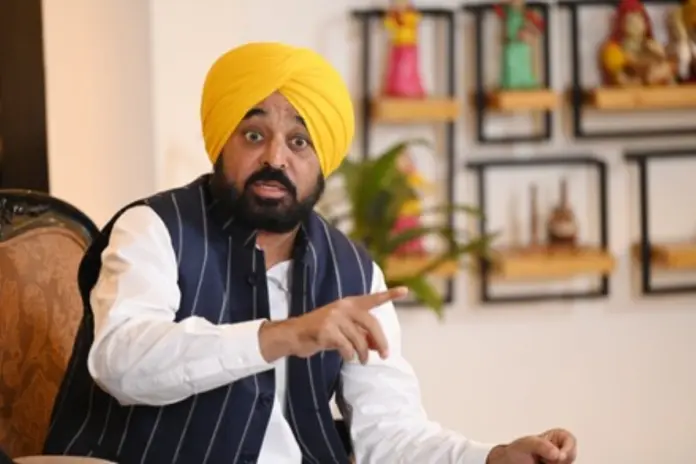
CM Bhagwant Singh Mann reviews progress of Phase II of Yudh Nashean Virudh; says this phase will further strike at backbone of drug menace

Punjab News

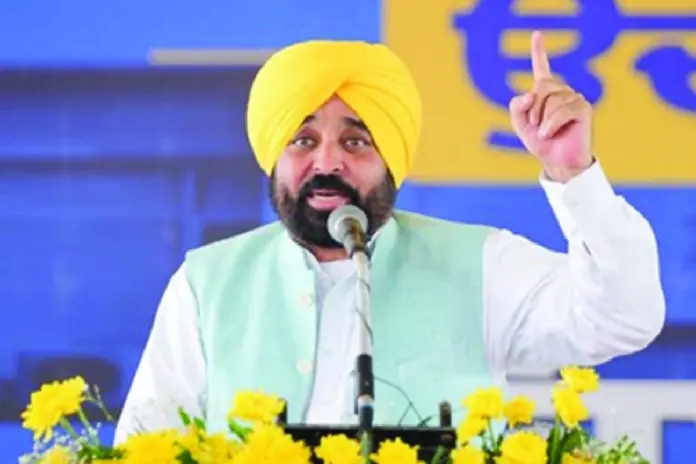
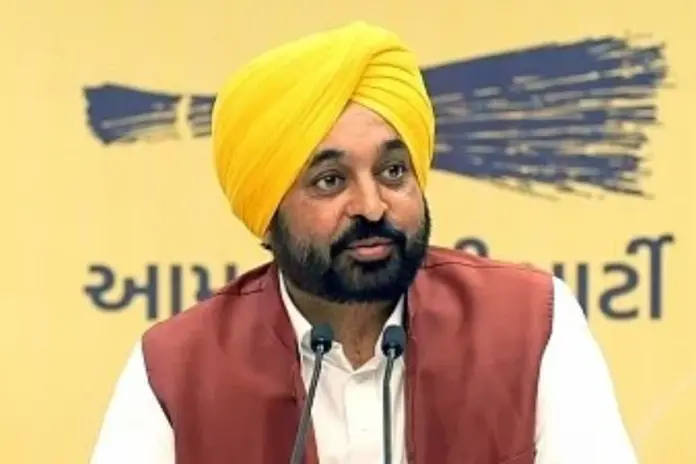
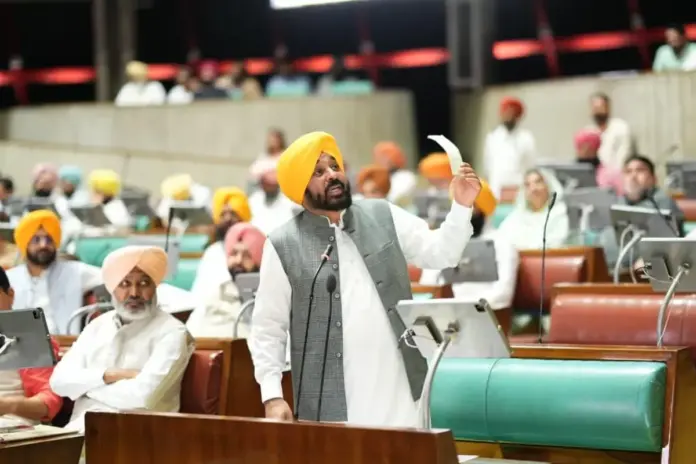
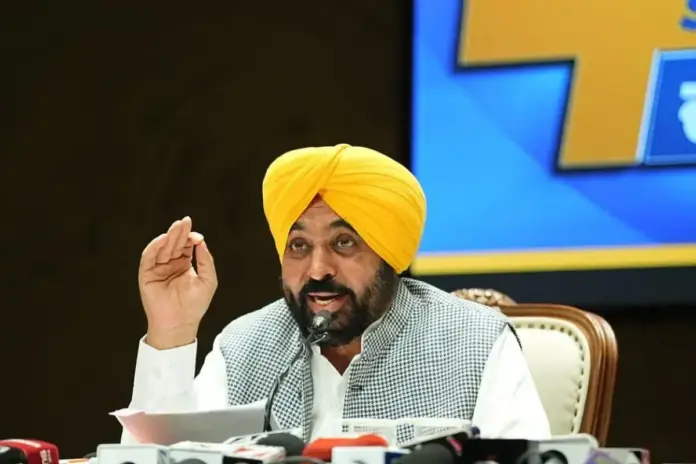
Punjab Chief Minister Bhagwant Singh Mann asserted that the second phase of ‘Yudh Nashean Virudh’ is set to strike at the very backbone of the drug menace, as the state prepares to escalate its most aggressive mass campaign yet against narcotics by mobilising people at the village level and deepening public participation across Punjab.

Reviewing the progress of Phase II of Yudh Nashean Virudh, the Chief Minister announced that a major state-level meeting of Village Defence Committees (VDCs) will be convened in the coming month to give renewed momentum and sharper direction to the campaign, signalling the government’s intent to convert the anti-drugs drive into an irreversible people-led movement.

Chairing a meeting to review the implementation of the second phase of ‘Yudh Nashean Virudh’ on Tuesday, Punjab Chief Minister Bhagwant Singh Mann said, “Drugs is a global phenomena but nowhere across the world the war against this menace has been launched in such a vigorous manner. In an unprecedented manner a 1.50 lakh member strong team of ‘Pinda De Pehredaar’ (warriors) in the form of Village Defence Committee (VDC) has been constituted to make Punjab drug free.” He said that an important meeting of these VDCs will be convened in the coming month to give further push to this campaign.

The Punjab Chief Minister stated, “In this meeting the VDC Members will take pledge to ensure their villages become Drug Free,” adding that the Punjab government will ensure fulsome support and cooperation to them for this noble cause.

He also asked the officers to award Identification Cards to members of VDC so that their significant work is recognized. Bhagwant Singh Mann said, “Public participation is must for every campaign,” adding that it is also imperative for sustainability.

The Chief Minister said, “The ‘Yudh Nashean Virudh’ has been transformed into a mass movement as this menace was a social problem.” He said that with the active support of the people Phase II of ‘Yudh Nashean Virudh’ will be more successful than the Phase I and Punjab is all set to script a new success story as a part of this campaign. CM Bhagwant Singh Mann said that Punjab has set an example by successful completion of this mass movement.

On the occasion, Health Minister Dr Balbir Singh and others were also present.

Vivo X200T: ZEISS Cameras, Dimensity 9400+ Chip and Massive Battery Steal the Spotlight, Check Specs

Vivo X200T
Google

Vivo has expanded its premium smartphone lineup with the launch of the Vivo X200T, a feature-packed device that puts strong emphasis on photography, performance, and battery life. The smartphone is aimed at users looking for flagship-level specifications without stepping into ultra-luxury pricing.

ZEISS-Tuned Camera Setup

The Vivo X200T features a powerful triple rear camera system co-engineered with ZEISS, a globally renowned optics brand. The setup includes a 50-megapixel (MP) primary camera with Optical Image Stabilisation (OIS), a 50 MP ultra-wide camera, and a 50 MP telephoto lens designed for detailed zoom shots. On the front, the phone offers a 32 MP selfie camera, suitable for video calls and social media content.

Flagship Performance With Dimensity 9400+

At its core, the device is powered by the MediaTek Dimensity 9400+ System on Chip (SoC), a high-end processor built for smooth multitasking and gaming. It is paired with up to 16 gigabytes (GB) of RAM (Random Access Memory) and 512 GB of internal storage, ensuring fast app performance and ample space.

Display, Battery and Software

The Vivo X200T sports a 6.67-inch AMOLED (Active Matrix Organic Light-Emitting Diode) display with a 120 hertz (Hz) refresh rate, delivering vibrant colours and fluid scrolling. A 6,200 milliampere-hour (mAh) battery powers the device, supported by fast wired charging for quick top-ups.

On the software side, the phone runs on Vivo’s custom user interface based on the Android Operating System (OS), offering a smooth and customisable user experience.

Mira-Bhayandar Flyover: Creative Genius Or Architectural Mishap? How A 4-Lane Flyover Suddenly Turns Into 2-Lane? MMRDA Responds

Mira-Bhayandar Flyover
Image Credit: Google

Mira-Bhayandar Flyover: A double-decker flyover extending from Sai Baba Nagar Metro Station near SK Stone Junction to Shivar Garden has become a laughing stock for social media users.

An initiative of the Mumbai Metropolitan Region Development Authority (MMRDA), the flyover has been ridiculed online by some users. The MMRDA has now issued a detailed fact-check and remarked that the assertion was “misleading“.

MMRDA Reaction on Mira-Bhayandar Flyover

The MMRDA commented that the assertion did not reflect the structure’s actual design intent. The authority remarked the transition from 4 lanes to 2 lanes is in no way a design flaw but entirely based on future network planning and available road width constraints.

The double-decker structure that was originally built as an integral part of Metro Line 9 connects Andheri West to Mira Bhayandar. The project, which was executed by J Kumar Infraprojects, integrates road traffic with an elevated metro corridor to simplify congestion at one the India financial capital’s busiest junctions in the region.

The authority also commented that two lanes were meant exclusively for Bhayandar East traffic while two lanes (at a future date) would connect Bhayandar West. Since the East arm appears first, the existing stretch of four lanes presently transitions into 2 lanes.

It also clarified that a 2+2 lane flyover integrated with the Metro would be provided up to Golden Nest Circle to manage heavy traffic volumes. It added a 1+1 lane flyover with dedicated up and down ramps would be additionally constructed along the median. The authority also remarked that a series of measures have been incorporated including but not limited to delineators, rumble strips, retro-reflective tags, directional boards, adequate signage and anti-crash barriers.

Chest Pain Warning: AIIMS Doctor Says Angiography May Miss Impending Heart Attack – Here’s The Test That Actually Detects It

Test That Detects Impending Heart Attack
Photo Credit: Created with Gemini

If you’ve ever felt sudden chest pain or heaviness, your first thought might be to rush for an angiography. But AIIMS-trained doctor Priyanka Sehrawat warns that this common step may not always detect an impending heart attack. Understanding what your tests can (and cannot) reveal is crucial for protecting your heart.

Why Angiography Isn’t Enough For Detecting Heart Attack

Many people believe angiography is the ultimate test for heart problems. Priyanka Sehrawat explains, “It shows how much blood supply is reaching the heart, how the heart’s valves are functioning, and whether the valves have become enlarged. It can also reveal if there was a previous heart attack that caused a part of the heart to stop working properly.”

However, angiography has limits. It cannot predict an impending heart attack. That risk is detected through an ECG (electrocardiogram) and a TMT (treadmill test). While angiography focuses on the blood vessels and structure, an ECG tracks electrical changes in the heart and a TMT tests the heart under stress.

How ECG And Treadmill Test Detect Early Heart Trouble

So, what exactly causes a heart attack? Dr Sehrawat explains that it occurs due to a mismatch between supply and demand. She says, “Your heart muscle needs oxygen to work. When the oxygen supply reduces while demand increases, this imbalance triggers a heart attack.”

The ECG and treadmill test help detect this mismatch. During a treadmill test, your heart’s demand rises through exercise. The test checks whether the blood supply can keep up with the increased need. Any imbalance indicates potential risk, often before a full-blown heart attack occurs.

Most importantly, Dr Sehrawat emphasises, do not self-diagnose. “If you have chest-related symptoms, always consult a doctor. They will decide which tests are necessary based on your condition.”

Disclaimer: This content is for general information only and not a substitute for professional medical advice. DNP India neither confirms nor denies the claims. Always consult a doctor before following any suggestions, treatments or diets.

8th Pay Commission: ₹18000 to ₹58500, Experts Explain Different Fitment Factor, Minimum Pay Rise For Employees And Pensioners Explained

8th Pay Commission
Image Credit: Google

8th Pay Commission: 8th Pay Commission’s preparations have gathered pace as drafting demands started with the fitment factor emerging as one of the most tracked things by central government employees and pensioners.

8th Pay Commission-Recent Developments

In a relief to millions of central government employees and pensioners, the preparations for the 8th CPC have finally commenced. Now, talks are undergoing towards major demands on allowances, pay and service conditions, with the fitment factor being the most tracked issue.

The National Council of the Joint Consultative Machinery Staff Side remarked in a communication that was sent to the Drafting Committee members. A meeting would now be held on 25 February 2026 in New Delhi. The meeting would emphasize on finalizing the approach and process on how to prepare the referendum that would be submitted to the 8th CPC.

Fitment Factor Takes The Limelight

As of now, the minimum basic pay stands at Rs. 18,000. The revised minimum pay with a fitment factor of 2.0 would be Rs. 36,0000. A factor of 3.0 that is very much likely would raise the basic pay to Rs. 54,000. The minimum pay would increase to Rs. 58,500 if the fitment factor of 3.25 is applied.

According to the estimates of Kotak Institutional Equities, the fitment factor would be 1.8. Ambit Capital has project the fitment factor to be around 1.8 to 2.46 while the former Finance Secretary S C Garg expect the fitment factor to be around 1.92 to 2.08.

Premanand Ji Maharaj: Snatch-And-Run Turns Into Divine Transformation, Thief Returns Phone To Owner And Apologises, Check Why?

Premanand Ji Maharaj
Image Credit: Google

Premanand Ji Maharaj: The internet could not stop replaying a now viral video in which a thief can be seen confessing before Premanand Ji Maharaj that he returned a phone to its rightful owner after seeing his picture in the phone.

Premanand Ji Maharaj-The Turn Of Events

In the video, a man appears before Premanand Ji and shares his story. The man remarked that he stole a smartphone and unlocked it but was astonished to see the picture of Premanand Ji on the phone’s wallpaper. The man did not vanish into the crowd or power off the smartphone. Instead, he tracked down the owner and handed the smartphone back and rendered a heartfelt apology.

Social Media Reactions

The now-viral clip was caught by someone who was present at the time the man shared his heartfelt story with the Vrindavan seer. A user commented, “Maharaj Ji ki nazar hi kaafi hein”. Another one commented, “This is bhakti at work”. Another user commented, “Sometimes you don’t need cops pr CCTV, just having the right wallpaper can be more than enough.”

Who is Premanand Ji?

Born on 30 March 1989, Premanand Ji has transformed countless lives via his soul-stirring kirtans and profound teachings at the Shri Hit Radha Keli Kunj on devotion. Divine grace led him to Shri Hit Premanand Govind Sharan Ji Maharaj, his guru at Barsana’s Radha Krishna Temple after the death of his father who used to work as an Ayurvedic doctor.

A well-known spiritual teacher based in Vrindavan, Premanand Ji is deeply devoted to Lord Krishna and Maa Radha Rani.

Premanand Ji is followed by millions who listen every day to his teachings and satsangs for their emotional honesty, fairness, simple language and living clean. He always emphasize on no shortcuts, no ego and no wrongdoing and equal love and affection for everyone, irrespective of their age, gender, religion or beliefs.

Dabur Chyawanprash Exposed? Health Expert Says It Has More Sugar Than Gulab Jamun

Dabur Chyawanprash Is High On Sugar
Photo Credit: X

For generations, Indian households have trusted Ayurveda for good health. Dabur Chyawanprash, one of the most popular Ayurvedic products, has been considered a daily health booster. But is it really as healthy as it claims?

A recent revelation by health expert Dr Prashant Desai from Stanford School of Medicine has raised some serious concerns that every consumer should know about.

How Much Sugar Is Really In Dabur Chyawanprash?

Dr Desai recently shared on Instagram that reading the Dabur Chyawanprash label carefully is an eye-opener. In 100 grams of this Ayurvedic jam, sugar (listed as Sharkara) weighs 59.5 grams, while honey contributes just 4.7 grams. That means nearly 65% of the product is sugar.

To put this in perspective, Coca-Cola contains 10.6 grams of sugar per 100 ml, Ferrero Rocher has 40 grams per 100 grams and even Haldiram’s Gulab Jamun contains around 52 grams of sugar per 100 grams. In other words, Dabur Chyawanprash actually has more sugar than a typical Gulab Jamun.

What makes this more concerning is that sugar is not highlighted on the label. It’s buried under a long list of Ayurvedic herbs, using the Sanskrit term Sharkara. Many consumers might not notice it, assuming that the herbs are the main ingredients. Dr Desai warns, “All the herbs combined weigh less than the sugar alone.”

What You Need to Know Before Buying

The product also markets itself as having “3× immunity action,” but this claim is limited to common infections, not serious disease prevention. Consumers often assume such labels mean complete immunity support, which is misleading.

Dr Desai also raised questions for FSSAI, India’s food regulator, asking why brands are allowed to hide sugar behind complex terminology instead of listing it clearly as the primary ingredient. He emphasises, “You are the CEO of your and your family’s health. Always read the ingredient list of every HEALTH product you buy.”

In short, while Dabur Chyawanprash may provide some Ayurvedic benefits, the high sugar content is a serious concern. If you’re consuming it daily, thinking it’s purely medicinal, it’s time to read the label carefully and rethink your health choices.

Disclaimer: This content is for general information only and not a substitute for professional medical advice. DNP India neither confirms nor denies the claims. Always consult a doctor before following any suggestions, treatments or diets.

Dharmendra Pradhan: No One Can Abuse UGC Regulations! Education Minister’s Assurance Does Little Good, What Next?

Dharmendra Pradhan
Image Credit: Google

Dharmendra Pradhan: In the wake of growing unrest in the country due to University Grants Commission (UGC) regulations, Union Education Minister Dharmendra Pradhan has remarked that there would be no abuse or any form of discrimination.

What Started The Ruckus?

UGC recently established a new set of regulations – Promotion of Equity in Higher Education Institutions Regulations, 2026 for constituting a structured framework to support disadvantaged groups and grievance redressal across colleges and universities across the country.

Pradhan urged educational institutions in the country to promote equity, transparency, accountability and fairness in higher education and implement anti-discrimination measures effectively.

The UGC recently issued regulations on January 15 that aim to curb caste-based discrimination on campuses. The new regulations aim to ensure an inclusive, safe and dignified academic environment for teachers, students and non-teaching staff.

Why The Controversy?

Under the new UGC rules, OBC students and employees are explicitly empowered to file complaints of discrimination or harassment. The UGC has also urged educational institutions to provide sufficient representation from SCs, STs, OBCs and persons with disabilities.

Several upper caste organizations have argued that the new UGC provisions are vulnerable to abuse. They believe that false complaints can be filed by students from the General Category. In Jaipur, many groups such as the Brahmin Mahasabha, Karni Sena, Kayastha Mahasabha and various Vaishya organizations have come together under a single banner of the Savarna Samaj Coordination Committee (S-4) to oppose the move.

After a video by Swami Anand Swaroop, the controversy started gaining traction. In the video, Swami asked for unity among members of the upper caste groups. Several upper case YouTubers, activists and influencers have labelled the UGC regulations as “anti-upper caste”.

The remarks of Dharmendra Pradhan are seen by many as generic hollow promises. Many on social media platforms commented if the education minister personally would intervene if someone is wrongfully trapped in discrimination cases.

Shark Tank India 5: Despite Heavy Criticism From Sharks, How Did Neha Marda Secure MASSIVE Deal From Aman Gupta, Anupam Mittal? Details Revealed!

Shark Tank India 5 - Neha Marda, Aman Gupta, Anupam Mittal
Photo Credit: X

Sometimes, one bold step is enough to change the game. Balika Vadhu fame Neha Marda did exactly that on Shark Tank India 5. In episode 16, she entered the tank not as a TV star, but as a first-time entrepreneur with a personal story and a clear vision.

Despite facing tough questions and sharp criticism from the sharks, Neha walked away with a big deal that surprised many viewers. Her journey on the show quickly became one of the most talked-about moments this season.

Neha appeared with her two co-founders to pitch Phitku, an alum-based deodorant brand. Alum (also known as fitkari) has been used for years in Ayurveda for its natural deodorising and antiseptic benefits. The team gave this traditional ingredient a modern makeover with stick-format packaging, trendy designs, and different “flavours”.

Neha Marda Gives Emotional Pitch, Faces Tough Questions

What instantly caught attention was Neha Marda’s entry. She began her pitch with a short dance performance to introduce the product. Soon after, she shared a deeply personal experience. Neha revealed that she struggled with strong body odour after pregnancy, which affected her confidence. This challenge inspired her to create a toxin-free, fragrance-free deodorant that offers long-lasting protection.

However, the sharks were not fully convinced. Namita Thapar questioned the Rs 999 price point and openly doubted its appeal in a price-sensitive market. She asked, “India relate kar paayegi?” Anupam Mittal raised concerns about the brand’s messaging and wondered if the “fragrance-free” promise was just a marketing gimmick. He also questioned the idea of offering “flavours” for a scentless product.

Aman Gupta added that deodorants are usually bought for fragrance, making a scent-free version hard to sell. He also asked whether the brand’s popularity was driven by the product or Neha’s celebrity image.

How Neha Marda Still Cracked The Deal On Shark Tank India 5

As the pitch continued, the founders were questioned about numbers, transparency, and the need for water to use the product. These issues led Namita Thapar, Ritesh Agarwal and Amit Jain to opt out of the deal.

Still, Anupam Mittal and Aman Gupta saw potential. While they were unhappy with some inconsistencies, they appreciated the innovation and Neha’s honest personal connection to the brand. After negotiations, the two sharks agreed to invest Rs 1.8 crore each for 1 percent equity per investor, valuing Phitku at Rs 180 crore. The deal also included a 5 percent royalty until Rs 5.4 crore was recovered.

After a quick discussion, the founders accepted the offer. Neha Marda’s brother, who is also a co-founder, sealed the moment by saying, “Deal pakki hai.” The pitchers and investors shook hands, smiled for the cameras and celebrated a win that turned criticism into opportunity on Shark Tank India 5.

Blinkit NCMC: Say Goodbye To Single City Metro Cards! RuPay-Powered Bharat Yatra Card With App Support, Check Benefits

Blinkit National Common Mobility Card
Image Credit: Google

Blinkit National Common Mobility Card: Blinkit has launched the RuPay-powered National Common Mobility Card (NCMC) Bharat Yatra Card that would help commuters to access buses and metro train services across different Indian cities. Previously, commuters can use their existing metro cards only on a single city metro. Not anymore!

Blinkit National Common Mobility Card

The NCMC Bharat Yatra Card can be recharged through a mobile app and its balance can be updated with Near-field communication (NFC) unlike most existing metro cards that users can only top-up physically.

Balance and ride updates happen instantly unlike existing metro cards that generally experienced delayed or manual updates for balance and ride balances. The best thing about the Blinkit RuPay-powered National Common Mobility Card is that it can be purchased instantly without any form of Know Your Customer (KYC) formalities by just paying Rs. 50.

How To Buy And Use It?

Users can order the Blinkit card online after paying a nominal fee of Rs. 50. Their Bharat Yatra Card kit would be delivered at their doorsteps. Users can then download the Bharat Yatra app by scanning the QR code on their welcome letter. Thereafter, they would have to login using their registered mobile number and one-time password (OTP).

The card then needs to be registered by scanning the QR code on the card’s back side or by entering the last 4 digits of the reference number. Users can then add more funds via QR code, mobile app or at a metro station.

Presently, the Blinkit National Common Mobility Card is valid across all Bus and Metro lines in Delhi NCR; metro and MTC bus services in Chennai; metro services in Ahmedabad and Kanpur; BEST bus services in Mumbai; Namma Metro in Bengaluru; and bus services in Guwahati, Haryana, Jammu, Srinagar, Himachal Pradesh, and Aurangabad.

The maximum loadable amount is Rs. 2000 and the card is valid for duration of 5 years. For email support, users can email support@bharatyatracard.com or contact 080-64534442 (9:00 AM to 6:00 PM, Mon to Sat).

Dhirendra Shastri Viral Video: “Gaali Mat De Mata…” Bageshwar Dham Seer Responds Hilariously To Old Lady’s Tantrums, Watch

Dhirendra Shastri Viral Video
Image Credit: Google

Dhirendra Shastri Viral Video: Bageshwar Dham seer Dhirendra Shastri could be seen playing and mocking an old lady in an innocent way. The video has now gone viral and devotees and others on social media are appreciating the way in which Bageshwar Dham seer Dhirendra Shastri is not taking things too heavily.

In a now-viral video, Bageshwar Dham seer Dhirendra Shastri could be seen hilariously mocking an old lady who wants him to invite her to the stage. Shastri repeatedly says he would not invite her to the stage after which the old lady can be seen abusing the seer.

After hearing the bad words, Shastri can be seen telling the old lady not to abuse, still in a hilarious way. Devotees of the Bageshwar Dham seer are appreciating the joyous moments between the lady and Shastri, saying that seers should be playful with their devotees instead of making bad faces and bad mouthing against them.

Dhirendra Shastri In Chitrakoot

A few days back, Dhirendra Shastri had remarked that anyone attacking the Sanatan tradition is not and cannot be a part of the Sanatan dharma. Shastri added those who worship the Sanatan tradition do not create riots in the country. The seer added that he or Hindus are not against Muslims of the country. Shastri said there have been many eminent Muslims like APJ Abdul Kalam, the former President of India.

The seer conducted a four-day Hanuman Katha in Banda, Bundelkhand. Horses, elephants and camels were also seen in the Kalash Yatra. During the Kalash Yatra, thousands of men and women participated and the devotees of Lord Ram were seen dancing beautifully to the tune of drums.

In another development, Shastri reached the home of his Rakhi sisters – Khushboo and Bhavana Rathore, residents of Ward No. 3, Ramganj Mandi.

A few days back, the two sisters had tied a Rakhi, a thread of love and respect between a Hindu brother and sister, on the hand of Shastri. They requested him to visit their home for a cup of tea. Shastri kept his promise and met the two Rakhi sisters.

Delhi Metro Expands Golden Line to Boost South Delhi Connectivity Along Yamuna Riverfront

Delhi Metro
Image Credit: Google

The Delhi Metro Rail Corporation (DMRC) has announced an elevated extension of the Golden Line to address the growing travel needs of South Delhi. The new corridor will run from Tughlakabad to Kalindi Kunj, significantly improving connectivity for areas located along the Yamuna riverfront.

3.9-Km Elevated Corridor With Three Stations

The upcoming stretch will cover a total length of 3.9 kilometres and feature three elevated stations. Designed to ease daily commuting, the corridor will connect key locations including Tughlakabad, Madanpur Khadar, and Kalindi Kunj, with operational linkage to the Sarita Vihar Depot. The project is being executed with modern metro infrastructure standards, with Bombardier involved in the rolling stock and system support.

Faster, Safer, and More Convenient Travel

According to DMRC, the Golden Line extension will make travel faster, smoother, and more convenient for thousands of commuters in South Delhi. By offering a reliable public transport alternative, the new route is expected to significantly reduce dependence on private vehicles, thereby easing traffic congestion on major arterial roads.

Relief for Road Traffic and Urban Congestion

One of the major objectives of this expansion is to decongest road traffic in densely populated areas. The metro extension will help balance Delhi’s transport ecosystem by shifting a large number of daily commuters from roads to rail, contributing to reduced travel time and lower vehicular emissions.

Strengthening Yamuna Riverfront Connectivity

The corridor will play a crucial role in enhancing connectivity to Yamuna riverfront settlements, which have long faced mobility challenges. Improved metro access is expected to support better urban integration, boost local development, and improve access to employment, education, and healthcare facilities.

Part of Delhi Metro Ongoing Expansion Drive

The Golden Line extension reflects DMRC’s broader vision of expanding the metro network to underserved areas while maintaining efficiency and sustainability. With continuous upgrades and new corridors, Delhi Metro remains a key pillar in shaping the capital’s future-ready public transport system.

The Tughlakabad–Kalindi Kunj corridor is set to become a vital link in South Delhi, reinforcing Delhi Metro’s reputation as the city’s lifeline and a model for urban mobility in India.

Bhagwant Mann Government Launches Massive Crackdown on Gangsters in Punjab, Records Major Success in 72 Hours

The Bhagwant Mann-led Punjab government has launched an aggressive statewide crackdown against gangsters, delivering what officials describe as a historic and exemplary success within just 72 hours. The operation sends a clear and uncompromising message—no gangster will be spared.

Bhagwant Mann: Statewide Police Operation on Unprecedented Scale

As part of the intensive drive, the Punjab Police deployed nearly 12,000 personnel across 2,000 teams, conducting coordinated raids in multiple districts. The operation was aimed at dismantling gangster networks, cutting off their support systems, and restoring public confidence in law and order.

Thousands Detained, Over 3,200 Arrested

During the operation, police detained 4,871 associates of gangsters for questioning and verification. In a major breakthrough, 3,256 accused persons, including 80 absconders, were arrested. Authorities stated that many of those taken into custody were actively involved in criminal activities or provided logistical support to organised gangs.

Weapons, Drugs, and Drug Money Recovered

The crackdown also led to the recovery of 69 illegal weapons, along with a large quantity of narcotics. Police seized drugs and drug money amounting to ₹2.69 lakh, dealing a significant blow to the nexus between gangsters and drug traffickers operating in the state.

Clear Warning to Criminal Elements

The Mann government reiterated that Punjab will not tolerate organised crime under any circumstances. Officials emphasised that this is not a one-time action but part of a sustained strategy to ensure long-term peace and security across the state.

Public Safety at the Centre of Governance

The operation reflects the government’s commitment to making Punjab safer for its people. By targeting gangsters and their entire ecosystem—from shooters to financiers and helpers—the administration aims to dismantle criminal networks completely rather than addressing crimes in isolation.

Campaign to Continue

The Punjab Police have indicated that similar intelligence-led operations will continue in the coming days. The state government has made it clear that the fight against gangsters, drugs, and organised crime will remain a top priority.

With this decisive action, the Bhagwant Mann government has reinforced its stance of zero tolerance against crime, marking a strong step towards a more secure Punjab.

Apple AirTag Second Generation Arrives in India With Big Improvements That Make Finding Lost Items Easier, Check Upgrades

Apple AirTag
Google

Apple has launched the second-generation AirTag in India with improved performance and real-world tracking features. While the design remains compact, internal upgrades make it easier to quickly find lost items like keys, wallets, bags, and luggage.

What Is New in Apple AirTag Second Generation?

The new Apple AirTag introduces a major enhancement that extends its Bluetooth range. The upgraded model enables users to track items from greater distances than the previous version. The extended tracking distance provides better results because users can locate their items even when they are farther from their actual position.. 

Improved Bluetooth Range for Better Tracking

The second-generation AirTag achieves greater operational efficiency through Apple’s Find My network thanks to improved Bluetooth technology. 

Louder Speaker for Faster Finding

The upgraded speaker ensures that the sound alert is clearer and more noticeable. The alert, which produces a louder sound, helps users find their keys stuck between sofa cushions or their bags hidden throughout their home.

Seamless Integration With Apple Ecosystem

Just like the earlier version, the new Apple AirTag works smoothly with iPhones, iPads, and other Apple devices. Precision Finding, location sharing, and privacy protections remain strong, ensuring accurate and secure tracking. Apple continues to prioritize user privacy, with features that prevent unwanted tracking and alert users if an unknown AirTag is detected nearby.

India Price and Availability

Apple AirTag second generation is now available in India via Apple’s official store and authorized retailers. It can be bought as a single unit or in a multi-pack for tracking multiple items.

Is the Upgrade Worth It?

Yes, the upgrade is worth considering for regular AirTag users. The longer Bluetooth range and louder speaker make everyday item tracking faster and more reliable.

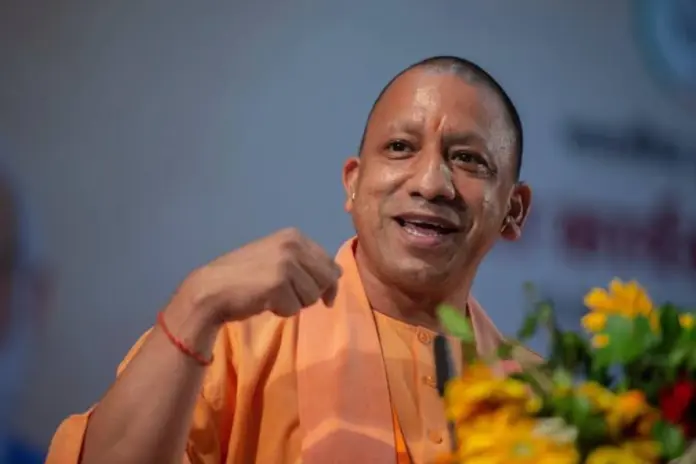
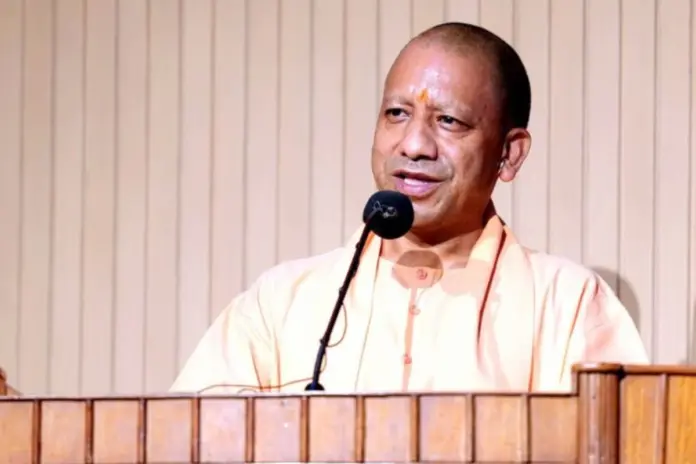
CM Yogi Adityanath Hails India EU FTA Deal as Historic Leap in India’s Global Economic Journey

India EU FTA Deal : Uttar Pradesh Chief Minister Yogi Adityanath has welcomed the India–European Union Free Trade Agreement (FTA), calling it a landmark step in strengthening India’s position in the global economy. In a post on social media platform X, CM Yogi credited the agreement to the visionary leadership of Prime Minister Narendra Modi, stating that it marks a decisive leap in India’s international trade and economic engagement.

India Integrated With 27 European Nations

The India–EU FTA Deal India with 27 European countries, significantly expanding India’s access to one of the world’s largest and most developed markets. Under the agreement, over 99 percent of Indian goods will receive preferential market access, a move expected to dramatically boost Indian exports and enhance competitiveness across global value chains.

₹6.41 Lakh Crore Export Potential

According to CM Yogi Adityanath, the agreement unlocks export opportunities worth nearly ₹6.41 lakh crore, particularly benefiting labour-intensive sectors such as textiles, footwear, agriculture-based products, and manufacturing. This is expected to generate employment at scale and provide a major push to domestic industries.

India EU FTA Deal

The Chief Minister highlighted that the FTA will empower farmers, strengthen micro, small and medium enterprises (MSMEs), and accelerate growth in manufacturing and services. Improved access to European markets will help Indian producers secure better prices, adopt global standards, and expand their footprint internationally.

Opportunities for Skilled Professionals

Beyond goods and manufacturing, the agreement is also expected to create new avenues for skilled Indian professionals by expanding cooperation in services and technology-driven sectors. This aligns with India’s growing role as a global talent hub.

Towards a Self-Reliant and Prosperous India

CM Yogi Adityanath described the India–EU FTA as a blueprint for shared prosperity, reinforcing India’s journey towards a stronger and self-reliant economy. He emphasized that such strategic global partnerships reflect India’s rising stature on the world stage and its commitment to inclusive, long-term economic growth.

The deal is being seen as a major milestone in India’s trade diplomacy, with the potential to reshape economic ties between India and Europe while delivering tangible benefits to people across sectors.