

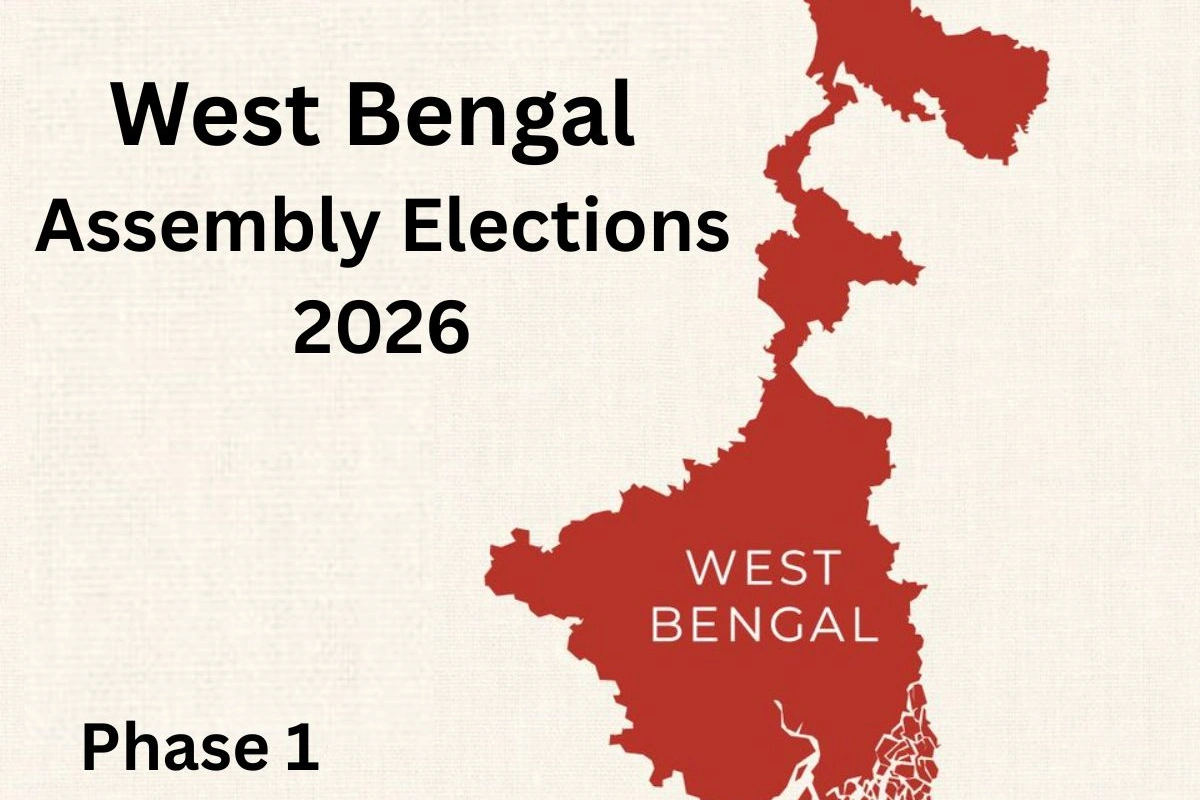
West Bengal Elections 2026: Today, West Bengal enters the polling booth carrying fifteen years of accumulated promise alongside an equal measure of unrealised potential. This election is not merely a contest between two parties. It is a question that every maturing democracy must eventually answer: when is continuity wisdom, and when does it become inertia?
Three decades of work in rural development and institution-building offer one clear lesson: governance, like any institution, requires periodic renewal. Without it, even well-intentioned systems grow self-referential. They begin to serve their own continuity rather than the purpose for which they were built.
Fifteen years is long enough to assess outcomes honestly. Bengal’s industrial potential remains largely unrealised. Its investment climate has not kept pace with comparable states. Its young people, among the most educated and capable in the country, continue to seek opportunity elsewhere. Social welfare programmes have provided genuine relief to many households, and that contribution deserves acknowledgement. But relief and development are not the same thing. A state owes its people not merely support, but the conditions in which they can build lives of genuine independence and dignity.
DON'T MISS
Bengal’s human capital, its intellectual tradition, its agricultural depth, its geographical significance, all of this deserves to be part of the larger national conversation about a resurgent India. The vision of a New Bharat is not a departure from Bengal’s identity. It is an invitation to bring Bengal’s considerable strengths into a wider, more purposeful story.
“Dr Kalam’s PURA vision holds that rural India must not wait for opportunity to arrive — opportunity must be taken to rural India. That requires institutional integrity, not merely intent.”
Gandhi understood that lasting development rises from the ground up, through honest institutions and a genuine orientation toward the last person in the last village. Dr APJ Abdul Kalam’s PURA vision — Providing Urban Amenities in Rural Areas — carried that conviction into a modern framework. It holds that rural India must not wait for opportunity to arrive; opportunity must be taken to rural India. That requires institutional integrity, accountability at every level, and governance that measures its success not by schemes announced but by lives transformed.
Bengal’s villages, its farming communities, its first-generation learners deserve governance oriented toward those measures. They deserve institutions that function with consistency and fairness. They deserve an administration whose primary accountability is to the citizen rather than to the structures of incumbency.
West Bengal has produced some of India’s greatest thinkers, reformers and institution-builders. That tradition has always been one of honest inquiry, of the willingness to question inherited arrangements and imagine something more just. Today’s voter inherits that tradition.
The New Bharat is being built, district by district, institution by institution, election by election. Bengal’s place in that story is not guaranteed. It must be chosen.
About Author: Kunwar Shekhar Vijendra is the co-founder and Chancellor of Shobhit Institute of Engineering and Technology, Deemed-to-be University, Meerut.