Home Blog Page 75

Heart Attack Risk In Young Adults: Experts Warn Normal Cholesterol Can Be Misleading, Share THESE Life-Saving Tests

Heart Attack Risk In Young Adults Experts Warn Normal Cholesterol Can Be Misleading, Share THESE Life-Saving Tests
Photo Credit: Created with Gemini

Heart Attack: Heart attacks are often seen as a problem for older adults, but recent observations show a worrying trend in younger people. Even those in their late 20s, 30s, and 40s can face sudden heart attacks despite having normal cholesterol reports. This raises an important question – what are routine tests missing? The answer lies in hidden markers in the blood that many standard checkups do not measure.

A recent video shared on the YouTube channel Health Wealth explains why a normal cholesterol report may give a false sense of security and how additional tests can reveal hidden risks.

Heart Attack: Hidden Risks Your Cholesterol Test May Miss

Most routine health checkups measure:

  • Total cholesterol
  • LDL (bad cholesterol)
  • HDL (good cholesterol)
  • Triglycerides

While these numbers are important, they don’t always reveal the real danger inside your arteries. Experts in India report that many young adults who suffer a sudden heart attack had perfectly normal cholesterol levels.

To detect hidden risks, doctors now recommend two advanced blood tests:

  1. Lipoprotein(a) – Lp(a)
    • Think of Lp(a) as a genetic predisposition test.
    • Unlike regular cholesterol, diet and exercise hardly affect its levels.
    • High Lp(a) can speed up plaque buildup in arteries, increasing the risk of heart attacks and strokes, even when your cholesterol is normal.
    • Doctors usually suggest doing this test once in a lifetime, as levels are mostly genetically fixed.
  2. Apolipoprotein B – ApoB
    • ApoB measures the number of harmful LDL particles in your blood.
    • Each LDL particle that can clog arteries carries ApoB protein.
    • Higher ApoB means more dangerous particles circulating, increasing heart attack risk.
    • This test is especially important for Indians, who often have smaller LDL particles carrying higher ApoB counts.

Why These Tests Are Important

Combining Lp(a) and ApoB tests with your regular cholesterol screening gives a clearer picture of heart risk. Some key points:

  • Affordable: ApoB costs between ₹300–₹500, Lp(a) ranges from ₹600–₹1,500 depending on the lab and city.
  • Early detection: Heart disease can develop silently over years, and these tests can reveal risk before symptoms appear.
  • Actionable insights: Knowing your risk lets you take steps to prevent heart attacks with lifestyle changes or medical guidance.

Experts emphasise that normal cholesterol does not always mean safe. If you are in your 20s, 30s or 40s, asking your doctor about Lp(a) and ApoB tests could be a lifesaving decision.

Anurag Dhanda Targets Delhi CM Rekha Gupta

Anurag- Dhanda
Google

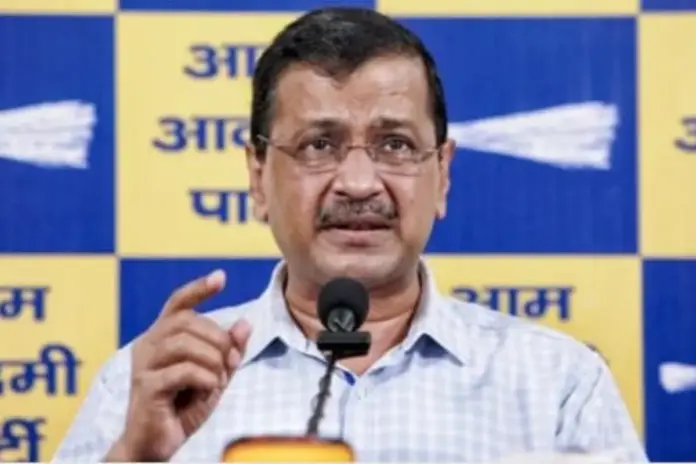
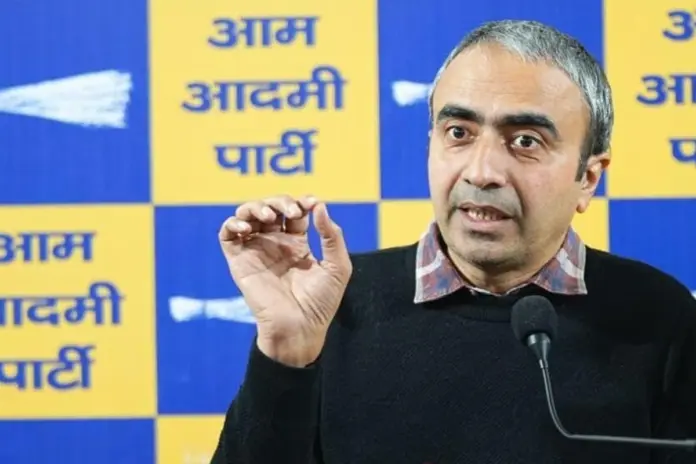
A fresh political controversy has erupted after AAP leader Anurag Dhanda launched a sharp attack on Delhi Chief Minister Rekha Gupta, drawing parallels with past allegations in Punjab politics.

Anurag Dhanda Targets Delhi CM

In a strongly worded statement, Dhanda alleged that the role once attributed to Bikram Singh Majithia during the previous BJP-Akali government in Punjab is now being mirrored in Delhi. He claimed that drug-related issues are being mishandled and questioned the leadership of the Delhi government.

The remark-

The remarks have intensified political tensions, with the statement framing a direct comparison that is likely to trigger reactions from opposition parties. Dhanda further said that citizens of Delhi are raising questions about governance and accountability, especially on sensitive issues like drug control and law enforcement.

The comments come amid ongoing political exchanges between AAP and BJP leaders across states, where issues of governance, law and order, and public safety remain key points of debate.

Political observers note that such statements are part of a broader strategy to highlight governance issues and influence public opinion. However, no official response had been issued by the Delhi Chief Minister’s office at the time of reporting.

The development is expected to escalate into a larger political confrontation, as both sides continue to trade allegations ahead of upcoming political engagements.

Meanwhile, leaders from rival parties are likely to respond strongly, either rejecting the आरोप or countering them with their own claims. Such exchanges often shape the political narrative, especially when they involve sensitive topics like drugs and public safety.

Experts point out that these आरोप-प्रत्यारोप can impact public perception but also underline the need for factual clarity and institutional accountability. They stress that agencies and authorities must rely on evidence-based action rather than political statements.

The issue is also expected to gain traction in media and public discourse in the coming days. With increasing focus on governance standards, statements like these may influence debates around law enforcement, transparency, and administrative responsibility.

As the political temperature rises, all eyes will be on how the Delhi government responds and whether the matter leads to further investigation, clarification, or continued political confrontation between the parties involved.

Bhagwant Mann Govt’s Achievement: Water equivalent to Bhakra Canal delivered to fields in just 4 years

Punjab News

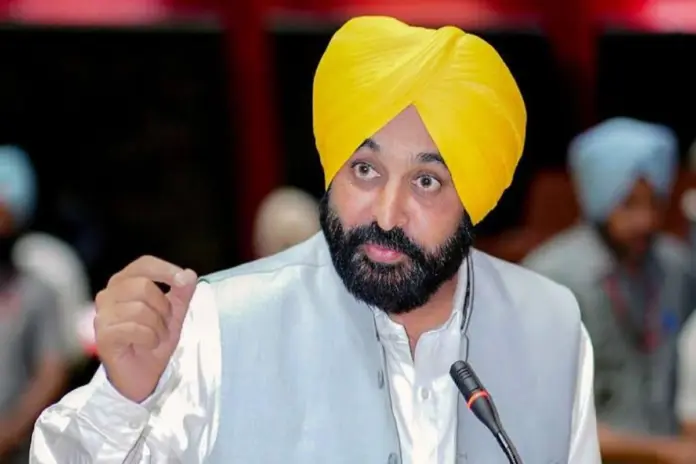
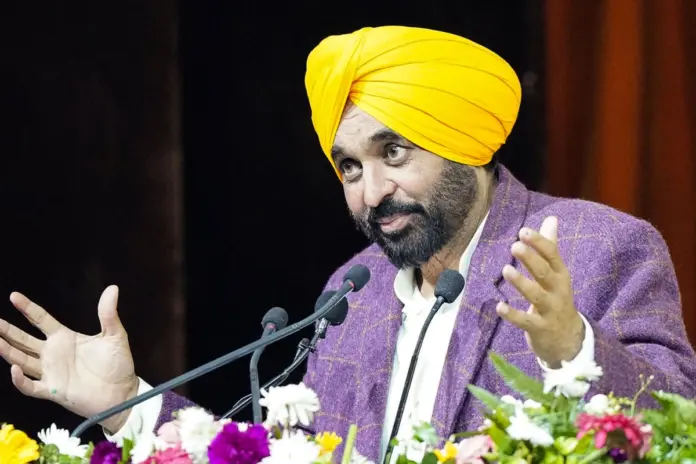
Punjab Chief Minister Bhagwant Singh Mann on Wednesday laid out a historic turnaround in Punjab’s irrigation system, noting that the Aam Aadmi Party (AAP) Government has, in just four years, ensured water supply to fields equivalent to the Bhakra canal by unlocking 10,000 cusecs from seasonal rivers and reviving a collapsing canal network. The Chief Minister said canal irrigation coverage has surged from just 26.50% in 2022 to 78% today, with long-defunct systems like the 22-km Sarhali canal brought back to life, round-the-clock water supply ensured through the Ferozepur-Sirhind feeder, and canal water reaching 1,446 villages for the first time since Independence.

CM Bhagwant Singh Mann addressed a detailed press conference, presenting a comprehensive account of the Punjab Government’s work in the irrigation sector over the past four years. “₹6,700 crore has been spent on canal lining, repair, modernisation and strengthening of infrastructure from April 2022 till now, which is the highest ever in Punjab’s history,” said the Chief Minister. He emphasised that Punjab has a total canal irrigation potential of around 75.90 lakh acres, but until March 2022, only 20.89 lakh acres, which was merely 26.5%, were actually receiving canal water.

“Today, we have increased this coverage to nearly 58 lakh acres, taking utilisation to around 78%. This is almost three times the earlier figure,” CM Bhagwant Singh Mann stated, adding that the Punjab Government has ensured maximum utilisation of canal water available in the state.

Detailing the massive scale of work undertaken on the ground, he said, “We have spent around ₹2,000 crore to construct and restore nearly 13,000 km of canals, due to which canal water is now reaching 58 lakh acres. Along with this, around 7,000 water channels have been restored.” He further added, “A total of 15,539 canals have been cleaned and 18,349 watercourses have been revived, ensuring that even tail-end agricultural fields now receive canal water.”

Highlighting a major structural intervention, CM Bhagwant Singh Mann said, “For the first time in Punjab’s history, 101 abandoned canals spanning 545 km have been revived. Many of these canals had been closed for 30 to 40 years and even filled up with soil. We restored them without acquiring even a single inch of land.”

He added that revival of rainwater channels alone has helped bring an additional 2.75 lakh acres under irrigation. “By restoring old canal systems, we have ensured that an additional 10,000 cusecs of water is now reaching fields. In effect, we have created a new ‘Bhakra canal’ without acquiring any land,” he said.

Sharing a striking example from Tarn Taran district, CM Bhagwant Singh Mann stated, “The 22-km-long Sarhali Minor canal had completely disappeared due to the negligence of previous governments. When our engineers began work, they discovered the canal buried underground. Even local people had forgotten about its existence. Today, we have revived it and made it fully operational.”

On strengthening major canal systems, he said, “The Ferozepur Feeder Canal, originally constructed in 1952, was upgraded in a record 35 days, increasing its capacity by 2,682 cusecs. Similarly, the Sirhind Canal, considered the lifeline of Malwa and built around 1950, has been upgraded after 75 years, increasing its capacity by 2,844 cusecs.”

He added, “Through lining of major canals like Sirhind and Patiala, we have increased water availability by around 1.5 MAF and ensured that even tail-end areas no longer face shortages.”

Addressing a long-standing issue faced by farmers, CM Bhagwant Singh Mann said, “Earlier, water in canals used to be supplied on a rotational basis, forcing farmers to wait for their turn. For the first time, we have ended this system and ensured that farmers get water every day.”

He further highlighted that the government even ran canals in reverse direction towards Harike Pattan when required to ensure equitable distribution of water.

Speaking about the Kandi region, CM Bhagwant Singh Mann said, “The Kandi Canal in Hoshiarpur, which had remained non-functional for nearly 40 years, has now been revived. People in this region understand the true value of water, and its return has brought immense relief.” He added, “Due to expansion of canal infrastructure, around 1,400 villages are now receiving canal water for the first time since Independence. Many of these villages had not seen canal water for 20 to 50 years.”

He also noted that new canal systems such as Cheema Minor, Phillaur Minor, Karamgarh Link, Rajpura, Patran, Ghaggar and Kotla have contributed to expanding irrigation reach across regions.

On infrastructure expansion, CM Bhagwant Singh Mann stated, “We have constructed 8 new canals and made 18 pump systems operational to strengthen irrigation coverage in multiple districts.”

Highlighting administrative reforms, he said, “To improve efficiency, we have created dedicated canal water and groundwater divisions such as Fatehgarh Canal Division and Tarn Taran Canal Division, with permanent officers posted there to ensure accountability and faster execution.”

On groundwater conservation, CM Bhagwant Singh Mann said, “Our efforts have significantly reduced dependence on groundwater. In one village in Gurdaspur, groundwater extraction has come down from 61.48% to around 31%, which is a remarkable achievement. This will benefit future generations.” He added that the government aims to further increase utilisation of surface water and reduce stress on groundwater resources.

On disaster management and environmental restoration, he said, “₹477 crore has been utilised from the State Disaster Mitigation Fund for 195 works aimed at flood prevention and water management. We have identified 199 desilting sites and deployed new chain-mounted machines to clean drains on a war footing.”

He further stated, “Desilting of rivers like Sutlej, Ravi and Ghaggar is underway with a target of removing 245 million cubic feet of silt, of which significant progress has already been made. Additionally, 206 km of river embankments are being strengthened to prevent flood damage.”

He added, “Under the Punjab Canal and Drainage Act, 2023, 849 out of 850 drains have been notified to prevent encroachments and safeguard life and property.”

Highlighting a long-pending infrastructure project, CM Bhagwant Singh Mann said, “The Shahpur Kandi Dam project, which had been pending for over 25 years, has now been completed at a cost of ₹3,394.49 crore. This will enhance the efficiency of the Ranjit Sagar Dam and stop water from flowing into Pakistan.”

Taking a strong position, CM Bhagwant Singh Mann said, “Those who claimed to be saviours of Punjab’s waters ended up destroying them. We have revived both our waters and our systems.”

Highlighting the broader impact, he added, “Canal water carries essential minerals, and its increased availability will significantly improve crop productivity. Farmers are happy as many are receiving canal water in their fields for the first time.”

Invoking Punjab’s spiritual ethos, he said, “We are guided by the message of our Gurus, ‘Pavan Guru, Pani Pita, Mata Dharat Mahat’, and we are committed to preserving our natural resources.”

He further stated that the irrigation department is also being developed as a revenue-generating model, adding, “We have developed 26 tourist sites including boating facilities, rest houses, headworks and other infrastructure to promote tourism and generate revenue.”

On the occasion, Cabinet Minister Barinder Goyal and other dignitaries were also present.

Viral Video: “Sanskar Shines Bright”! Little Girl’s Bhagavad Gita Rendition Wins Netizens’ Hearts

Viral Video
Image Credit: Google

Viral Video: A tiny voice reciting ancient wisdom from Sri Bhagavad Gita has captured the hearts of netizens across the country. In the now viral video, a little 4-year-old girl could be seen reciting flawless rendition of verses, racking up millions of like, shares and comments across Instagram, Facebook and X.

Viral Video-Turn Of Events

In the video, the little girl could be seen reciting the sacred verses with astonishing clarity and devotion, her eyes sparkling with innocence.

In an era where kids of all ages scroll Instagram, the girl’s Gita shlokas remind us of India’s rich cultural heritage. Parents and educators hail it as inspiration for early moral education, sparking debates on introducing scriptures in playful ways. The video urges all  to nurture sanskar in the next generation amid modern distractions.

Social Media Reactions

A social media user commented, “OMG, this little angel is a blessing! Pure sanskar at its best!” Another commented, “Such a cute little girl, a blessing! Pure sanskar at its best!” A user wrote, “4 years old and chanting Gita like a pro? Future of India right here!

An emotional user commented, “Tears in my eyes! In a world of chaos, her voice brings peace. God bless her!” Another commented, “So proud of our culture shining through this kiddo. Share more such gems!” Another user commented, “From Delhi with love! Girl, you’re inspiring us all to reconnect with roots.” Another user wrote, “What a reminder to teach kids Gita early. Adorable and profound!”

A user in emotional mood wrote, “Crying happy tears. Proof that tradition lives in tiny hearts. Beautiful!” Another wrote on Instagram, “This video just made my hectic day peaceful. Thank you, little one!”

Punjab to recover ₹1.44 lakh crore from Rajasthan Govt for decades of unpaid water dues: CM Bhagwant Singh Mann

CM Mann

Punjab Chief Minister Bhagwant Singh Mann on Wednesday asserted that the Punjab Government will stake claim to ₹1.44 lakh crore from the Rajasthan Government for decades of unpaid water usage, making it clear that Rajasthan must either release Punjab’s rightful dues or stop drawing water, while also calling for a review of the historic 1920 agreement governing this arrangement.

Interacting with the media, CM Bhagwant Singh Mann said, “The Rajasthan Government owes ₹1.44 lakh crore to Punjab for the water drawn through the Ferozepur Feeder since 1960, for which not even a single penny has been paid. Rajasthan must either release Punjab’s rightful dues or stop taking water.”

He stated that as per an agreement signed in the 1920s between the state of Bikaner, the erstwhile Punjab, and the British, Rajasthan had agreed to pay for water on a per-acre basis. “Payments were made till 1960, but after the Indus Water Treaty, Rajasthan stopped paying despite continuously drawing 18,000 cusecs of water,” added CM Bhagwant Singh Mann.

Highlighting the contradiction in Rajasthan’s stand, Punjab Chief Minister Bhagwant Singh Mann said, “Even today, Rajasthan continues to draw water under the 1920 agreement, but when it comes to paying dues, it takes shelter under the 1960 arrangement.”

He further stated, “The governments at that time, while entering into the new arrangement in 1960, did not mention payment, but they also never cancelled the 1920 agreement.”

Raising serious questions over past inaction, CM Bhagwant Singh Mann said, “The agreement clearly mandated a review every 25 years, but previous governments never raised this issue or pursued Punjab’s rightful claim.”

Reiterating the historical context, Punjab Chief Minister Bhagwant Singh Mann said, “Under a 1920 agreement signed during the British era with Bikaner, 18,000 cusecs of Punjab’s water was supplied continuously till 1960. However, after the Indus Waters Treaty, there was no mention of this arrangement. If we calculate dues from 1960 to 2026, Rajasthan owes Punjab ₹1.44 lakh crore.”

The Chief Minister further noted, “We have raised this issue with both the Union Government and the Rajasthan Government.” He added, “The Punjab Government has also written a letter to the Rajasthan Government seeking a meeting to discuss this issue.”

CM Bhagwant Singh Mann asserted that Punjab will pursue the matter firmly, stating, “Our government seeks a review of the 1920 agreement so that Punjab can recover its rightful dues. We will raise this issue strongly at all appropriate forums and ensure that Punjab gets what is rightfully its own. We will leave no stone unturned to recover this money.”

Back on Indian Roads, But Not Alone! Renault Duster and 3 best Alternatives to Roar the urban road, check prices

Renault- Duster
Google

Renault Duster 2026 has made a solid return to the Indian market, starting at an introductory price of ₹10.29 lakh (ex-showroom) with R Pass benefits, while the standard starting price stands at ₹10.49 lakh.

The SUV combines rugged appeal with modern features, making it suitable for both city driving and occasional rough-road use.

Price and Variants Explained

The Renault Duster 2026 is priced between ₹10.49 lakh and ₹18.49 lakh (ex-showroom), depending on the variant.

Key highlights:

  • Variants include Techno, Techno Plus, and Iconic
  • Engine options: 1.0L and 1.3L turbo-petrol
  • Strong hybrid variant expected later in 2026
  • On-road prices start around ₹12.22 lakh

Bookings are open till March 31 for buyers looking to grab introductory pricing benefits.

Features That Stand Out

The new Renault Duster 2026 comes equipped with several premium features, including:

  • Level 2 ADAS
  • Panoramic sunroof
  • 212mm ground clearance
  • 518-litre boot space

These upgrades make it more competitive in the mid-size SUV segment, especially for urban buyers who also want occasional off-road capability.

Top 3 Alternatives to Consider

If you are exploring options, here are three strong rivals to the Renault Duster 2026:

Hyundai Creta

Starting at ₹11.11 lakh, Creta offers a feature-loaded cabin, smooth ride quality, and advanced driver assistance systems, making it a strong urban SUV.

Kia Seltos

Priced from ₹10.90 lakh, Seltos stands out with its stylish design and connected tech features, appealing to younger buyers.

Tata Sierra

Expected to start around ₹12.50 lakh, the Sierra promises a spacious cabin and solid build quality, making it worth waiting for.

Which One Should You Pick?

The Renault Duster 2026 is a great choice if you want a value-for-money SUV with rugged capability.

However, it is up to the viewers’ decision which one suits their preferences best.

Dabur Hajmola Test: Is This Nostalgic Candy Hiding Filthy Contaminants? Lab Examination Results Will Shock Every Indian Household

Dabur Hajmola Test Results
Photo Credit: YouTube

Dabur Hajmola is more than just an Ayurvedic candy. For many Indians, it is a taste of childhood memories. Its tangy, spicy flavour, made with ginger, cumin, black pepper and black salt, has been a part of homes for generations. Kids used to carry Rs 1 sachets, sharing some with friends, while adults and elderly people often enjoyed it after meals or social gatherings for taste and digestion.

Because of its nostalgic value, many of us consider Hajmola a safe, everyday candy. But is it really free from hidden risks? That’s why a Dabur Hajmola Test was conducted to uncover the truth about its safety and hygiene.

Why Physical Contamination Is The Biggest Risk

Hajmola is not a nutritionally dense food. It does not have significant calories, protein, fats, or carbohydrates. So, testing its nutrition scientifically is less meaningful. Instead, the main concern is physical contamination, which can affect hygiene and safety.

Filth analysis is the method used to detect:

  • Insect fragments
  • Animal hair
  • Foreign particles
  • Any visible matter that indicates hygiene issues

The test is divided into two types:

  1. Heavy Filth Analysis – Detects larger, often visible particles such as:
    • Sand
    • Soil
    • Stones
    • Glass or metal fragments
  2. Light Filth Analysis – Detects extremely small particles that require a microscope, including:
    • Broken insect body parts, wings, legs, antenna
    • Animal hairs
    • Tiny debris from spices, grains or herbs

These contaminants usually enter during harvesting, storage or processing of plant-based raw materials and can go unnoticed in routine checks.

What The Dabur Hajmola Test Found

Dabur Hajmola Test was first done at Eurofins India for heavy filth, while light filth analysis required specialised lab methods. Here’s what the test revealed in a 100-gram sample:

  • Heavy filth: No sand, soil, glass or metal particles detected
  • Light filth: 1,140 counts detected
    • 1,137 counts were insect fragments (broken wings, legs or antenna)
    • 3 counts were animal hair

These results are based on official lab reports, using AOAC official method 970.66. This method is internationally recognised for microscopic determination and referenced by regulatory bodies, including the FDA. The testing was conducted in an ISO 17025-accredited lab, ensuring internationally validated quality standards and procedures.

Weather Update March 19 2026: Fresh Snow Spells To Grip Himalayas, Yellow Alert For Rain In Delhi NCR, High-Intensity Rainfall Likely To Trouble Northeast

Weather Update March 19 2026
Image Credit: Google

Weather Update March 19 2026: The India Meteorological Department (IMD) has predicted moderate to heavy spells of rain with a yellow alert for Delhi, Noida, Ghaziabad, Greater Noida and Gurugram from March 18 to 20. Maximum temperatures are likely to come down in these cities along with several regions in Jammu & Kashmir, Himachal Pradesh, Punjab, Haryana, Madhya Pradesh and Rajasthan.

Many regions in Bengaluru are likely to witness heavy rainfall along with hailstorm in the next 48 hours.

Weather Update March 19 2026-Northeastern states

Nagaland, Manipur and Mizoram are likely to experience moderate to heavy rainfall during early morning and late evening hours.

Uttarakhand, Himachal Pradesh, Jammu & Kashmir and Ladkah

Several parts in Uttarakhand, Himachal Pradesh, Jammu & Kashmir and Ladkah would experience light to moderate rainfall and snowfall. Sopore, Kathua, Udhampur, Kupwara, Pulwama, Anantnag along with Chamba, Una, Palampur, Kasauli, Sundernagar, Dalhousie, Rohru, Jogindernagar, Theog and Keylong may experience moderate to heavy rainfall.

Rajasthan, Punjab and Haryana Weather Update

Patiala, Bathinda, Hoshiarpur, Mohali and Malerkotla along with Gurdaspur, Amloh, Firozpur, Faridkot, Ajmer, Bharatpur, Alwar, Churu, Tonk, Jaipur, Jodhpur, Hanumangarh, Barmer, Kishangarh and Bundi are likely to witness moderate spells of rainfall.

Bhilwara, Pali, Sri Ganganagar, Jaisalmer, Dausa, Udaipur, Kota, Bikaner, Panipat, Ambala, Yamunanagar, Rohtak, Hisar, Karnal and Rewari may experience the same set of weather conditions.

Uttar Pradesh Weather Update

Several parts in Agra, Varanasi, Ghaziabad, Prayagraj, Meerut, Bareilly, Aligarh, Saharanpur, Gorakhpur, Noida, Firozabad, Mathura, Rampur, Shahjahanpur, Lucknow and Kanpur may witness cloudy skies throughout the day with a prediction of rain during early morning and late night hours.

Kerala weather Update

Kollam, Thrissur, Kannur, Alappuzha, Kottayam, Palakkad, Malappuram, Manjeri, Thalassery, Ponnani, Vatakara, Kanhangad, Payyanur, Thiruvananthapuram, Kochi, Kozhikode, Kollam, Koyilandy, Parappanangadi, Kalamassery and Neyyattinkara are likely to experience moderate rainfall over the next 48 hours. Gusty winds reaching speeds of up to 40 kmph may disrupt normal lives.

Vivo T5x 5G vs iQOO Z11x: Surprising Differences That Will Make You Think Twice Before Buying, Check Now

Vivo- T5x -5G- vs- iQOO- Z11x
Google

Choosing the right mid-range 5G smartphone can be tricky, especially when comparing two strong contenders like Vivo T5x 5G vs iQOO Z11x. 

Design and Build Quality

When it comes to design, Vivo T5x 5G is slimmer and lighter, making it more pocket-friendly compared to the slightly heavier iQOO Z11x. On the other hand, iQOO Z11x feels more robust and solid in hand, which could appeal to gamers or heavy users. 

Display and Visual Experience

The displays on both devices are impressive, but there are clear differences. iQOO Z11x offers a higher refresh rate compared to the Vivo T5x 5G, delivering smoother scrolling and better gaming visuals. 

Performance and Gaming

Performance is another area where the differences are notable. iQOO Z11x, compared to Vivo T5x 5G, is optimized for heavy gaming, handling demanding games without lag. Vivo T5x 5G, on the other hand, is designed more for daily multitasking and casual gaming.

Camera and Photography

Camera capabilities also highlight surprising contrasts. Vivo T5x 5G excels in selfies and vibrant daytime shots, whereas iQOO Z11x outperforms in low-light photography and rear-camera performance.

Battery Life and Charging

Battery and charging differ as well. The Vivo T5x 5G lasts longer on moderate use, whereas the iQOO Z11x supports faster charging, allowing quick top-ups.

Software and User Experience

Software experience is another point of comparison. Vivo T5x 5G offers a clean and simple UI, whereas iQOO Z11x comes with gamer-focused features and more customization options.

Choose the smartphone that best fits your needs and lifestyle, balancing performance, features, and personal preferences.

Viral Video: Publicity Stunt Or Unconditional Love? Family Goes Bald On Mundan Ceremony To Support Son! Netizens Divided

Viral Video
Image Credit: Google

Viral Video: In an artificial world overflowing with viral trends and reels going to unimaginable heights for likes, a video has gone viral wherein a simple mundan ceremony has captured the attention of everyone.

Viral Video-Turn Of Events

In the now viral video, a family in Gujarat could be seen celebrating the mundan ceremony of their son. The entire family decided to shave their heads in solidarity with the young child, turning a age-old custom into a profound symbol of solidarity.

The mundan ceremony is a sacred Hindu ceremony that is performed on young children or infants between the age of one and three. During the ceremony, the child’s head is shaved to symbolize the shedding of past karma, promoting a fresh start free from negative energies. Families often host it at holy sites like temples in Tirupati or Varanasi, complete with prayers, feasts and blessings from priests.

“We’re all in this together!” one family member is heard saying in Hindi, as laughter mixes with tears.

Social Media Reactions

A social media user wrote, “This family is pure gold! Shaving heads together to make the little one smile – that’s love beyond words!” Another wrote, “Heart melted! From scared to smiling in seconds. Proof that unity makes every ritual special. Share if this touched you.” Another commented, “Love how they turned a teary ceremony into a family party! Netizens are right – shocked and in awe!”

A social media user commented, “Imagine the scenarios…The kid in the washroom feeling lonely, In exams, During vaccination, Giving Interviews, Getting Married, During Suhagrat…This family will accompany everywhere?? Utterly stupid…Not knowing the customs, viewership k liye kuch bhi gandh machayenge.”

Another wrote, “Nautanki chal Raha hai. Log viral hone k liye aajkal kuch jada drama ho raha hein.”

Eid Ul Fitr 2026: The Real Reason Zakat-Ul-Fitr Is Given Before Eid Prayer – Hidden Meaning Of Fitrana Explained!

Eid Ul Fitr 2026 The Real Reason Zakat-Ul-Fitr Is Given Before Eid Prayer
Photo Credit: X

As the holy month of Ramadan comes to an end, Muslims around the world prepare to celebrate Eid Ul Fitr 2026, one of the most important festivals in Islam. Along with Eid prayers, greetings, and festive meals, there is one important religious duty that must be completed before the Eid namaz — Zakat-ul-Fitr. This special charity holds deep spiritual meaning and plays a key role in ensuring that everyone can celebrate Eid with dignity.

During Eid Ul Fitr 2026, Muslims are reminded that the festival is not only about celebration but also about helping others. This is why giving Zakat-ul-Fitr before the Eid prayer is considered an essential part of the festival.

What Is Zakat-ul-Fitr?

Zakat-ul-Fitr, also known as Fitrana, is a compulsory form of charity that every eligible Muslim must give at the end of Ramadan. It is different from regular Zakat because it is a fixed donation given on behalf of every member of the family, including children and dependents.

Traditionally, Zakat-ul-Fitr is given in the form of staple food such as wheat, rice, barley, or dates, though many people today give the equivalent amount in money so it can be distributed to the needy.

Islamic teachings say that this charity has two main purposes:

To purify the fast from mistakes made during Ramadan

To help poor and needy people celebrate Eid without hardship

Scholars explain that the Prophet Muhammad made Zakat-ul-Fitr obligatory so that those who fasted could be spiritually cleansed and the less fortunate could also enjoy the festival. Because of this belief, giving Fitrana is an important part of Eid Ul Fitr 2026 preparations.

Eid Ul Fitr 2026: Why Zakat-ul-Fitr Must Be Given Before Eid Namaz

One of the most important rules about Zakat-ul-Fitr is the timing. It must be given before the Eid-ul-Fitr prayer (Eid namaz). If it is given after the prayer, it is counted as normal charity (Sadaqah) and not as Zakat-ul-Fitr.

There is a strong reason behind this rule. The charity is meant to reach poor families before Eid so that they can buy food, clothes or essentials and join the celebrations happily. If the donation is delayed, the purpose of helping them prepare for Eid is lost.

Islamic scholars also state that Zakat-ul-Fitr can be given during the last days of Ramadan, but it should be completed before people leave for Eid prayers. This ensures that the act of charity becomes part of the Eid worship itself.

Zakat-ul-Fitr also reminds Muslims that Eid is not only about celebration but also about compassion, equality, and gratitude. By giving charity before Eid namaz, believers make sure that no one in the community is left behind on the day of joy.

This is why, before offering Eid prayer in Eid Ul Fitr 2026, Muslims are encouraged to complete their Zakat-ul-Fitr so the festival begins with kindness, generosity and blessings for all.

Jal Jeevan Mission Phase 2: Rajasthan And Madhya Pradesh Sign MoU With Centre! Would Uninterrupted Water Supply Now Be Assured To Rural Areas?

Jal Jeevan Mission Phase 2
Image Credit: Google

Jal Jeevan Mission Phase 2: The Union Government has signed Memorandum of Understanding (MoUs) under Jal Jeevan Mission (JJM) 2.0 with the state governments of Rajasthan and Madhya Pradesh. This is seen as a landmark step to bolster drinking water governance in rural areas of the two states. The mission’s extended phase was approved on March 10 by the Union Cabinet.

Jal Jeevan Mission Phase 2 Updates

The Rajasthan Government signed the MoU in the presence of Chief Minister of Rajasthan Shri Bhajan Lal Sharma, Union Minister of Jal Shakti Shri CR Paatil and Minister of State (Ministry of Jal Shakti) Shri V Somanna. The MoU ceremony was also attended by Shri Kanhaiya Lal Choudhary, Minister, PHED, Rajasthan along with Centre and the State Government officials.

In contrast, the Madhya Pradesh government signed the MoU in the presence of Chief Minister of Madhya Pradesh Dr. Mohan Yadav (via video conferencing) and Union Minister of Jal Shakti, Shri CR Paatil. Smt. Sampatiya Uikey, Minister, PHED, Madhya Pradesh, Shri V Somanna, Minister of State, Ministry of Jal Shakti and several senior State Government officials were present during MoU signing.

Inclusions

The Jal Jeevan Mission Phase 2 would help the two states with the strengthening of institutional capacity, governance and long-term sustainability of rural water supply with key focus on 11 structural reform areas.

This includes Citizen-Centric Water Quality Governance, Institutional Architecture for Drinking Water Governance, Technical Compliance and Efficient Scheme Implementation, Service Utility Framework for Rural Water Supply, Human Resource and Skilling Ecosystem, Capacity Building Framework and Digital Data Governance in Rural Drinking Water Systems. Iy would also include Participatory Governance through Jan Bhagidari, Source Sustainability and Water Security Framework, Research, Innovation and Knowledge Ecosystem and Operational and Financial Sustainability of Water Supply Schemes.

A Gram Panchayat-led, community-centred model is promoted by the MoU. Completed piped water schemes would be handled to local communities formally via the “Jal Arpan” process.

Uttarakhand News: Big Win For Kumaon! Dehradun-Pithoragarh Air Service To Hit The Skies Soon!

Uttarakhand News
Image Credit: Google

Uttarakhand News: Uttarakhand Chief Minister Pushkar Singh Dhami has received a letter from Union Civil Aviation Minister Ram Mohan Naidu Kinjarapu that the air service between the border town of Pithoragarh and Dehradun, the capital city of Uttarakhand, would commence soon.

Kumaon Would Get Its Air Services

It has been notified by the Union Government that the required formalities are being pursued by Skyhop Aviation Private Limited to initiate air services on the route under the Regional Connectivity Scheme (RCS).

The company has been handling operational and regulatory work regarding the route, including acquiring aircraft and obtaining the flight operator certificate. Once the formalities are completed, Skyhop Aviation would start regular flights on the route. Other airlines have also been contacted by the Central Government to commence services on the route.

Uttarakhand News-Present Day Operations From Dehradun

Presently, flight services from Dehradun include Delhi, Shamshabad (Telangana), Jaipur, Lucknow, Bhubaneswar, Bengaluru, Mumbai, Kolkata, Ahmedabad, Pune and Kullu.

Previously, a detailed framework for the resumption and expansion of air services between Dehradun and Pithoragarh was successfully completed by the Uttarakhand Civil Aviation Development Authority (UCADA). Ashish Chauhan, the Chief Executive Officer of UCADA, had confirmed that all the required approvals have been secured for the flight operations.

The new route would significantly enhance regional connectivity while also promoting tourism, trade and commerce between the cities. It would help individuals and entrepreneurs cover the distance of 11 hours in less than an hour. The flight service would connect the state’s eastern regions to Dehradun including Sahastradhara, New Tehri, Almora, Chinyalisaur, Gauchar and Haldwani.

The Uttarakhand government is also contemplating the development of Joshimath, Mussoorie, Nainital, Dharchula, Haridwar and Ramnagar heliports in the near future. The state government is also likely to initiate air services from Champawat, Lansdowne, Munsiyari, Bageshwar and Triyogi Narayan Heliports.

Noida International Airport: The Wait Is FINALLY Over! Narendra Modi To Inaugurate On March 28, Here’s How It Will Prove a Gamechanger For UP

Noida International Airport
Image Credit: Google

Noida International Airport: The much-awaited opening date of the Noida International Airport has been set to March 28.

Noida International Airport-Inauguration

The Jewar Airport would be inaugurated by Prime Minister Narendra Modi. Uttar Pradesh Chief Minister Yogi Adityanath announced that an invitation has been sent to PM Modi to inaugurate the Noida International Airport on March 28, 2026.

Noida International Airport-Benefits For State Economy

The inauguration of the Jewar Airport would be a turning point for the state of Uttar Pradesh and adjoining regions. Over its full development cycle, the airport would become one of the country’s largest airports. It is likely to be the much-awaited infrastructure push that could decisively transform western UP’s economic and connectivity landscape.

The Noida International Airport (NIA) at Jewar would feature 28 aircraft parking stands, 10 aerobridges and a runaway that would be capable of handling approximately 30 flight operations every hour. It would feature a cargo hub characterized by an initial capacity of 2.5 lakh tonnes every year, expandable to 1.5 million tonnes in later phases.

Boost To Air Connectivity In Western UP

The Jewar Airport is likely to revolutionize air connectivity for the state’s western districts and beyond. The airport would directly serve Ghaziabad, Noida, Greater Noida, Aligarh, Mathura, Vrindavan, Agra, Bulandshahr and surrounding areas that have been largely dependent on Delhi’s Indira Gandhi International Airport (IGIA) by road.

Engine for Jobs And MSME Growth

Airports across the world have been known to be powerful economic multipliers and the Jewar Airport would be no exception. It would create thousands of direct as well as indirect jobs with many industry experts claiming that millions of jobs would be created within the next 3-5 years and more so going forward. Direct employment roles would range from airport operations, security, retail, hospitality, catering, facility management and ground handling.

The airport is also likely to accelerate the movement of people, goods, services and capital in Uttar Pradesh and adjoining areas. This would turn the state into a magnet for both foreign and domestic investment. The “airport effect” around Jewar would also boost the creation of hotels, mid-rise and high-rise housing, commercial complexes, amusement parks and warehousing parks.

Over time, expressways, metro extensions and bus links would integrate Jewar into a larger regional growth network, making western UP one of the most infrastructure-rich pockets in the country. The airport can help correct historical imbalances in regional development. For years, Gurugram raced ahead of Noida despite both being part of the NCR, largely because of its immediate proximity to Delhi airport.

Chaitra Navratri 2026: Wrong Bhog Tomorrow Can Ruin Your Festival – Do Not Offer THESE Items To Goddess Durga Or Face Bad Luck

Chaitra Navratri 2026 - Do not offer these items to Goddess Durga
Photo Credit: Created with Gemini

Chaitra Navratri 2026 begins on March 19 and is one of the most important festivals dedicated to Goddess Durga. The nine-day festival is known for fasting, prayers and special rituals performed to seek blessings for health, success and peace. According to Hindu beliefs, Navratri starts on Chaitra Shukla Pratipada and ends on Ram Navami.

During Chaitra Navratri 2026, devotees will perform Kalash Sthapana on the first day and offer bhog to Maa Durga every day. Religious experts say that worship should be done carefully because offering the wrong items can make the puja incomplete. Some foods and objects are considered inauspicious and should not be offered to the Goddess, especially on the first day of Navratri.

Following the right rules is believed to bring blessings, while mistakes in rituals may reduce the spiritual benefits of the festival.

Things You Should Not Offer On Chaitra Navratri 2026

Experts suggest avoiding certain items during Durga puja to keep the worship pure and sattvic.

1. Onion And Garlic

Food prepared for bhog should be sattvic. Onion and garlic are considered tamasic, so they should not be used in prasad or meals offered to Maa Durga.

2. Certain Flowers

Not all flowers are suitable for Durga Puja. Doob, madar, harsingar, bel and tagar are believed to be inauspicious for offering. Always use fresh and clean flowers during worship.

3. Stale Or leftover Food

Bhog should always be fresh. Offering stale food is considered disrespectful and may reduce the positive effect of the puja. Devotees should prepare fresh prasad every day.

4. Broken Or Damaged Items

Broken idols, cracked utensils or damaged diyas should not be used in puja. Clean and proper items are preferred during Chaitra Navratri rituals.

5. Unclean Clothes Or Body During Puja

One should bathe, wear clean clothes, and keep the mind calm before performing Navratri puja. Worship without purity is believed to remain incomplete.

Why The Festival Is Considered Spiritually Powerful

Chaitra Navratri 2026 is a time when divine energy will be very strong. Each of the nine days is dedicated to a different form of Goddess Durga. Worship done during this period may give long-lasting results.

Religious traditions say Navratri is not only about fasting but also about purity in food, thoughts and actions. People who follow the rituals with discipline are believed to receive peace, prosperity and protection from negative energy.

Because of this, be careful about what you offer to Maa Durga during Chaitra Navratri 2026.